

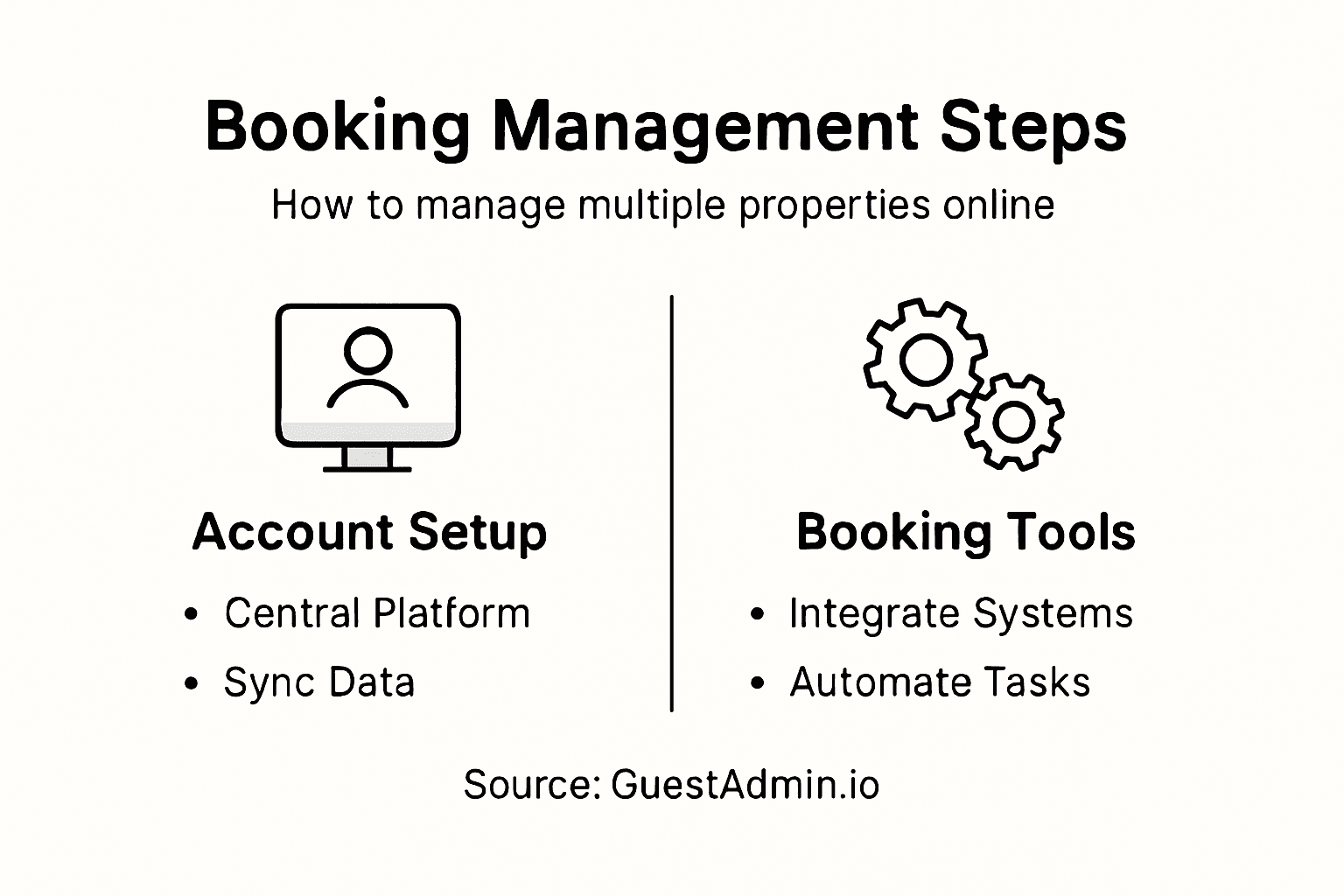
Managing multiple short-term rental properties across Europe often means juggling countless administrative tasks and ever-changing compliance rules. With each country enforcing its own guest registration regulations, property managers face the challenge of creating a structured digital ecosystem that keeps operations smooth and data secure. This guide breaks down the step-by-step strategies for building centralised management frameworks, integrating key systems, and automating compliance workflows to turn complex requirements into an efficient process.
Table of Contents
- Step 1: Prepare Your Multi-Property Account Environment
- Step 2: Integrate Booking Platforms And Property Management Systems
- Step 3: Automate Guest Data Capture And Compliance Workflows
- Step 4: Monitor Booking Activity And Track Submissions In Real Time
- Step 5: Verify Compliance And Secure Guest Data Archives
Quick Summary
| Insight | Explanation |
|---|---|
| 1. Centralised Digital Framework Setup | Create a single dashboard for all property information to enhance oversight and streamline management processes. |
| 2. Data Synchronisation Between Platforms | Integrate booking systems and property management software to ensure seamless information exchange and reduce manual entries. |
| 3. Automate Guest Data Capture | Implement automated workflows for collecting guest information, ensuring compliance while minimising human error in data handling. |
| 4. Real-Time Monitoring of Bookings | Establish centralised tracking for booking activity to maintain proactive oversight and quickly address operational issues. |
| 5. Secure Data Management Practices | Develop a robust verification system for compliance, ensuring the security and integrity of guest data across your properties. |
Step 1: Prepare your multi-property account environment
Preparing your multi-property account environment is about creating a structured digital ecosystem that enables efficient management across different rental properties. This initial setup will streamline your administrative processes and ensure smooth operational workflows.
To begin, you’ll want to create a centralised digital framework that allows comprehensive oversight. This involves establishing structured environments that support coordinated access and monitoring. Start by following these key preparation steps:
- Consolidate all property information into a single dashboard
- Set up unique identifiers for each property
- Configure user access permissions and roles
- Integrate existing property management systems
The goal is to develop a robust online infrastructure that provides real-time visibility across your entire property portfolio. By implementing a comprehensive account setup, you’ll transform complex multi-property management into a seamless, data-driven experience.
Effective environment preparation is the foundation of successful multi-property management.
Your account environment should support flexible data capture, enable rapid reporting, and maintain strict compliance standards across different jurisdictions. This means designing a system that can handle diverse regulatory requirements while providing a unified management interface.

Expert Tip: Configure automated data synchronisation between your properties to minimise manual administrative tasks and reduce potential human error.
Step 2: Integrate booking platforms and property management systems
Integrating your booking platforms and property management systems is crucial for creating a seamless, efficient operational workflow across multiple properties. This step transforms disconnected software tools into a unified, powerful management ecosystem.
To achieve comprehensive integration, you’ll need to focus on establishing robust data synchronisation between different platforms. Effective integration strategies support smooth coordination and facilitate real-time information exchange. Start by examining your current systems and identifying potential connection points:
- Evaluate existing booking and management software capabilities
- Identify APIs and integration protocols
- Check compatibility between platforms
- Determine data transfer requirements
- Select appropriate middleware or integration tools
The integration process requires careful planning to ensure comprehensive data mapping across different systems. This means creating standardised protocols for information exchange, such as synchronising guest details, reservation statuses, and financial transactions.
Successful system integration eliminates manual data entry and reduces operational complexity.
Your goal is to create a centralised management interface that provides real-time insights across all your properties. By implementing strategic integrations, you’ll streamline booking processes, reduce administrative overhead, and enhance overall operational efficiency.
To help select integration tools, here is a comparison of common middleware features:
| Feature | Standard Middleware | Advanced Integration Platform |
|---|---|---|
| Data mapping | Manual setup required | Automated protocols available |
| Scalability | Limited by software | Easily expands across properties |
| Monitoring | Basic status checks | Real-time health dashboards |
| Customisation | Minimal options | Extensive custom integration support |
Expert Tip: Conduct thorough testing of your integrated systems before full deployment to identify and resolve any potential data synchronisation issues.
Step 3: Automate guest data capture and compliance workflows
Automating guest data capture and compliance workflows is essential for streamlining your multi-property management process and ensuring regulatory adherence. This critical step transforms manual, time-consuming processes into efficient, reliable digital workflows.
Automated data collection technologies enable property managers to capture guest information systematically while maintaining strict privacy standards. Your automation strategy should focus on implementing robust digital processes that capture, validate, and securely store guest data:
- Implement intelligent form-filling technologies
- Create automated data validation checkpoints
- Set up real-time compliance verification mechanisms
- Establish secure data storage protocols
- Configure automatic regulatory compliance alerts
The key to successful automation lies in developing intelligent workflow systems that can seamlessly capture guest information across different properties while maintaining consistent data quality and legal compliance. This means creating standardised processes that automatically verify guest details, cross-reference information, and generate necessary documentation.
Effective data automation reduces human error and ensures comprehensive regulatory compliance.
Your ultimate goal is to create a centralised compliance management system that works silently in the background, handling complex regulatory requirements without manual intervention. By leveraging advanced technologies, you’ll transform guest data management from a labour-intensive task to a streamlined, secure digital process.
Expert Tip: Always maintain a comprehensive audit trail of your automated data capture processes to demonstrate compliance and facilitate potential regulatory reviews.
Step 4: Monitor booking activity and track submissions in real time
Monitoring booking activity and tracking submissions in real time is crucial for maintaining comprehensive oversight across your multi-property portfolio. This step transforms passive management into a dynamic, proactive approach to property bookings.
Real-time monitoring systems provide property managers with instant visibility into booking statuses, submission progress, and operational performance. Your tracking strategy should encompass several key monitoring mechanisms:
- Set up centralised dashboard tracking
- Configure automated status notifications
- Implement real-time performance metrics
- Create custom reporting filters
- Enable instant submission verification
The foundation of effective monitoring lies in developing comprehensive tracking dashboards that aggregate data from multiple properties into a single, intuitive interface. This means creating systems that not only display current booking statuses but also provide predictive insights and potential compliance alerts.
Effective real-time monitoring transforms data into actionable operational intelligence.
Your ultimate objective is to create a proactive management ecosystem that allows you to anticipate issues, respond quickly to changes, and maintain seamless operational continuity across all your properties. By leveraging advanced tracking technologies, you’ll shift from reactive management to strategic oversight.
Expert Tip: Configure custom alert thresholds that notify you immediately about critical booking or submission anomalies to enable rapid intervention.
Step 5: Verify compliance and secure guest data archives
Verifying compliance and securing guest data archives is a critical process that protects your multi-property booking system from potential legal and security risks. This step ensures that your guest information remains confidential, accessible, and fully protected under regulatory standards.
Data security frameworks provide comprehensive strategies for maintaining the integrity of guest information across your property portfolio. Your compliance verification process should incorporate multiple layers of protection and systematic review:
- Implement robust encryption protocols
- Establish granular access controls
- Create comprehensive audit trails
- Configure automatic compliance checks
- Define strict data retention policies
- Schedule periodic security assessments
The core of effective data security involves developing a multi-layered protection strategy that goes beyond basic storage. This means creating a dynamic system that continuously validates data integrity, monitors access patterns, and ensures compliance with evolving regulatory requirements.
Comprehensive data archiving is not just a technical requirement, but a fundamental trust mechanism with your guests.
Your ultimate objective is to build a secure and transparent data management ecosystem that provides peace of mind for both your organisation and your guests. By implementing rigorous verification processes, you transform data archiving from a passive storage function into an active compliance and security mechanism.
To clarify the overall process, here’s a summary of each step and its key outcome:
| Step | Core Focus | Main Benefit |
|---|---|---|
| Prepare account environment | Centralised digital framework setup | Seamless oversight across properties |
| Integrate systems | Data synchronisation between platforms | Efficient unified management interface |
| Automate workflows | Guest data capture & compliance automation | Reduced human error, better compliance |
| Monitor in real time | Booking activity and submission tracking | Proactive operational management |
| Verify compliance & archives | Data security and audit checks | Protected guest data, regulatory assurance |
Expert Tip: Regularly conduct simulated security audits to identify and address potential vulnerabilities before they become actual risks.
Simplify Your Multi-Property Booking Management with GuestAdmin.io
Managing multiple rental properties online involves overcoming challenges such as consolidating booking data, automating guest data capture, and ensuring compliance with diverse travel regulations across European jurisdictions. This article highlights the need for a centralised digital framework, seamless integration of systems, and real-time monitoring to reduce administrative stress while maintaining full regulatory compliance.
GuestAdmin.io is designed specifically to address these exact challenges. Our platform offers a comprehensive SaaS solution that automates guest data processing, synchronises bookings across popular PMS and OTA platforms, and provides real-time dashboards for proactive management. By using GuestAdmin.io, property owners and managers can effortlessly stay ahead of compliance requirements, reduce manual effort, and maintain secure, GDPR-compliant archives accessible from any device.
Ready to transform your multi-property management into a simple, efficient operation with guaranteed regulatory compliance?
Discover how GuestAdmin.io can streamline your property management and compliance workflows today. Visit our landing page to get started and explore the full benefits of automating multi-property bookings with ease.
Frequently Asked Questions
How can I prepare my multi-property booking account effectively?
To prepare your multi-property booking account, create a centralised digital framework. Start by consolidating all property information into a single dashboard and setting up unique identifiers for each property.
What are the steps to integrate my booking platforms with property management systems?
To integrate your booking platforms, evaluate your existing software capabilities and identify APIs for connecting systems. Determine data transfer requirements and select appropriate middleware or integration tools to ensure comprehensive data synchronisation.
How do I automate guest data capture for multiple properties?
Automate guest data capture by implementing intelligent form-filling technologies and setting up real-time compliance verification mechanisms. Establish secure data storage protocols to manage and protect guest information automatically.
What should I monitor in real-time for my multi-property bookings?
Monitor booking activity, submission progress, and operational performance by creating a centralised dashboard that displays current status. Configure automated notifications and implement performance metrics to maintain oversight across all properties.
How can I ensure compliance and security of guest data in my system?
To ensure compliance and security, implement robust encryption protocols and create comprehensive audit trails. Regularly schedule security assessments and define strict data retention policies to maintain guest information confidentiality.
What are the benefits of automating workflows in multi-property management?
Automating workflows in multi-property management reduces human error and streamlines operations. By creating standardised processes for guest data verification, you can enhance regulatory compliance and significantly improve efficiency.
One Comment
How to automate guest data reporting in 2026
[…] managers running multi-property bookings, the operational impact compounds quickly. A manager overseeing ten properties across two countries […]