

Managing short-term rental properties across several European countries often means facing a tangled web of compliance regulations and endless guest data demands. The challenge grows as property managers balance local service needs with centralised control. Multi-property management systems offer a powerful solution, allowing you to unify operations, automate compliance tasks, and harness centralised guest profile management for smoother reporting and guest experiences across each location.
Table of Contents
- Defining Multi-Property Management Systems
- Types Of Multi-Property Management Platforms
- Core Features And Integration Capabilities
- Legal Compliance Across European Jurisdictions
- Challenges, Risks, And Mistakes To Avoid
Key Takeaways
| Point | Details |
|---|---|
| Operational Efficiency | Multi-property management systems streamline operations through centralised data management, enhancing guest experiences and resource allocation across venues. |
| Technological Advancements | Modern platforms integrate cloud technology and AI, enabling automated processes and real-time analytics for informed decision-making. |
| Legal Compliance | Adhering to complex European regulations requires robust compliance frameworks that systematically address diverse legal obligations across jurisdictions. |
| Risk Management | Proactive strategies are crucial to mitigate potential pitfalls, including data silos and inconsistent guest experiences, ensuring operational integrity. |
Defining Multi-Property Management Systems
Multi-property management systems represent a sophisticated technological approach for hospitality businesses to centralise and streamline operational functions across multiple venues. These comprehensive digital platforms go far beyond simple booking management, offering an integrated solution for complex hospitality environments. Multi-property management systems fundamentally transform how organisations coordinate guest experiences and backend operations.
At their core, these systems provide several critical capabilities that elevate operational efficiency:
- Centralised guest profile management
- Unified booking and reservation tracking
- Automated compliance documentation
- Real-time financial and performance reporting
- Customisable service delivery protocols
- Cross-property resource allocation
The evolution of property management technologies has been remarkable. Property management systems initially emerged as standalone client/server applications but have dramatically transformed into cloud-based platforms with sophisticated guest-facing functionalities. Modern systems now integrate online check-in, virtual concierge services, and advanced data analytics capabilities.
Beyond technological integration, these systems enable organisations to maintain local service nuances while benefiting from centralised operational intelligence. This dual approach allows property managers to preserve cultural customisation while simultaneously optimising resource deployment and revenue strategies. By leveraging data-driven insights, businesses can make strategic decisions that enhance guest satisfaction and operational efficiency.
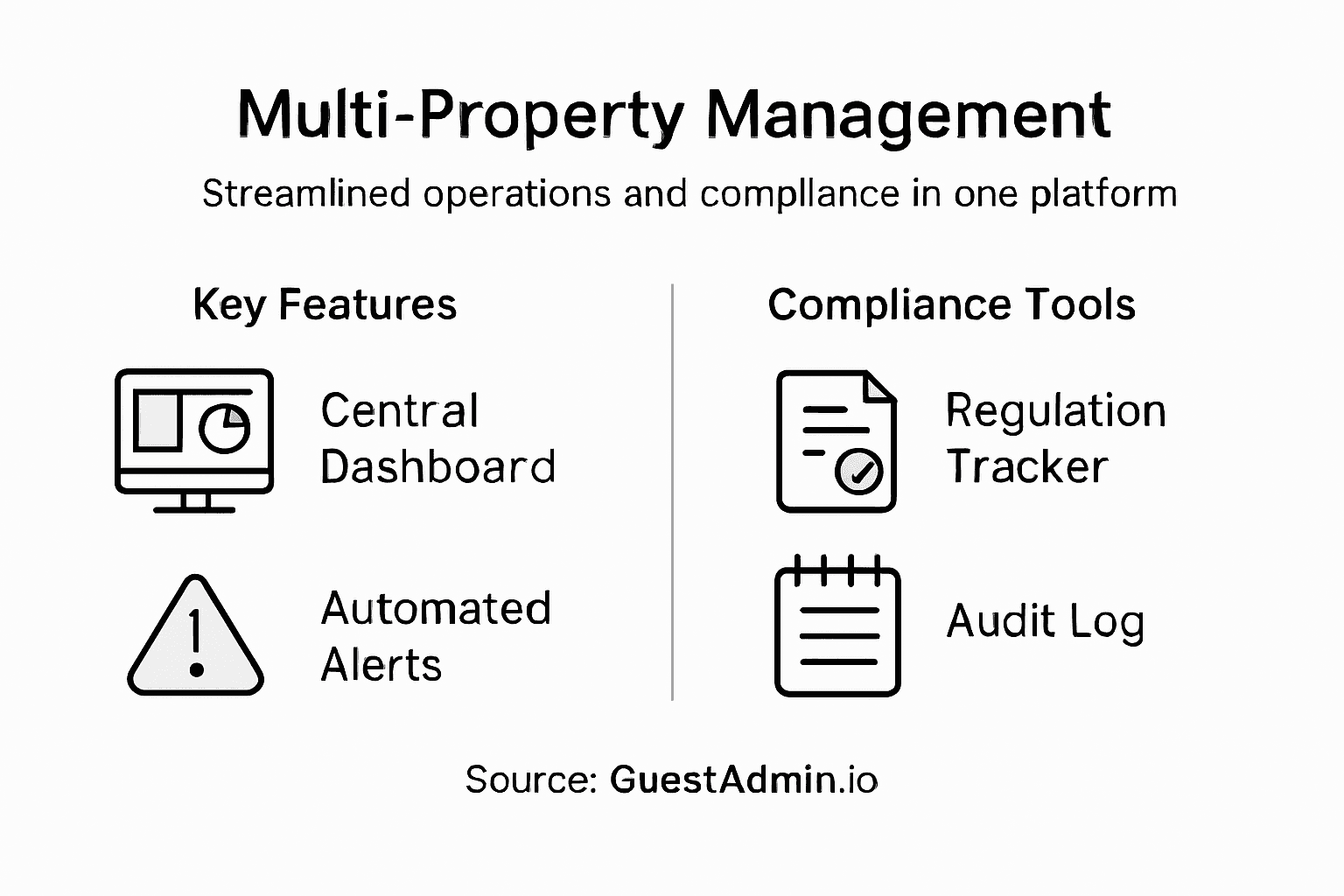
The following table summarises how multi-property management systems impact key operational areas in hospitality:
| Operational Area | System Capability | Organisational Impact |
|---|---|---|
| Guest Experience | Centralised guest data | Personalised service across venues |
| Resource Allocation | Cross-property scheduling | Improved efficiency and cost control |
| Financial Management | Automated real-time reporting | Enhanced transparency and decisions |
| Compliance | Integrated documentation and tracking | Reduced legal risk and admin burden |
Pro tip: When selecting a multi-property management system, prioritise platforms offering robust integration capabilities and comprehensive reporting features that align with your specific operational requirements.
Types Of Multi-Property Management Platforms
Multi-property management platforms have evolved dramatically, offering specialised solutions for diverse hospitality and real estate sectors. Emerging platform trends demonstrate increasingly sophisticated capabilities that streamline operational complexity across different property types and management requirements.
The primary categories of multi-property management platforms include:
- Residential property management systems
- Commercial real estate management platforms
- Hospitality-specific management solutions
- Enterprise-grade portfolio management suites
- Homeowners association (HOA) management systems
- Multifamily housing management platforms
These platforms differentiate themselves through unique technological features and specialised functionalities. Multi-property management solutions range from user-friendly interfaces with basic accounting tools to advanced enterprise systems offering comprehensive analytics, bulk management capabilities, and multi-user access protocols.
Modern platforms increasingly integrate artificial intelligence, mobile-first design, and cloud-based architectures to provide seamless operational continuity. This technological convergence enables property managers to simultaneously track bookings, manage finances, ensure regulatory compliance, and optimise resource allocation across multiple properties with unprecedented efficiency.
This comparison highlights differences between major types of multi-property management platforms:
| Platform Type | Target Sector | Primary Strength |
|---|---|---|
| Hospitality Solutions | Hotels & resorts | Guest-centric integrations |
| Residential Systems | Flats & housing | Lease and tenant management |
| Commercial Platforms | Office buildings | Asset and contract tracking |
| HOA Management | Communities/HOA | Association rule enforcement |
Pro tip: Prioritise multi-property management platforms that offer scalable architecture, comprehensive integration capabilities, and robust reporting features tailored to your specific portfolio requirements.
Core Features And Integration Capabilities
Multi-property management platforms have developed sophisticated core features that transform operational efficiency across diverse property portfolios. Advanced integration capabilities now enable seamless connections between disparate technological systems, allowing property managers unprecedented control and visibility.
The key features of modern multi-property management platforms include:
- Automated accounting and financial reporting
- Maintenance request management
- Resident/guest service tracking
- Real-time booking synchronisation
- Dynamic pricing engines
- Comprehensive analytics dashboards
- Mobile-responsive management interfaces
AI-driven automation technologies are revolutionising how property managers interact with their operational ecosystems. These platforms now offer deep API integrations that connect booking engines, payment gateways, communication channels, and reporting systems into unified, intelligent platforms.

Cloud-based architectures have fundamentally transformed multi-property management by enabling scalable, flexible solutions that can rapidly adapt to changing business requirements. Property managers can now add new properties, users, and functionalities with minimal technical intervention, creating a dynamic and responsive management environment that supports growth and innovation.
Pro tip: Evaluate potential management platforms by testing their API flexibility, integration depth, and ability to scale across your specific portfolio requirements.
Legal Compliance Across European Jurisdictions
European legal compliance represents a complex landscape of interconnected regulatory requirements that multi-property managers must carefully navigate. EU regulatory frameworks create a sophisticated system of harmonised yet nuanced legal obligations that demand meticulous attention and systematic management.
Key legal compliance considerations for multi-property managers include:
- Data protection and GDPR regulations
- Anti-money laundering protocols
- Tax governance requirements
- Financial transparency standards
- Cross-border property operation rules
- National reporting obligations
- Individual member state legal variations
International governance standards require property managers to implement robust due diligence processes that account for jurisdictional differences. This necessitates developing sophisticated compliance strategies that can adapt to evolving regulatory landscapes while maintaining consistent operational integrity across multiple European locations.
The complexity of European legal compliance demands integrated risk management systems that can dynamically track and respond to regulatory changes. Property managers must invest in technological solutions capable of aggregating diverse legal requirements, automating compliance reporting, and providing real-time insights into potential regulatory risks across different national contexts.
Pro tip: Develop a centralised compliance tracking system that enables real-time monitoring of regulatory changes across different European jurisdictions, ensuring proactive adaptation to evolving legal requirements.
Challenges, Risks, And Mistakes To Avoid
Multi-property management presents a complex operational landscape fraught with potential pitfalls that can significantly impact organisational performance. Operational challenges emerge from the intricate balance required to maintain consistency across diverse property environments while adapting to unique local requirements.
Key risks and potential mistakes include:
- Creating isolated data silos between properties
- Neglecting automation and technological integration
- Underestimating cultural variations across locations
- Failing to implement centralised reporting mechanisms
- Inconsistent guest experience management
- Poor communication between property management teams
- Inadequate regulatory compliance tracking
Complex project risk management demands proactive strategies that anticipate potential points of failure. Property managers must develop robust governance frameworks that enable dynamic response to changing regulatory environments, technological shifts, and stakeholder expectations.
Successful multi-property management requires sophisticated technological solutions that can aggregate diverse operational data, standardise processes, and provide real-time insights. Managers must invest in platforms capable of bridging communication gaps, ensuring consistent quality standards, and maintaining operational flexibility across different geographical and regulatory contexts.
Pro tip: Conduct quarterly comprehensive risk assessments that systematically evaluate operational vulnerabilities across your entire property portfolio, ensuring proactive mitigation of potential systemic challenges.
Simplify Multi-Property Compliance with GuestAdmin.io
Managing multiple hospitality properties across European jurisdictions can feel overwhelming due to complex regulatory requirements and the need for centralised reporting. This article reveals how multi-property management systems enhance operational efficiency while underscoring the critical challenge of maintaining legal compliance and streamlining data across diverse locations. If you are struggling with manual compliance processes, isolated data silos, or inconsistent guest data management, these pain points can jeopardise your business performance.
GuestAdmin.io offers a tailored SaaS platform designed specifically to tackle these challenges head-on by automating compliance for short-term rental property owners and managers. Key benefits include real-time booking dashboards, AI-powered data processing, and seamless integration with top PMS and OTA platforms. This means you can automate GDPR-compliant submissions to authorities within 24 hours, reduce administrative burdens, and gain transparency across your property portfolio Multi-property management solutions.
Take control of your compliance today and experience how GuestAdmin.io empowers you to focus on guest satisfaction and growth rather than paperwork.
Discover the difference intelligent automation can make by visiting GuestAdmin.io. Start streamlining your multi-property management compliance now and ensure your operations stay ahead in Europe’s complex regulatory landscape.
Frequently Asked Questions
What is a multi-property management system?
A multi-property management system is a technological platform designed to centralise operational functions across multiple hospitality venues, streamlining processes such as guest profile management, booking tracking, and financial reporting.
How do multi-property management systems enhance compliance?
These systems automate compliance documentation, integrate regulatory requirements, and provide real-time insights, thus minimising legal risks and ensuring adherence to various operational standards.
What are the main features to look for in a multi-property management system?
Key features include automated financial reporting, maintenance request management, guest service tracking, real-time booking synchronisation, and comprehensive analytics dashboards that enhance operational efficiency.
What challenges can arise when managing multiple properties?
Challenges can include isolation of data between properties, inadequate automation, cultural variance management, and the need for centralised reporting mechanisms, all of which can impact consistency and compliance.
3 Comments
6 Essential Multi-Property Management Best Practices
[…] Multi-Property Management Explained: Streamlining Compliance […]
Property Management SaaS – Streamlining Hospitality Compliance
[…] Multi-Property Management Explained: Streamlining Compliance […]
APIs in property tech: compliance and efficiency in 2026
[…] Explore our short-term rental compliance guide to understand your obligations, review our multi-property management solutions for portfolio-scale operations, or visit GuestAdmin.io to book a demo and see API-led compliance in […]