

Managing short-term rental properties in Europe means facing a complex mix of local laws, rapid guest turnover, and strict privacy expectations. One overlooked step can quickly put you at risk of legal action or hefty fines. If you want your property management process to be smooth, secure, and fully compliant, you need clear, actionable methods—right from the start.
This list reveals the most practical steps you can use to protect your business and guests. You will discover how to handle guest data securely, why reporting rules must be followed within tight deadlines, and what tools can safeguard your operation. See for yourself how these proven techniques can give you peace of mind and a competitive edge.
Table of Contents
- Understand Local Regulations Early
- Automate Guest Data Collection Securely
- Submit Guest Information Within 24 Hours
- Integrate with PMS and OTA Platforms
- Archive Data in Line with GDPR Rules
- Monitor Compliance in Real Time
- Adapt Processes for Multi-Property Management
Quick Summary
| Key Message | Explanation |
|---|---|
| 1. Research Local Regulations Thoroughly | Understanding local laws helps avoid legal issues and penalties in property management. Compliance requires ongoing research tailored to each property location. |
| 2. Automate Guest Data Collection | Using secure automated systems reduces errors and speeds up guest information processing, thus maintaining compliance with privacy regulations. |
| 3. Submit Guest Information Promptly | Timely submission of guest details within 24 hours supports regulatory compliance and efficient operations, reducing the risk of penalties. |
| 4. Integrate Digital Platforms Effectively | Seamless integration of Property Management Systems and Online Travel Agencies streamlines operations and ensures consistent regulatory adherence across multiple properties. |
| 5. Monitor Compliance in Real-Time | Continuous compliance tracking allows for immediate identification of regulatory gaps, enhancing operational transparency and reducing legal risks. |
1. Understand Local Regulations Early
Property management compliance starts with a deep understanding of local regulations that govern short-term rentals across European jurisdictions. Navigating the complex landscape of legal requirements demands proactive research and strategic planning.
Local regulations can vary dramatically between regions, impacting critical aspects of property management such as:
- Guest registration protocols
- Tax reporting requirements
- Occupancy limitations
- Safety and accessibility standards
- Data protection and privacy rules
Comprehensive regulatory comprehension helps property managers avoid potential legal pitfalls and financial penalties. Real property laws establish fundamental frameworks that define operational boundaries for rental properties.
Understanding regulations early prevents costly compliance mistakes and potential legal challenges.
Successful property managers invest time in researching specific local requirements by:
- Consulting municipal government websites
- Connecting with local hospitality associations
- Reviewing current rental ordinances
- Attending regional property management workshops
By developing a systematic approach to regulatory research, you can transform potential compliance challenges into strategic opportunities for professional growth.
Pro tip: Develop a dedicated compliance checklist for each property location to track and monitor changing regulatory requirements systematically.
2. Automate Guest Data Collection Securely
Modern property management demands intelligent and secure approaches to capturing guest information efficiently. Digital data collection transforms traditional administrative processes by streamlining information gathering while maintaining strict privacy standards.
Automating guest data collection offers multiple strategic advantages:
- Reduces manual data entry errors
- Accelerates registration processes
- Enhances data security protocols
- Ensures consistent information capture
- Facilitates rapid regulatory reporting
Property managers can leverage technology to implement secure data flow management strategies that protect guest privacy while meeting compliance requirements.
Secure automation bridges the gap between operational efficiency and regulatory adherence.
Effective digital data collection strategies involve:
- Implementing encrypted data capture platforms
- Using multi-factor authentication
- Creating structured digital registration workflows
- Establishing clear data retention policies
- Ensuring GDPR and local privacy regulation compliance
Technology like blockchain platforms can provide additional layers of security by creating tamper-proof digital records that protect both guests and property managers.
Pro tip: Select automation tools with robust encryption and transparent data handling policies to maintain guest trust and regulatory compliance.
3. Submit Guest Information Within 24 Hours
Property management compliance hinges on rapid and accurate guest information reporting. Timely submission of guest details is not just a recommended practice but a critical regulatory requirement across European jurisdictions.
Most local authorities mandate that property managers submit guest registration information within 24 hours of guest arrival. This stringent timeline ensures:
- Accurate municipal records
- Enhanced local security tracking
- Compliance with regional regulations
- Streamlined administrative processes
- Reduced potential for legal penalties
Property managers can effectively meet these guest registration policies by implementing systematic digital reporting mechanisms.
Swift and precise guest data submission transforms administrative tasks into strategic compliance opportunities.
Key steps for meeting the 24-hour submission requirement include:
- Digitise guest registration immediately upon check-in
- Use automated reporting platforms
- Validate data accuracy before submission
- Maintain backup documentation
- Set internal alerts for pending submissions
Successful property managers recognise that rapid information processing is not merely a bureaucratic exercise but a fundamental aspect of professional hospitality management.
Pro tip: Configure automated notification systems to alert you about pending guest registrations and potential submission deadlines.
4. Integrate with PMS and OTA Platforms
Successful property management demands sophisticated digital integration strategies that connect multiple operational platforms seamlessly. Digital platform synchronisation enables property managers to streamline booking processes and maintain regulatory compliance across diverse systems.
Integrating Property Management Systems (PMS) and Online Travel Agency (OTA) platforms offers multiple strategic advantages:
- Eliminates manual data re-entry
- Reduces potential human error
- Accelerates booking confirmations
- Ensures consistent guest information
- Supports real-time reporting capabilities
Property managers can leverage integration architecture patterns to create robust digital ecosystems that facilitate efficient operations.
Seamless platform integration transforms complex administrative tasks into streamlined digital workflows.
Key strategies for effective PMS and OTA integration include:
- Assess compatibility of existing systems
- Select platforms with open API capabilities
- Implement secure data transfer protocols
- Establish automated synchronisation processes
- Regularly update integration configurations
Comprehensive digital integration enables property managers to transcend traditional operational limitations and create more responsive guest experiences.
Pro tip: Conduct regular system compatibility audits and prioritise platforms offering robust API documentation and developer support.
5. Archive Data in Line with GDPR Rules
Navigating the complex landscape of data protection requires property managers to implement robust archiving strategies that align with General Data Protection Regulation (GDPR) requirements. Data archival compliance is not just a legal obligation but a critical aspect of maintaining guest trust and operational integrity.
GDPR-compliant data archiving offers several key advantages:
- Protects individual privacy rights
- Reduces potential legal risks
- Demonstrates organisational accountability
- Enables secure long-term information management
- Supports transparent data handling practices
Property managers can leverage data storage best practices to ensure comprehensive regulatory adherence.
Effective data archiving transforms regulatory compliance from a burden into a strategic operational advantage.
Critical steps for GDPR-compliant data archiving include:
- Implement clear data retention policies
- Create secure, encrypted storage mechanisms
- Establish robust access control protocols
- Enable easy data modification and erasure
- Maintain comprehensive audit trails
- Regularly review and update archiving processes
Proactive data management ensures that property managers can protect guest information while meeting stringent European data protection standards.
Pro tip: Develop a systematic data lifecycle management approach that includes regular audits and automatic data anonymisation processes.
6. Monitor Compliance in Real Time
Professional property management demands sophisticated, continuous oversight of regulatory compliance across multiple operational dimensions. Proactive compliance monitoring transforms reactive administrative tasks into strategic risk management opportunities.
Real-time compliance tracking provides critical advantages for property managers:
- Immediate detection of potential regulatory gaps
- Rapid response to emerging compliance challenges
- Reduced risk of unintentional violations
- Enhanced operational transparency
- Continuous improvement of management practices
Property managers can leverage strategic compliance monitoring to maintain robust regulatory adherence.
Continuous monitoring converts compliance from an administrative burden into a competitive operational advantage.
Key strategies for effective real-time compliance monitoring include:
- Implement automated compliance tracking systems
- Establish clear reporting mechanisms
- Create customised alert protocols
- Develop regular internal audit processes
- Maintain comprehensive documentation trails
- Train team members on compliance awareness
Digital monitoring technologies enable property managers to stay ahead of complex regulatory landscapes with unprecedented precision and efficiency.
Pro tip: Configure multilayered monitoring dashboards that provide granular insights across different regulatory domains and property portfolios.
7. Adapt Processes for Multi-Property Management
Managing multiple properties requires sophisticated, scalable compliance strategies that can flex across diverse operational environments. Standardised management protocols enable property managers to maintain consistent regulatory adherence while supporting business growth.
Multi-property management demands adaptive approaches that include:
- Centralised compliance tracking
- Consistent reporting mechanisms
- Flexible digital infrastructure
- Standardised operational procedures
- Scalable risk management strategies
Property managers can leverage comprehensive compliance strategies to streamline complex multi-location operations.
Successful multi-property management transforms complexity into a strategic competitive advantage.
Essential strategies for effective multi-property compliance include:
- Develop standardised operational templates
- Implement centralised digital management platforms
- Create uniform reporting frameworks
- Establish consistent training protocols
- Design adaptable compliance checklists
- Utilise cloud-based management technologies
Technological integration enables property managers to maintain precision and consistency across diverse property portfolios.
Pro tip: Invest in modular compliance management systems that can be easily customised and scaled across different property types and regulatory jurisdictions.
Below is a comprehensive table summarising the key strategies and best practices for ensuring regulatory compliance in property management as detailed in the article.
| Topic | Key Details | Benefits |
|---|---|---|
| Understand Local Regulations Early | Conduct proactive research into local mandates like guest registration, tax requirements, and safety standards. Develop a compliance checklist for each property location. | Avoids legal challenges and financial penalties whilst supporting professional growth. |
| Automate Guest Data Collection | Implement encrypted platforms for secure, efficient data handling. Ensure compliance with privacy regulations such as GDPR. | Reduces human error, enhances operational speed, and aligns with strict data protection requirements. |
| Submit Guest Information Promptly | Digitise guest registration and implement automated reporting systems to meet the 24-hour submission timeline. | Maintains regulatory adherence and prevents administrative oversights. |
| Integrate with PMS and OTA Platforms | Use platforms with open API capabilities to synchronise data transfer and ensure seamless guest information management. | Enhances operational efficiency and reduces manual workload whilst minimising errors. |
| Archive Data as per GDPR Standards | Establish clear data retention and storage mechanisms. Maintain comprehensive documentation audit trails. | Secures guest trust and meets long-term data handling obligations. |
| Monitor Compliance Continuously | Introduce automated compliance tracking systems and conduct regular audits. | Enhances responsiveness to regulatory changes and supports consistent operational standards. |
| Adapt for Multi-Property Management | Centralise oversight using scalable management platforms and standardised processes. | Enables effective operation across diverse regulatory environments, maintaining consistency and compliance. |
Simplify Your Property Management Compliance Today
Managing short-term rental properties across Europe means navigating a maze of complex regulations like GDPR data archiving, timely guest information submissions, and multi-platform integration. This places enormous administrative pressure on property owners and managers striving to meet requirements such as 24-hour guest data reporting and real-time compliance monitoring without risking costly penalties.
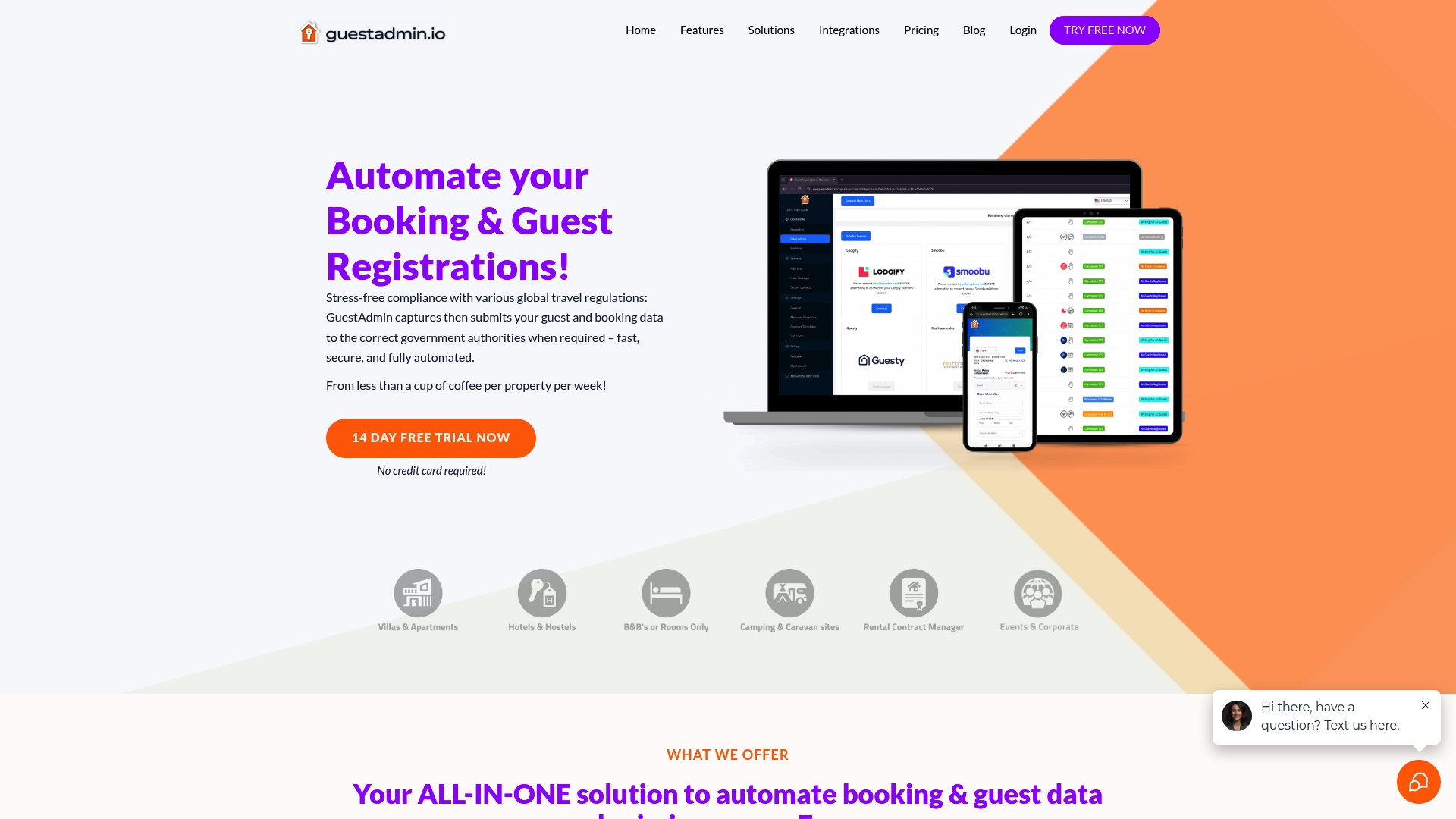
Unlock the power of automation with GuestAdmin.io, the SaaS platform designed specifically to ease these challenges. Streamline compliance by automating guest data collection and submissions, integrate seamlessly with your PMS and OTA systems, and gain full control of multi-property operations with GDPR-secure workflows. Don’t let regulatory complexity hold you back — discover how GuestAdmin.io can transform your property management compliance into a competitive advantage. Visit GuestAdmin.io now to take the next step towards effortless, reliable compliance.
Frequently Asked Questions
What are the key local regulations I should understand for property management compliance?
The key local regulations include guest registration protocols, tax reporting requirements, occupancy limitations, safety standards, and data protection laws. Conduct thorough research on these regulations by consulting municipal websites and attending local workshops to stay compliant.
How can I automate guest data collection to ensure compliance?
To automate guest data collection, implement encrypted data capture platforms and structured digital registration workflows. This reduces manual errors and speeds up registration processes, helping you comply with data privacy regulations effectively.
What steps should I follow to ensure timely submission of guest information?
To ensure timely submission, digitise guest registration immediately upon check-in and use automated reporting platforms. Establish a routine to validate data and maintain documentation, aiming to submit guest details within 24 hours to meet compliance requirements.
How can I integrate my Property Management System with Online Travel Agency platforms?
To integrate your Property Management System with Online Travel Agency platforms, assess compatibility and choose systems with open API capabilities. Implement secure data transfer protocols to ensure seamless booking confirmations and consistent guest information across platforms.
What are best practices for archiving data in compliance with GDPR?
Best practices for GDPR-compliant data archiving include implementing clear data retention policies and creating secure, encrypted storage mechanisms. Regularly review and update your archiving processes to ensure protection of guest information and compliance with data protection rules.
How do I monitor compliance in real-time across multiple properties?
To monitor compliance in real-time, implement automated compliance tracking systems and establish clear reporting mechanisms. Develop customised alert protocols that notify you of potential regulatory gaps, enabling you to respond rapidly and maintain high compliance standards.
7 Comments
Role of Automation in Rentals: Ensuring Effortless Compliance
[…] recognise the significance of automation, especially when navigating complex regulatory landscapes. property management compliance best practices demonstrate how technological solutions can dramatically reduce administrative burdens while […]
Property Management Data Security in Europe – Why It Matters
[…] 7 Property Management Compliance Best Practices Explained […]
Master Compliance Workflow for Property Managers Easily
[…] 7 Property Management Compliance Best Practices Explained […]
Property Management Terminology Explained: Key Terms for Compliance
[…] 7 Property Management Compliance Best Practices Explained […]
Master Multi-Property Management Workflow for Compliance
[…] 7 Property Management Compliance Best Practices Explained […]
Master property owner responsibilities for EU rentals 2026
[…] for unreported income, adding substantial back taxes and interest to your penalty burden. Adopting compliance best practices prevents these cascading consequences. Understanding penalties for non-compliance in your […]
Property management compliance checklist Europe 2026
[…] current with evolving regulations demands continuous monitoring. Compliance best practices emphasise establishing systems that adapt quickly to regulatory changes, protecting your business […]