

TL;DR:
- Hospitality automation uses AI tools to streamline processes and improve operational efficiency in hotels and short-term rentals. Most successful deployments start with back-office systems because they deliver faster ROI and require cleaner data. Proper data management and gradual implementation are key to maximizing automation benefits and ensuring legal compliance.
Hospitality automation is defined as the deployment of AI-powered tools and integrated software platforms that replace or assist labour-intensive processes across hotel and short-term rental operations. The automation trends in hospitality 2026 are not incremental upgrades. They represent a structural shift in how properties manage bookings, comply with regulations, schedule staff, and serve guests. Platforms like Amadeus AI Commerce, CloudNSite’s AI automation stack, and Shiji’s scan-to-pay dining systems are already delivering measurable results. 82% of hospitality technology decision-makers plan to expand AI use this year, with 85% allocating at least 5% of IT budgets to AI tools. That level of investment signals a market that has moved well past experimentation.
What are the leading AI automation technologies in hospitality 2026?
The most impactful automation technologies in 2026 fall into four categories: back-office AI, guest-facing tools, robotics, and dining automation. Each delivers a different return, and understanding the distinction helps you prioritise your investment.
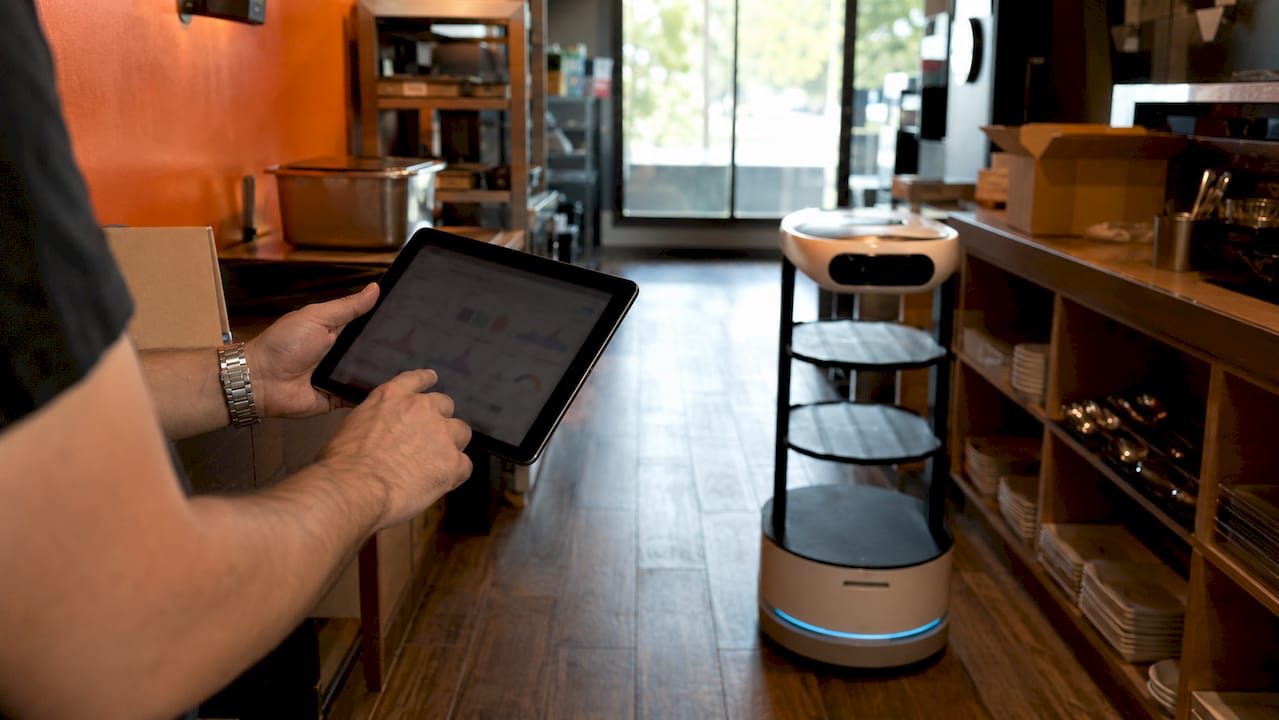
Back-office AI covers dynamic pricing engines, AI-powered labour scheduling, and revenue management systems. These tools connect directly to your property management system (PMS) and adjust rates or staffing levels in real time based on demand signals. They require clean data to function well, but when that condition is met, the results are significant.
Guest-facing automation includes AI chatbots, digital check-in kiosks, and personalised messaging platforms. Amadeus AI Commerce is a notable example: it connects hotels directly to AI travel assistants and AI-driven booking conversion reaches 44.7% in pilots using Generative Engine Optimisation (GEO), compared to 25.9% for traditional search. That gap is large enough to justify a dedicated distribution strategy.
Robotics-as-a-Service (RaaS) is the dominant commercial model for service robots in hospitality. Rather than purchasing hardware outright, operators subscribe to a service that includes maintenance and upgrades. The RaaS market is projected to reach $3.25 billion in US hospitality by 2032. The subscription model removes the risk of technology obsolescence, which has historically deterred adoption.
Dining automation is delivering some of the fastest operational wins. Shiji’s scan-to-pay system saves approximately 15 minutes of labour per cover, with native POS integration eliminating third-party reconciliation problems. At scale across a busy food and beverage operation, those minutes add up to significant cost reductions.
| Technology | Operational impact | Typical deployment | ROI timeline |
|---|---|---|---|
| AI labour scheduling | 20–30% reduction in scheduling time | 4–8 weeks | 2–4 months |
| Dynamic pricing engine | 10–20% revenue uplift | 6–12 weeks | 3–6 months |
| Scan-to-pay dining | 15 min saved per cover | 2–4 weeks | 1–3 months |
| AI chatbot / digital check-in | 30–50% reduction in front desk queries | 4–8 weeks | 3–5 months |
| Robotics-as-a-Service | Reduces delivery and cleaning labour | 8–16 weeks | 6–12 months |
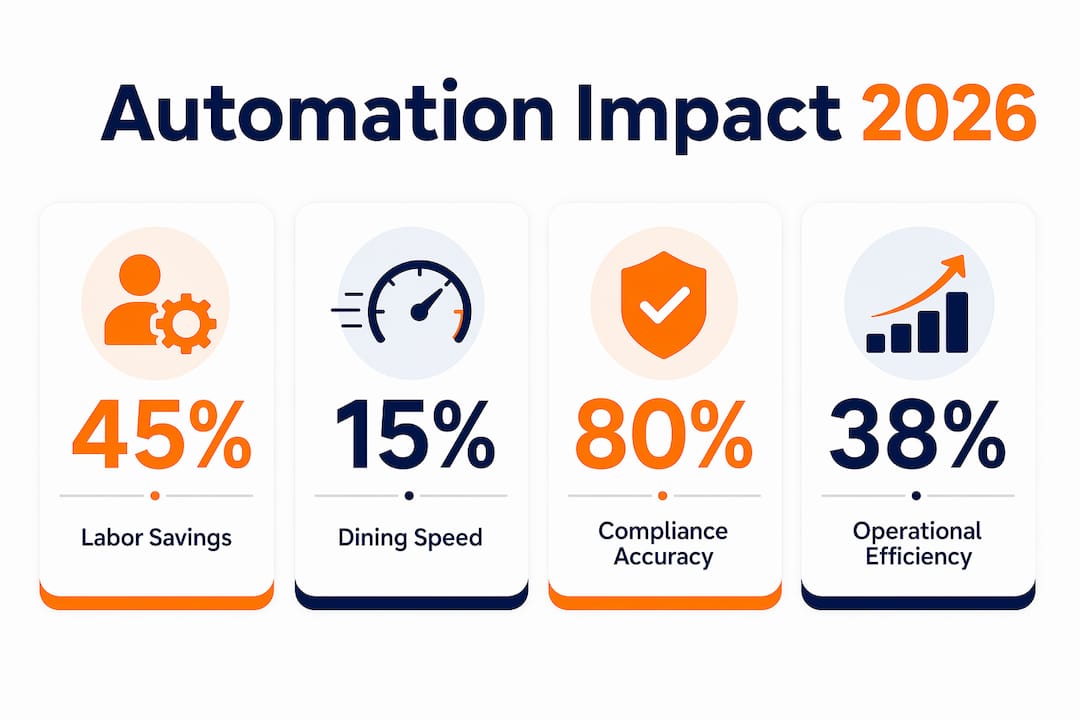
Pro Tip: Start with the technology that touches your highest-volume process first. If you run a food and beverage operation, dining automation pays back faster than robotics. If you manage multiple short-term rentals, AI labour scheduling and compliance automation will deliver the clearest early return.
How does automation improve guest experience and compliance in short-term rentals?
Automation improves guest experience by removing friction from the booking and check-in process, and it improves compliance by removing human error from regulatory reporting. For short-term rental operators, both outcomes matter equally.
On the guest experience side, AI Commerce tools like those from Amadeus connect your property directly to AI travel assistants used by guests during trip planning. This is a meaningful shift in distribution. Guests increasingly discover and book accommodation through conversational AI rather than traditional search engines. Properties that optimise their content for these channels gain a structural advantage in booking conversion.
Hybrid workforce models are also reshaping how operators deliver service. These models combine on-site staff for complex guest interactions with AI and offshore teams handling routine tasks such as enquiry responses, booking confirmations, and review management. This approach addresses staffing shortages without reducing service quality. It is particularly relevant for European short-term rental operators who manage properties across multiple locations.
On the compliance side, automation is becoming a legal necessity rather than a competitive advantage. European regulations require short-term rental operators to capture, process, and submit guest data to government authorities within strict timeframes. Manual processes create risk. Automated compliance reporting for rentals removes that risk by processing guest data and submitting it within required windows, with full GDPR-compliant data handling.
Key benefits of automation for short-term rental operators include:
- Reduced compliance risk: Automated guest data submission meets regulatory deadlines without manual intervention.
- Faster guest onboarding: Digital check-in and pre-arrival messaging reduce time-to-room and improve first impressions.
- Higher booking conversion: AI Commerce channels deliver significantly higher conversion rates than traditional OTA search.
- Consistent service quality: AI handles routine queries at any hour, maintaining response standards without additional staffing.
- Audit-ready records: Automated data archiving creates a complete, searchable record of all guest interactions and submissions.
Pro Tip: Trust architecture matters as much as the technology itself. Guests are more accepting of automated interactions when you disclose clearly how their data is used. A short, plain-language statement at check-in about AI data handling builds confidence rather than concern.
What are the practical steps to implementing hospitality automation in 2026?
The most common reason hospitality AI projects fail is not the technology. Most AI implementation failures stem from integration and data issues. Operators who attempt to deploy AI tools on top of fragmented, inconsistent guest records consistently underperform those who invest in data readiness first.
A phased approach is the most reliable path to successful deployment. The fastest route to labour reduction targets the highest-volume, lowest-variance processes first, using clean data integration before expanding AI use. In practice, this means automating back-office functions before guest-facing ones.
The following steps reflect best practice for operators in 2026:
- Audit your data. Consolidate guest records across your PMS, CRM, and booking platforms. Inconsistent data is the single biggest barrier to effective AI deployment.
- Identify your highest-volume processes. These are the tasks your team repeats most often with the least variation. Booking confirmations, compliance submissions, and pricing updates are strong candidates.
- Deploy back-office automation first. Dynamic pricing and AI labour scheduling deliver the fastest return and carry the lowest guest-facing risk.
- Establish a master data management layer. A governed data layer above your PMS, using a Model Context Protocol, simplifies integration across AI tools and prevents integration debt from accumulating as you add new systems.
- Introduce guest-facing automation in phases. Start with digital check-in and automated messaging before deploying conversational AI or robotics.
- Communicate transparently with guests. Clear disclosures about AI data usage, written in plain language, are now considered a core product feature rather than a legal formality.
- Review and iterate. Set performance benchmarks before deployment and review them at 30, 60, and 90 days. Adjust based on real operational data, not vendor projections.
Properties implementing agent-based automation across five or more processes achieve 38–45% labour hour reductions within 4–8 months. Full deployment post-discovery typically completes in 3–5 months. Those timelines are achievable, but only when data readiness precedes deployment.
For operators managing API integrations across platforms, the architecture decisions made early in the process determine how much flexibility you retain as your technology stack evolves.
How does automation affect labour costs in short-term rentals?
Labour cost reduction is the most quantifiable benefit of hospitality automation, and the evidence from 2026 deployments is consistent. Properties automating five or more back-office processes achieve 38–45% reductions in labour hours on those processes within 4–8 months. That is not a marginal efficiency gain. It is a structural change to the cost base.
The more significant strategic benefit is redeployment. When AI handles scheduling, pricing updates, compliance submissions, and routine guest communications, your on-site team can focus entirely on the interactions that require human judgement. Guest complaints, complex booking changes, and relationship-building with repeat visitors all benefit from human attention. Automation does not replace hospitality. It protects the time needed to deliver it properly.
| Automation domain | Labour hour reduction | Key tool type |
|---|---|---|
| Compliance reporting | Up to 80% of submission time | Automated data capture and submission |
| Labour scheduling | 20–30% scheduling time saved | AI scheduling platforms |
| Dining service | 15 min saved per cover | Scan-to-pay POS integration |
| Guest communications | 30–50% front desk query reduction | AI chatbots and messaging platforms |
| Dynamic pricing | Near-zero manual pricing time | Revenue management systems |
The future of hospitality automation points toward half of all back-office tasks being automated by 2035. Operators who begin building their automation infrastructure now will carry a meaningful cost advantage into that environment.
Pro Tip: Sequence your automation investment by ROI speed, not by novelty. Back-office automation like dynamic pricing and compliance reporting pays back faster than guest-facing AI. Establish your financial case with back-office wins before committing budget to robotics or AI concierge tools.
Key takeaways
Automation in hospitality 2026 delivers the strongest returns when operators prioritise data readiness, begin with back-office processes, and expand to guest-facing tools only after foundational systems are stable.
| Point | Details |
|---|---|
| Data readiness comes first | Clean, unified records across PMS, CRM, and bookings are required before AI deployment. |
| Back-office automation pays fastest | Dynamic pricing, scheduling, and compliance tools deliver ROI within 2–6 months. |
| Labour reductions are substantial | Automating five or more processes cuts labour hours by 38–45% within 4–8 months. |
| Compliance automation is a legal necessity | European short-term rental regulations require timely, accurate guest data submissions. |
| Trust architecture drives guest acceptance | Plain-language disclosures about AI data use improve guest confidence in automated services. |
Why I think most operators are automating in the wrong order
After working closely with property managers across Europe, I have noticed a consistent pattern. Operators get excited about guest-facing technology first. They want the AI concierge, the robot butler, the conversational booking assistant. Those tools are genuinely impressive. They are also the worst place to start.
The operators who see the fastest returns are the ones who fix their data infrastructure before touching anything guest-facing. They consolidate their PMS records, automate their compliance submissions, and get their pricing engine working properly. Only then do they layer in the guest-facing tools. By that point, the back-office savings are already funding the next phase of investment.
The other mistake I see regularly is underestimating integration complexity. Adding a new AI tool to an existing stack without a proper data management layer creates what the industry calls integration debt. You end up with systems that technically connect but do not share data cleanly. The result is manual workarounds that undermine the automation you paid for.
My honest recommendation: treat your short-term rental compliance processes as the first automation priority. They are high-volume, low-variance, and carry real legal risk if done manually. Automating them delivers immediate cost savings and removes regulatory exposure. That is the foundation everything else should be built on.
The operators who will hold a competitive advantage in 2028 are the ones making disciplined infrastructure decisions now, not the ones chasing the most visible technology.
— Alex
How Guestadmin supports automation for short-term rental operators
Property owners managing short-term rentals across Europe face a specific automation challenge: regulatory compliance varies by jurisdiction, deadlines are strict, and the consequences of errors are real. Guestadmin is built to address exactly that problem.
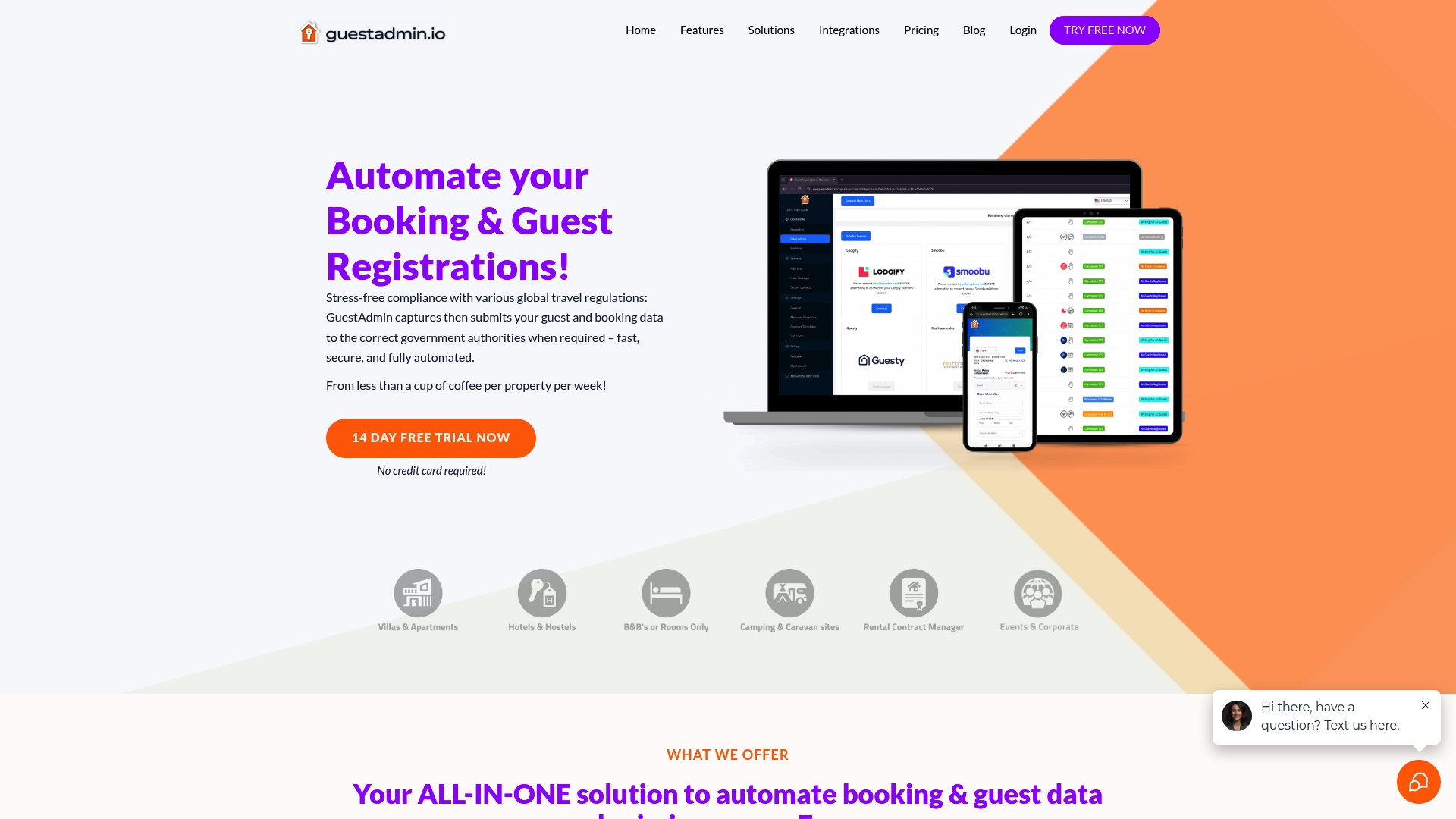
Guestadmin automates the capture, processing, and submission of guest data to government authorities, with submissions completed within 24 hours. The platform integrates with leading PMS and OTA platforms via APIs and webhooks, fits into your existing technology stack without disruption, and provides a real-time booking dashboard so you always know where your compliance stands. For operators managing multiple properties, the multi-property compliance workflow removes the administrative burden that scales with your portfolio. If you are evaluating your options, the property management software comparison is a practical starting point for understanding what the right platform looks like for your operation.
FAQ
What is hospitality automation?
Hospitality automation is the use of AI-powered software and integrated platforms to manage operational tasks such as pricing, scheduling, compliance reporting, and guest communications without manual intervention.
Which automation technology delivers the fastest ROI in 2026?
Back-office automation, specifically dynamic pricing and AI labour scheduling, delivers the fastest return. Properties implementing these tools typically see measurable results within 2–4 months of deployment.
How does automation affect compliance for short-term rental operators?
Automation removes human error from regulatory reporting by capturing and submitting guest data to authorities within required timeframes. This is particularly relevant for European operators subject to diverse national and regional regulations.
What is the biggest risk when implementing hospitality AI?
The biggest risk is deploying AI tools before data readiness is established. Most implementation failures stem from fragmented or inconsistent guest records across PMS, CRM, and booking platforms.
What is AI Commerce and why does it matter for hotels?
AI Commerce, as developed by Amadeus, connects hotels directly to AI travel assistants used by guests during trip planning. Pilots using this approach achieve booking conversion rates of 44.7%, compared to 25.9% for traditional search channels.
One Comment
AI for Restaurants: The Untold Truth | Pip Hospo
[…] is no longer a fringe activity. Recent industry data shows 82% of hospitality technology decision-makers plan to expand their use of AI, with most now […]