

TL;DR:
- Automated compliance uses software to monitor and report regulatory obligations continuously, reducing manual effort. It enhances accuracy, minimizes compliance risks, and scales efficiently across multiple properties and jurisdictions. The system ensures real-time readiness, simplifies reporting, and helps managers maintain compliance effortlessly.
Automated compliance is defined as the use of software systems to continuously monitor, collect evidence for, and report on regulatory obligations, replacing manual, periodic checks. For short-term rental property managers across Europe, the benefits of automated compliance are direct and measurable: less administrative burden, fewer regulatory gaps, and the ability to manage growing portfolios without hiring additional compliance staff. Regulations governing guest data, local registration requirements, and GDPR obligations are tightening across EU jurisdictions. Manual processes simply cannot keep pace. Automated compliance systems, such as those offered by Guestadmin, address this challenge by embedding regulatory adherence into daily operations rather than treating it as a separate, periodic task.
1. How automated compliance reduces manual workload
Automation cuts audit preparation time by up to 70%, freeing property managers from repetitive evidence gathering and manual reporting cycles. That figure represents a genuine shift in how compliance teams spend their working hours. Instead of chasing documents and cross-referencing spreadsheets, managers can focus on risk oversight and guest experience.

Manual compliance relies on periodic effort. Someone must remember to check, gather, and submit. Automated compliance systems run continuously, processing guest data and submitting reports to authorities without human prompting. This is particularly valuable for managers handling multiple properties across different municipalities, where each jurisdiction may have its own submission deadlines and data formats.
The operational benefits extend beyond time savings:
- Automated data capture pulls guest information directly from booking platforms and property management systems, removing the need for manual entry.
- Scheduled submissions send required reports to government authorities within defined windows, reducing the risk of late filings.
- Centralised records store all compliance evidence in one location, making retrieval fast during inspections.
- Audit trails log every action with a timestamp, providing a clear record of what was submitted, when, and by whom.
Pro Tip: Integrate your compliance platform directly with your property management system. Guestadmin connects with major PMS and OTA platforms via API, so guest data flows automatically without any manual re-entry.
2. How automation improves accuracy and reduces compliance risk
Automated evidence collection removes variability and human error, providing consistent, timestamped data suitable for regulatory audits. Human checklists introduce inconsistency. A staff member working under pressure may miss a field, mislabel a document, or submit data in the wrong format. Automated systems apply the same rules every time, without exception.
Automated compliance systems also act as proactive risk-detection engines, identifying issues well before manual audits would surface them. Consider a practical example: a property manager receives a booking through an OTA, but the guest’s identification data is incomplete. An automated system flags this immediately, prompting resolution before the guest checks in. A manual process would likely miss this until an audit revealed the gap, potentially weeks later.
The accuracy advantages are specific:
- Rule-based validation checks every data field against regulatory requirements before submission.
- Continuous monitoring detects policy breaches in guest data handling as they occur, not after the fact.
- Consistent formatting ensures submissions meet the exact technical standards required by each authority.
- Reduced compliance gaps mean fewer instances of missing or incorrect records during inspections.
For managers operating under GDPR, accuracy is not optional. Incorrect or incomplete guest data records carry financial penalties. Automation reduces that exposure significantly by improving audit readiness and evidence quality at every stage of the guest lifecycle. You can read more about EU data privacy compliance and how automation supports it in practice.
3. Scalability across multi-property and multi-jurisdictional portfolios
Automation scales horizontally: adding more regulatory frameworks does not require proportional increases in headcount. This is the defining advantage for property managers with growing portfolios. A manager overseeing five properties in one city faces a manageable compliance load manually. The same manager with 30 properties across three countries faces a task that is practically impossible without automation.
The scalability works because automated systems map controls to regulatory requirements. When a new regulation is introduced, the system extends existing controls to cover it. The manager does not need to hire a compliance officer for each new jurisdiction.
| Approach | Adding a new property | Adding a new regulation | Team size impact |
|---|---|---|---|
| Manual compliance | Duplicate all checklists and processes | Create new manual workflows | Grows proportionally |
| Automated compliance | System extends existing controls | New rule mapped to existing framework | Remains stable |
Unified dashboards give managers a single view of compliance status across all properties. A manager in London can see whether a property in Lisbon has submitted the required guest registration data for the current week, without making a phone call or opening a separate portal. For managers navigating EU regulations alongside local municipal requirements, this centralised visibility is the difference between confident oversight and constant uncertainty. Guestadmin’s multi-property management approach is built specifically for this kind of portfolio complexity.
4. Continuous audit readiness versus periodic manual compliance
Point-in-time manual compliance leaves gaps between audits, creating periods where a property could be non-compliant without anyone knowing. Regulators are increasingly aware of this pattern. Frameworks such as DORA and NIS2 explicitly require continuous operational resilience, not just compliance at the moment of inspection.
Automation transforms compliance from a periodic snapshot into a permanent state. The system collects evidence continuously, scores it for completeness, and flags any gaps in real time. When an inspector arrives, the manager does not scramble to compile records. The evidence is already organised, timestamped, and ready.
The practical advantages of continuous audit readiness include:
- Instant audit reports generated on demand, covering any time period the regulator requests.
- Real-time compliance status visible on a dashboard, so managers know their position at any moment.
- Early warning alerts that notify managers of emerging gaps before they become reportable breaches.
- Reduced inspection stress because the compliance record is always current, not assembled under pressure.
Automation shifts compliance from reactive audit preparation to proactive assurance, lowering organisational stress and reducing the hours spent preparing for external audits. For short-term rental managers who already manage guest relations, maintenance, and pricing simultaneously, removing the compliance scramble has a real impact on day-to-day operations.
Pro Tip: Set up automated alerts within your compliance platform to notify you the moment a submission deadline approaches or a data gap is detected. Guestadmin’s dashboard surfaces these alerts in real time, so nothing falls through the cracks.
Key takeaways
Automated compliance systems deliver their greatest value by making regulatory adherence continuous, accurate, and scalable, rather than periodic, error-prone, and labour-intensive.
| Point | Details |
|---|---|
| Workload reduction | Automation cuts audit preparation time by up to 70%, freeing managers for higher-value tasks. |
| Accuracy gains | Rule-based validation and timestamped evidence remove the human error common in manual checklists. |
| Portfolio scalability | Adding new properties or regulations extends existing controls without growing the compliance team. |
| Continuous readiness | Real-time monitoring means compliance evidence is always current, not assembled before inspections. |
| Cost predictability | Fewer penalties, reduced manual hours, and stable team sizes support more predictable operating costs. |
Why I think most rental managers underestimate automation’s cultural impact
The conversation about automated compliance almost always focuses on time savings and risk reduction. Those benefits are real. But the shift I find most significant, and least discussed, is what happens to the culture of a property management business once compliance becomes continuous.
Manual compliance creates a cycle of anxiety. Managers know an inspection could arrive, they know their records are probably incomplete, and they manage that anxiety by hoping for the best. Automation breaks that cycle. When compliance is embedded in daily operations, it stops being a source of dread and becomes background infrastructure, like accounting software or a booking calendar.
The implementation challenge is real, though. Platforms require initial configuration, staff need to understand what the system does and does not handle, and managers must resist the temptation to treat automation as a complete replacement for human judgement. The best outcomes I have seen come from teams that use automation to handle the repetitive, rule-based work while keeping a person responsible for reviewing flagged exceptions and making decisions that require context.
My honest recommendation: choose a platform that grows with your portfolio. A system that works for five properties should handle fifty without requiring a complete rebuild. That scalability is what separates a genuine long-term solution from a short-term fix. The step-by-step guide to automating hospitality compliance is a practical starting point for managers who want to approach implementation methodically rather than reactively.
— Alex
Guestadmin: automated compliance built for rental managers
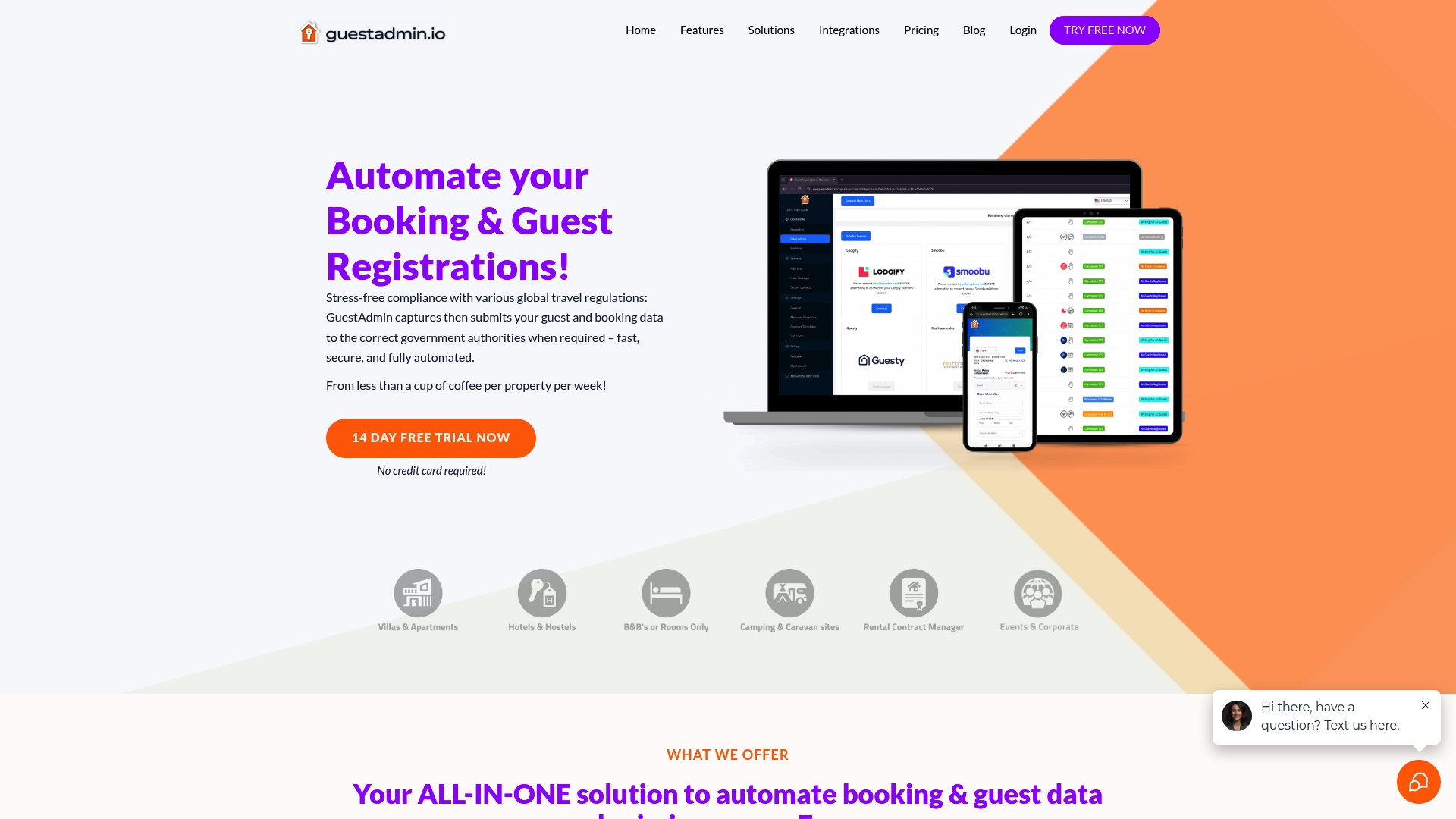
Guestadmin is a SaaS platform designed specifically for short-term rental property managers operating across Europe. It automates the capture, processing, and submission of guest data to government authorities, with AI-powered processing that completes submissions within 24 hours. The platform connects with major PMS and OTA platforms via API, so data flows without manual re-entry.
For managers who want to understand the full regulatory picture before committing to a platform, Guestadmin’s 2026 hospitality regulations guide covers the key obligations across EU jurisdictions in plain language. For those ready to act, the platform’s compliance automation for rental managers page explains exactly how the system works and what onboarding looks like.
FAQ
What are the main benefits of automated compliance for rental managers?
Automated compliance reduces manual workload, improves data accuracy, and provides continuous audit readiness. Managers gain real-time visibility across their portfolio without increasing team size.
How does automation reduce the risk of compliance penalties?
Automated systems validate guest data against regulatory requirements before submission and flag gaps immediately. This removes the human error that most commonly leads to incomplete records and subsequent penalties.
Can automated compliance handle multiple jurisdictions at once?
Automated compliance scales horizontally, meaning existing controls extend to new regulatory frameworks without additional headcount. A single dashboard can display compliance status across properties in different countries simultaneously.
How quickly does automated compliance produce audit-ready evidence?
Platforms with continuous monitoring generate instant audit reports on demand, covering any time period a regulator requests. Evidence is collected and timestamped in real time, so no preparation period is required before an inspection.
Is automated compliance suitable for small portfolios as well as large ones?
Automated compliance delivers value at any portfolio size, but the return increases as the number of properties and jurisdictions grows. Even a manager with a handful of properties benefits from accurate, timely submissions and reduced administrative time.