

TL;DR:
- Secure guest data access involves encrypting, role-based permissions, and legal compliance measures to protect guest information. It emphasizes technical controls like RBAC, encrypted gateways, and audit logs, aligned with GDPR rights and obligations. Implementing structured data flow mapping, strict access management, and automated retention workflows significantly reduces compliance risks and human errors in hospitality.
Secure guest data access is the practice of limiting and protecting guest information through encryption, role-based permissions, and GDPR-compliant processes. In the European hospitality sector, this concept sits at the intersection of data access security and legal obligation. Property owners and managers handling passport scans, payment details, and booking records must apply technical controls such as role-based access control (RBAC), encrypted data gateways, and audit trails. GDPR Articles 15–21 grant guests rights over their own data, and failure to honour those rights carries real regulatory consequences. Understanding what is secure guest data access is the first step towards building a compliant, trustworthy operation.
What is secure guest data access in hospitality?
Secure guest data access is defined as a controlled, auditable system that restricts who can view, edit, or transfer guest information based on their role and legitimate need. The industry term for this discipline is data access governance, and it combines technical architecture with legal compliance procedures.

The core components are encryption, RBAC, and audit logging. Encryption of guest data in transit and at rest is the recognised industry standard as of 2026. This means that passport scans stored in your property management system (PMS) and payment data transmitted during booking are both protected from interception or unauthorised reading.
RBAC restricts access by job function. A housekeeper has no legitimate reason to view passport details or payment records. Under best practice, front desk access is limited to current reservations only. This is not just a security preference. It is a GDPR requirement under the principle of data minimisation.
Audit trails complete the picture. Every access event, whether a staff member views a guest record or an API call retrieves booking data, should be logged with a timestamp and user identifier. These logs are your evidence of compliance during an audit.
PMS access models vs secure data gateways
| Feature | Standard PMS Access | Secure Data Gateway |
|---|---|---|
| Permission granularity | Broad, role-light | Granular, function-specific |
| Encryption at rest | Varies by vendor | Enforced by default |
| Audit logging | Basic or manual | Automated and timestamped |
| PII deletion automation | Rarely included | Configurable retention rules |
| GDPR compliance risk | Higher | Significantly lower |
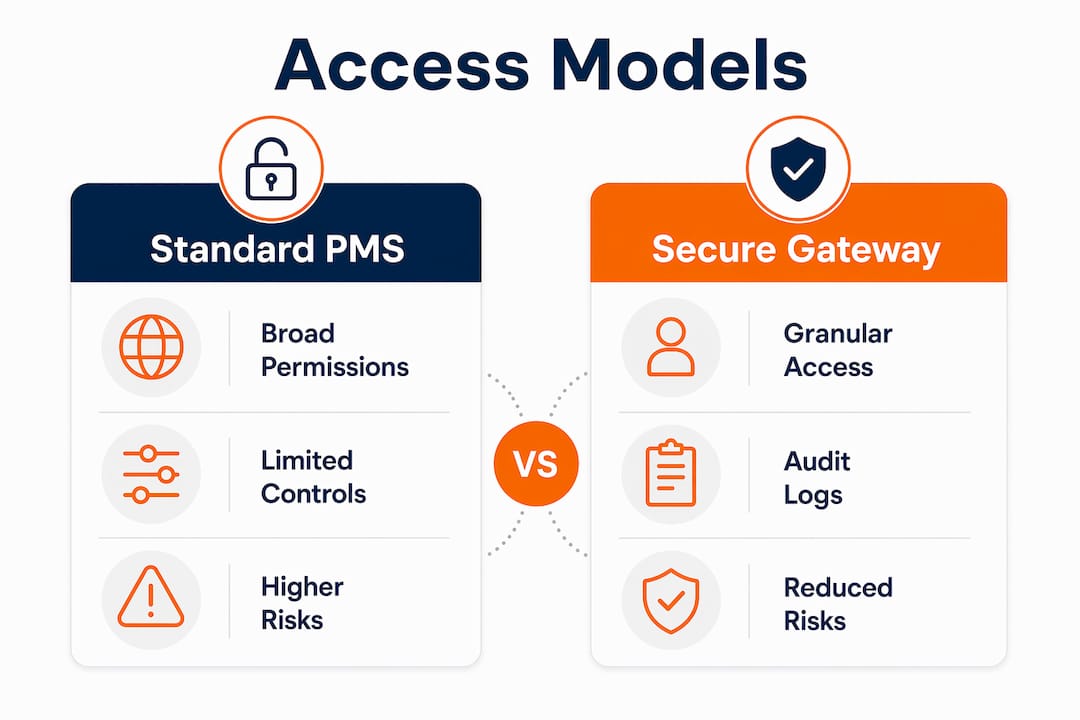
Custom-built secure data gateways acting as controlled entry points reduce compliance risk compared with standard PMS broad permission models. A practical example is using tools like FastAPI and Supabase Vault to encrypt passport data and automate deletion 180 days after checkout.
Pro Tip: Set a calendar reminder to review all active staff permissions every quarter. Stale access rights are one of the most common and easily preventable vulnerabilities in hospitality data systems.
How does GDPR shape guest data privacy policies?
GDPR is the primary legal framework governing guest data protection measures across Europe, and its requirements go well beyond a privacy notice on your website. The regulation grants guests specific rights that you are legally obliged to fulfil within defined timeframes.
Under GDPR Articles 15–21, guests can request access to their data, correction of errors, erasure, or portability to another provider. You must respond within 30 calendar days. That window applies whether you manage one apartment in Lisbon or fifty properties across the Netherlands.
Key GDPR obligations for hospitality operators include:
- Data subject requests: Respond to access, correction, erasure, and portability requests within 30 days, with possible extensions for complex cases.
- Breach notification: Report data breaches to your national supervisory authority within 72 hours of detection. Missing this deadline is an independent violation, regardless of the breach’s severity.
- Data Processing Agreements (DPAs): A DPA must be signed with every third-party vendor handling guest data, covering their security obligations and access limits under Article 28.
- Data mapping: Document every touchpoint where guest data is collected, stored, or shared, from booking platforms to cleaning management apps.
- Retention policies: Define and enforce how long you keep guest records. Indefinite storage is not compliant.
The California Consumer Privacy Act (CCPA) follows a similar rights-based model for US guests, which is worth noting if your property attracts American visitors. However, GDPR remains the binding framework for European operators and their guests.
The practical implication is clear. Compliance is not a one-time task. It requires live, executable workflows that update your PMS, CRM, and marketing platforms in synchrony when a guest exercises their rights. A privacy policy document alone does not constitute compliance.
What operational best practices reduce human error?
Human error and poor network configuration are the leading causes of guest data breaches in hospitality. Regular staff training and recurring security audits are the most effective controls against these risks. Technology alone cannot compensate for a staff member who shares login credentials or clicks a phishing link.
Follow these steps to build a stronger operational foundation:
- Train staff on data handling quarterly. Cover phishing awareness, password hygiene, and the correct procedure for handling a guest data request. Make training mandatory, not optional.
- Segregate your guest Wi-Fi from internal networks. A guest connecting to the same network as your PMS creates a direct pathway to sensitive data. This is a basic but frequently overlooked configuration error.
- Eliminate informal data stores. Unprotected spreadsheets, paper forms, and staff chat messages are primary failure points in hospitality data protection audits. If guest information lives in an Excel file on someone’s desktop, it is a compliance liability.
- Conduct a security audit every six months. Review who has access to what, check for shared logins, and verify that former staff accounts have been deactivated.
- Enforce access expiry. Guest access should follow the principle of least privilege with defined expiry dates. Expired permissions that remain active create significant vulnerabilities. Revoke access immediately when a project or stay ends rather than waiting for a scheduled review.
Pro Tip: Create named guest data roles in your PMS, such as “Front Desk,” “Housekeeping,” and “Finance,” each with pre-defined permission sets. Assigning staff to a role rather than granting individual permissions makes quarterly reviews far faster and more consistent.
How to implement secure guest data access systems
Implementing a reliable system for protecting guest information requires a structured approach across technology, process, and vendor management. The starting point is always a data flow audit.
- Map every data touchpoint. Identify where guest data enters your operation (booking platforms, check-in forms, OTAs), where it is stored (PMS, cloud drives, paper files), and where it is shared (cleaning apps, local authorities, marketing tools). Effective GDPR compliance depends on comprehensive mapping of guest data flows through all touchpoints.
- Select a PMS with granular permissions. Not all property management systems offer the same level of access control. Prioritise platforms that support role-based permissions, encrypted storage, and audit logging as standard features rather than add-ons.
- Use a secure data gateway as a control point. Rather than allowing direct database access, route all data requests through a governed API layer. This single control point enforces encryption, logs every request, and applies retention rules automatically.
- Automate retention and deletion workflows. Manual deletion of guest records is unreliable. Automated workflows that delete or anonymise data after a defined retention period are both more consistent and more defensible during an audit.
- Sign DPAs with all vendors. Every booking platform, channel manager, and cleaning app that touches guest data requires a signed Data Processing Agreement. Keep a register of these agreements and review them annually.
- Verify vendor compliance. Signing a DPA is not sufficient on its own. Ask vendors for their ISO 27001 certification, penetration testing reports, or SOC 2 attestations. A vendor’s security posture directly affects your own compliance standing.
The operational benefits extend beyond compliance. When guest data is well-governed, your team spends less time resolving data errors, responding to access requests, and managing audit queries. Good data security in hospitality is also good operations.
Key takeaways
Secure guest data access requires encryption, role-based controls, and executable GDPR workflows working together across every system that touches guest information.
| Point | Details |
|---|---|
| Define access by role | Apply RBAC so each staff member sees only the data their job requires. |
| Encrypt data everywhere | Protect guest information both in transit and at rest as a non-negotiable baseline. |
| Meet GDPR deadlines | Respond to data subject requests within 30 days and report breaches within 72 hours. |
| Eliminate informal data stores | Remove spreadsheets, paper forms, and chat logs from your data handling processes. |
| Automate retention workflows | Use automated deletion rules to remove guest records after the defined retention period. |
Why data architecture matters more than policy documents
I have reviewed compliance setups for hospitality operators across Europe, and the pattern is consistent. Most properties have a privacy policy. Far fewer have a working data architecture that actually enforces it.
The uncomfortable truth is that a well-worded privacy notice does nothing to prevent a housekeeper from accessing passport scans, or a former employee’s account from remaining active for months after they leave. Policy documents describe intent. Architecture determines what actually happens.
Legacy PMS platforms are a particular concern. Many were built before GDPR existed and were not designed with data minimisation in mind. Their permission models are broad, their audit logs are shallow, and their API integrations often grant third-party tools far more access than those tools need. I have seen channel managers with read access to full guest profiles when they only needed booking dates and room numbers. That is API over-privilege, and it is a genuine compliance risk that most operators do not know they have.
The emerging response to this is zero-trust architecture, where no system or user is trusted by default and every access request is verified in context. Paired with AI-assisted monitoring that flags unusual access patterns in real time, this approach is moving from enterprise IT into hospitality SaaS. It is not science fiction. Platforms are already building these capabilities.
My view is straightforward. Treat guest data security with the same seriousness you apply to physical guest safety. You would not leave a master key unattended. You should not leave a shared admin login unreviewed. The risks to guest data are just as real, and the regulatory consequences are considerably more expensive.
— Alex
How Guestadmin supports secure guest data management
Managing guest data securely across multiple properties and jurisdictions is genuinely complex. Guestadmin is built specifically to reduce that complexity for European property owners and short-term rental managers.
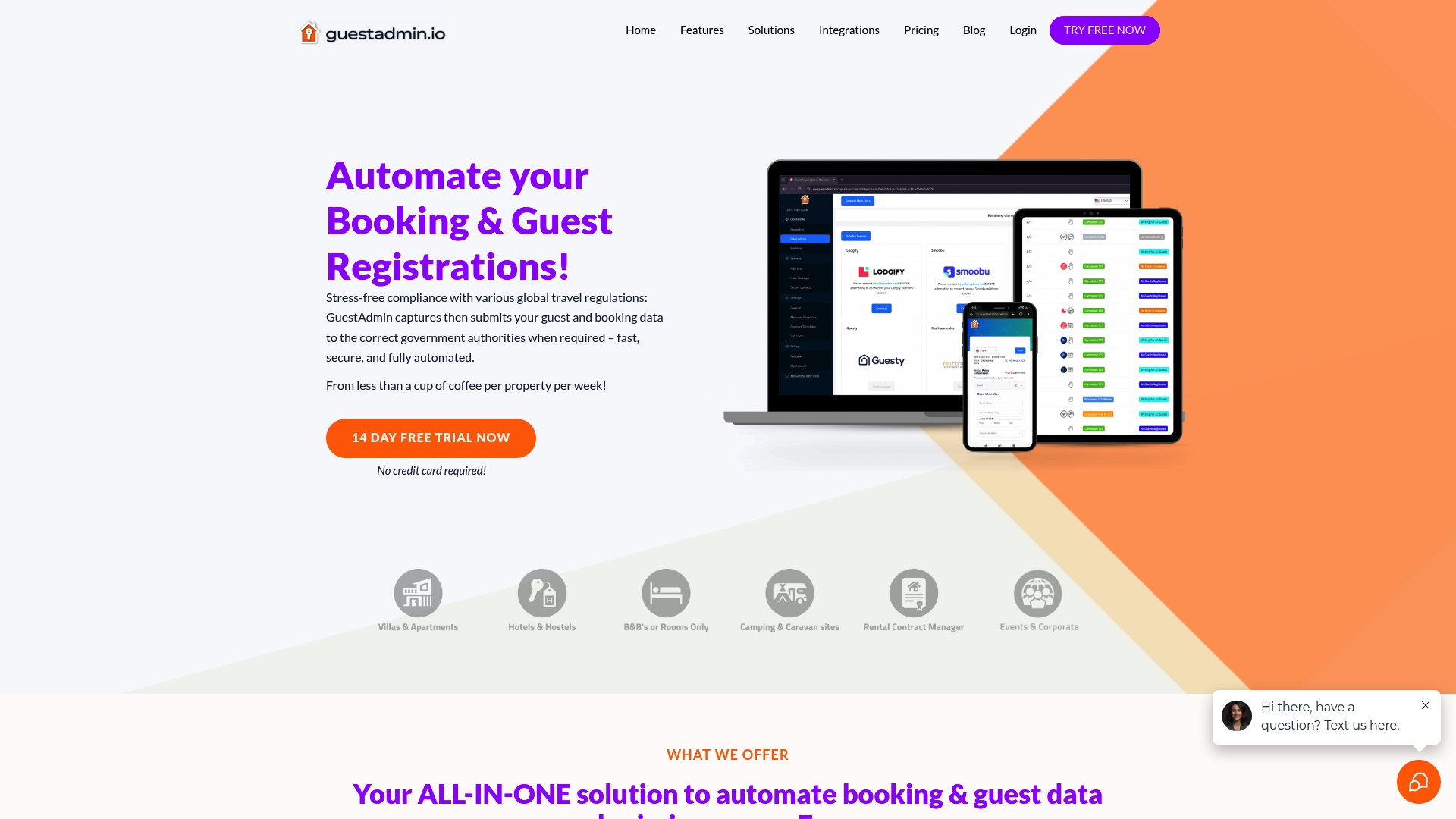
The platform automates GDPR-compliant guest registration, processes and submits data to the relevant authorities within 24 hours, and integrates directly with your existing PMS and OTA platforms. Every data interaction is governed, logged, and protected. Guestadmin also supports signed Data Processing Agreements and provides secure guest data processing workflows that keep your operation compliant without adding administrative burden. If you are ready to move beyond spreadsheets and manual processes, explore how Guestadmin handles short-term rental compliance from registration to retention.
FAQ
What is secure guest data access?
Secure guest data access is the controlled, encrypted management of guest information, restricting who can view or use that data based on their role and legitimate need. It combines technical measures such as RBAC and encryption with legal compliance procedures under GDPR.
How do i protect guest data under GDPR?
Encrypt guest data in transit and at rest, apply role-based access controls, sign Data Processing Agreements with all vendors, and respond to data subject requests within 30 calendar days. Breach notification to your national supervisory authority is required within 72 hours of detection.
What are the biggest risks to guest data security?
Human error and informal data stores are the leading risks, including unprotected spreadsheets, paper records, and shared login credentials. Improper network segregation, where guest Wi-Fi shares infrastructure with internal systems, is also a common and serious vulnerability.
What is a data processing agreement and do i need one?
A Data Processing Agreement (DPA) is a contract required under GDPR Article 28 between a data controller and any third-party vendor that processes guest data on their behalf. Every booking platform, channel manager, and cleaning app handling guest information requires a signed DPA.
How long should i keep guest data?
GDPR requires that personal data is kept only as long as necessary for its original purpose. For hospitality operators, this typically means defining a specific retention period, such as 180 days post-checkout, and automating deletion or anonymisation at that point to remain compliant.