

TL;DR:
- Rental property liability is the legal responsibility landlords have for injuries or damages caused by unsafe conditions. Managing it requires proper insurance, timely repairs, documentation, and tenant insurance requirements to reduce financial risks. Proactive operational practices and layered protections help landlords limit liability and safeguard their assets effectively.
Rental property liability is the legal and financial responsibility a landlord holds for injuries or property damage that occur on their rental premises due to unsafe conditions or negligence. In practice, this means that if a tenant slips on a broken staircase or a guest is harmed by a faulty smoke detector, the property owner can be held legally accountable. Understanding what is rental property liability, and how to manage it, is not optional for European landlords. It is the foundation of a sustainable rental business, particularly as short-term rental regulations across Europe continue to tighten in 2026.
What does rental property liability insurance cover?
Landlord liability insurance, the standard industry term for what many call rental property insurance, is the primary financial shield against these risks. Standard policies cover bodily injury to tenants, guests, and contractors, property damage caused by the landlord’s negligence, and legal defence expenses. Some policies extend to non-physical injuries such as wrongful eviction or libel claims. That breadth matters because a single incident can generate costs across multiple categories simultaneously.
Coverage limits vary significantly, and choosing the wrong level is a common and costly mistake. Basic policies start at £100,000 in liability limits, but most legal professionals recommend £300,000 to £1,000,000 given the scale of modern defence costs. Defence expenses alone can reach £30,000 to £50,000 per injury lawsuit, before any settlement or judgement is factored in. That figure alone makes a low-limit policy a false economy.
Landlord insurance is not the same as homeowners insurance, and the distinction is critical. Homeowners insurance does not cover rental properties, and insurers can retroactively deny claims if a property is rented without switching to the correct policy. Landlord insurance also typically includes lost rental income protection, reimbursing rent if the property becomes uninhabitable. For a property generating £1,800 per month, that protection can cover up to £21,600 over twelve months.
Key coverage areas to confirm with your insurer:
- Bodily injury: covers medical costs and legal fees if a tenant or visitor is injured on the property
- Property damage: covers damage caused by the landlord’s negligence, not tenant misuse
- Legal defence: pays solicitor and court fees regardless of the outcome
- Non-physical injury extensions: wrongful eviction and defamation claims, where available
- Environmental and habitability risks: mould and lead paint exposure often require broad form coverage or special endorsements, as basic policies exclude them
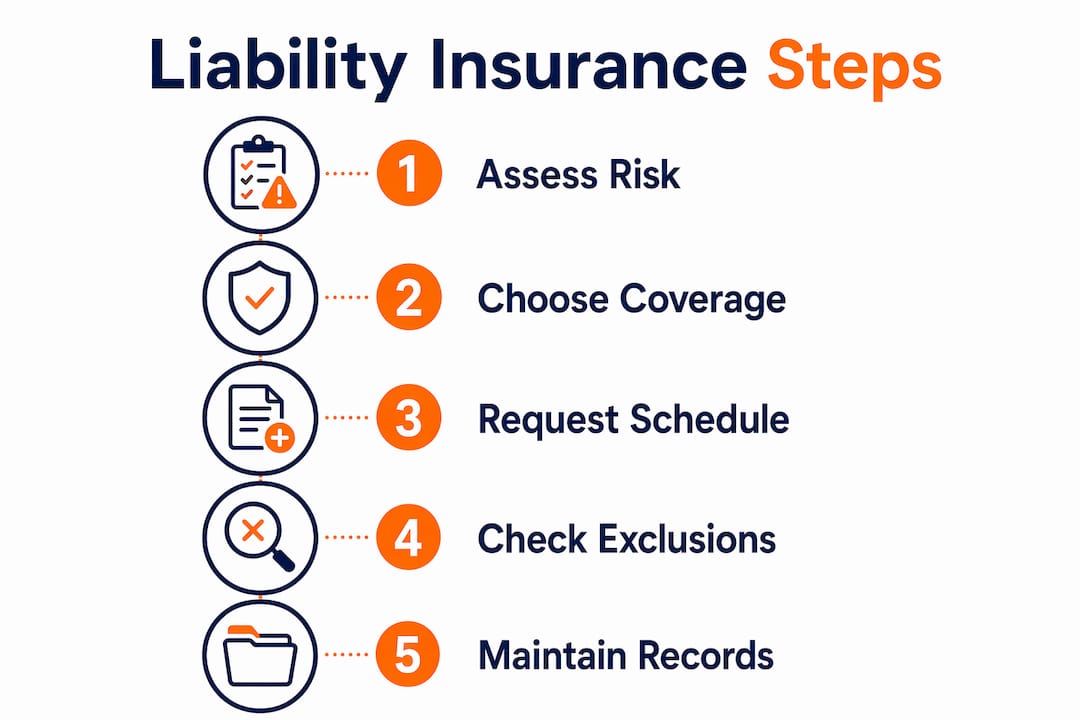
Pro Tip: Always request a policy schedule in writing and check explicitly for habitability exclusions. Many landlords discover gaps only after a claim is filed.
What legal duties do landlords have to minimise liability?
The legal concept underpinning landlord liability across European jurisdictions is the “duty of care.” This standard requires landlords to address hazards they know about, or reasonably should know about, through routine and reasonable maintenance. Negligence is legally established via actual or constructive notice of a hazard. In plain terms, if a broken handrail was reported and not repaired, liability is very difficult to contest.
The specific obligations landlords must meet typically include:
- Structural safety: stairs, railings, walkways, and load-bearing elements must be maintained to the standard required by local building regulations
- Environmental safety: functioning fire detectors, carbon monoxide alarms, and freedom from mould or toxic materials are legal requirements in most European countries
- Security provisions: adequate locks, lighting in communal areas, and secure entry points reduce both physical risk and legal exposure
- Routine inspections: scheduled property checks create a documented record of proactive care and catch hazards before they cause harm
- Prompt hazard repairs: once a hazard is identified, delay in remediation is the single fastest route to a successful negligence claim against a landlord
Regulatory requirements vary across European jurisdictions. Short-term rental regulations in Europe differ by country and sometimes by municipality, but the reasonable care standard is consistent across most legal frameworks. A landlord in Portugal and a landlord in the Netherlands face different specific rules but the same core obligation: know your property’s condition and act on it.
Pro Tip: Schedule inspections at fixed intervals, at least every six months, and record them with date-stamped photographs. This documentation is your primary legal defence if a claim is ever made.

How can landlords limit liability through tenant responsibilities?
Tenant liability risks and landlord liability are separate legal categories, but they interact directly. A tenant who causes damage to a neighbour’s property, or injures a visitor through their own negligence, can generate a claim that escalates to the landlord if the tenant has no insurance. Requiring tenants to carry renters insurance with at least £100,000 in liability coverage significantly reduces this risk. Tenant insurance shifts minor claims to the tenant’s insurer, which limits the frequency of claims directed at the landlord.
The practical benefits of mandating tenant insurance in a lease agreement include:
- Reduced claim frequency: tenant insurers handle minor incidents before they become landlord lawsuits
- Clearer liability boundaries: a lease clause specifying tenant insurance creates a documented allocation of responsibility
- Lower litigation risk: landlords with insured tenants face fewer direct legal actions for tenant-caused incidents
- Stronger negotiating position: if a dispute arises, a tenant with active insurance is more likely to resolve it through their own policy
Incorporating an insurance requirement into a lease is straightforward. State the minimum liability limit, require proof of an active policy before move-in, and request annual renewal confirmation. This single clause can materially reduce your exposure over the life of a tenancy.
What are the financial risks and costs of rental property liability?
The financial exposure from a single liability claim can exceed what most landlords anticipate. Defence costs for a slip-and-fall or hazard lawsuit typically reach £30,000 to £50,000, and that is before any settlement or court judgement. Judgements can exceed standard policy limits, leaving the landlord personally liable for the remainder. This is where umbrella policies become relevant: they provide additional coverage above the primary policy limit, typically in increments of £1,000,000.
| Risk category | Typical financial exposure | Mitigation tool |
|---|---|---|
| Bodily injury defence | £30,000–£50,000 per lawsuit | Landlord liability policy |
| Judgement above policy limit | Potentially unlimited | Umbrella policy |
| Lost rental income | Up to £21,600 per year (at £1,800/month) | Landlord insurance income clause |
| Habitability claims | Variable, often excluded from basic policies | Broad form or endorsed coverage |
| Homeowners policy denial | Full claim value, uncovered | Switch to landlord policy immediately |
Landlord insurance costs approximately 25% more than homeowners insurance. That premium difference is modest relative to the financial risk of an uncovered claim. The most dangerous scenario is a landlord who continues using a homeowners policy after converting a property to a rental. Insurers can and do deny claims retroactively in this situation, leaving the owner fully exposed.
For European short-term rental operators, the financial risk is compounded by 2025 UK rental law changes and equivalent regulatory updates across the continent. Non-compliance with registration or reporting requirements can itself generate fines, adding a regulatory liability layer on top of the civil liability risk.
Best practices for reducing liability and protecting your assets
Effective liability protection for rentals requires a layered approach. No single measure is sufficient on its own. The most resilient landlords combine legal structure, insurance, documentation, and tenant management into a coherent system.
- Hold properties in separate legal entities: placing rental properties in LLCs or equivalent corporate structures isolates liability to individual properties and protects personal assets from claims. This is a secondary protection that works alongside insurance, not instead of it.
- Maintain meticulous records: digital documentation of inspections, maintenance requests, repairs, and tenant communications is decisive evidence in court. A landlord who can produce a timestamped repair log is in a fundamentally stronger legal position than one who cannot.
- Review insurance annually: coverage limits that were adequate three years ago may be insufficient today. Property values, rental income, and litigation costs all change. Annual reviews with your broker catch gaps before they matter.
- Require tenant insurance: as discussed, this is one of the highest-return risk management steps available to a landlord. The administrative effort is minimal and the liability reduction is material.
- Use compliance automation tools: platforms like Guestadmin automate guest data capture, regulatory reporting, and document management. For short-term rental operators managing multiple properties across European jurisdictions, this reduces the risk of compliance failures that can themselves trigger liability.
- Respond to incidents immediately: when a hazard is reported or an incident occurs, document it, act on it, and communicate with the affected party in writing. Delay and silence are the two behaviours most likely to escalate a manageable incident into a lawsuit.
For landlords managing properties across multiple European countries, legal compliance for rentals in Europe requires tracking jurisdiction-specific rules alongside the universal duty of care standard.
Key takeaways
Rental property liability is a landlord’s legal responsibility for harm caused by unsafe conditions, and managing it requires layered protection across insurance, legal structure, documentation, and tenant policy.
| Point | Details |
|---|---|
| Insurance coverage limits | Choose £300,000–£1,000,000 in liability coverage; basic limits rarely cover full defence and judgement costs. |
| Switch from homeowners policy | Convert to landlord insurance immediately upon renting; homeowners policies can be denied retroactively. |
| Duty of care standard | Address hazards promptly and document every inspection; constructive notice of a hazard creates legal liability. |
| Tenant insurance requirement | Require at least £100,000 in tenant liability coverage to reduce claims directed at the landlord. |
| Layered asset protection | Combine insurance, LLC structures, and digital records for the strongest possible legal defence. |
Why landlords consistently underestimate liability risk
Most landlords I speak with think of liability as an insurance problem. Buy a policy, tick the box, move on. That framing is the root cause of most of the costly surprises I see. Insurance is necessary but it is not sufficient. The real risk sits in the gap between what a policy covers and what a court can award, and in the administrative failures that give insurers grounds to deny claims entirely.
The landlords who manage liability well treat it as an operational discipline, not a financial product. They inspect properties on a schedule, not when something breaks. They document everything, not because they expect litigation, but because documentation changes the economics of litigation. A claimant’s solicitor assesses the strength of a case before filing. A landlord with clean records is a less attractive target than one with none.
The European short-term rental market adds a layer that long-term landlords rarely face: rapid guest turnover, cross-border regulatory requirements, and the reputational risk of a public incident on a booking platform. Hospitality compliance is not separate from liability management. It is part of the same system. A landlord who automates guest registration and regulatory reporting is also building the audit trail that supports a legal defence.
My honest view is that the landlords most at risk are not the ones ignoring insurance. They are the ones who bought a policy years ago and have not looked at it since. Review your coverage, check your legal structure, and make tenant insurance a lease requirement. Those three steps, done properly, change your liability profile more than any single insurance product.
— Alex
How Guestadmin supports compliance and reduces liability risk
Managing liability across multiple European properties means keeping pace with registration requirements, guest data obligations, and regulatory reporting, all at once.

Guestadmin automates the compliance tasks that create liability exposure when they slip. The platform captures and submits guest data to the relevant authorities within 24 hours, maintains a secure digital archive of all records, and integrates with major property management and booking platforms. For landlords who want a clear audit trail without manual administration, the step-by-step compliance guide is a practical starting point. Reducing administrative gaps is one of the most direct ways to reduce legal exposure in the European short-term rental market.
FAQ
What is rental property liability in simple terms?
Rental property liability is a landlord’s legal responsibility to compensate tenants, guests, or third parties for injuries or damages caused by unsafe conditions on the property. It arises when a landlord fails to meet the duty of care standard.
Does landlord insurance cover all liability claims?
Standard landlord insurance covers bodily injury, property damage, and legal defence, but basic policies exclude habitability claims such as mould or lead paint exposure. Broad form coverage or specific endorsements are required for full protection.
Is tenant insurance a legal requirement in Europe?
Tenant insurance is not universally mandated by law across Europe, but landlords can and should require it as a lease condition. Requiring at least £100,000 in tenant liability coverage materially reduces the risk of claims escalating to the landlord.
What happens if I rent a property on a homeowners insurance policy?
Insurers can deny claims retroactively if a property is rented without converting to a proper landlord policy. The landlord becomes personally liable for the full cost of any uncovered claim.
How does an umbrella policy help with rental property liability?
An umbrella policy provides additional liability coverage above the primary landlord policy limit, typically in £1,000,000 increments. It protects personal assets when a court judgement exceeds the standard policy limit.