

Managing short-term rentals across Europe comes with more than just tending to guest comforts. Every booking means collecting and protecting sensitive guest information while staying on the right side of regulations like GDPR. Failing to prioritise data security and privacy risks hefty fines, reputational harm, and legal complications. Understanding how to guard personal data—using both technical solutions and good policies—gives you a robust foundation to keep both guests and your business safe.
Table of Contents
- Defining Data Security In Property Management
- GDPR And Legal Duties For Guest Data
- How SaaS Platforms Secure Guest Information
- Risks Of Non-Compliance And Common Failures
- Best Practices For Hospitality Data Protection
Key Takeaways
| Point | Details |
|---|---|
| Data Security Definition | Data security in property management encompasses the protection of guest information, payment details, and identification documents from unauthorised access and misuse. |
| GDPR Compliance | Understanding and adhering to GDPR obligations is essential for property managers to avoid significant fines and maintain guest trust. |
| Three Pillars of Data Handling | Effective data security relies on technical measures, organisational policies, and continuous improvement to safeguard personal data. |
| Vendor Management | Ensure that third-party data processors have robust security measures and GDPR compliance in place to mitigate legal risks. |
Defining Data Security in Property Management
Data security in property management isn’t just about protecting passwords or locking filing cabinets. It’s about safeguarding guest information, booking records, payment details, and identification documents from unauthorised access, theft, and misuse.
For short-term rental operators across Europe, this responsibility carries real weight. Your guests trust you with their personal data during their stay, and regulatory bodies expect you to protect it rigorously.
What Data Security Actually Means
Data security encompasses three core protective measures:
- Confidentiality: Only authorised people can access guest data (encryption, access controls)
- Integrity: Data remains accurate and unaltered (preventing tampering or corruption)
- Availability: Information is accessible when legitimate users need it (system reliability)
Information security risk management helps property managers identify potential vulnerabilities and address them through both organisational policies and technical safeguards. This ongoing process ensures personal data remains protected against evolving cyber threats.
Think of it this way: a guest’s name and passport number in an unencrypted spreadsheet stored on your laptop represents a security failure. That same information encrypted, backed up securely, and accessible only to authorised staff represents data security in action.
Why This Matters for Your Business
Compromised guest data can trigger serious consequences:
- Identity theft affecting your guests
- Regulatory fines under GDPR and local laws
- Reputational damage that costs bookings
- Legal liability for negligent data handling
European regulations demand that property managers implement protective measures proportionate to the risks involved. Data breaches aren’t hypothetical—they happen when systems lack proper safeguards.
Treating data security as optional is treating your guests’ personal information as disposable.
Your responsibility begins the moment a guest provides their details and continues until you securely delete records according to legal requirements.
The Three Pillars of Secure Data Handling
Effective data security rests on three interconnected elements:
- Technical measures: Encryption, firewalls, secure databases, multi-factor authentication
- Organisational measures: Access policies, staff training, incident response procedures
- Continuous improvement: Regular audits, monitoring, adaptation to new threats
Each pillar supports the others. Strong encryption means nothing if staff share passwords. Access controls fail if systems aren’t monitored for breaches.

Pro tip: Start by inventorying all the guest data you collect—where it’s stored, who accesses it, and for how long—then implement protections accordingly.
GDPR and Legal Duties for Guest Data
The General Data Protection Regulation (GDPR) isn’t optional guidance—it’s a legal requirement that applies to every property manager collecting guest information in Europe. Failing to comply can result in fines up to €20 million or 4% of annual turnover, whichever is higher.
For short-term rental operators, understanding your GDPR obligations is non-negotiable. Your guests’ names, contact details, identification numbers, and payment information are personal data that require rigorous protection and lawful handling.
Your Core Legal Obligations
GDPR imposes specific duties on property managers as data controllers:
- Establish a lawful basis for processing guest data (contractual necessity, legal obligation, or consent)
- Provide transparency notices explaining how you collect, use, and protect personal information
- Implement data protection by design—security measures built into your systems from the start
- Maintain records of processing activities to demonstrate compliance
- Respond to data subject requests within 30 days (access, correction, deletion)
Understanding lawful bases for data processing helps property managers determine which legal justification applies to each type of guest data collected. Most guest information is processed on the basis of contractual necessity—you need their details to complete their booking.
Personal Data in Property Management
Guest data includes far more than contact information. Personal data encompasses:
- Names, email addresses, phone numbers
- Identification document numbers (passports, national ID cards)
- Payment information and financial records
- Booking history and travel patterns
- IP addresses and device information
Each data point carries responsibility. A leaked passport number can enable identity theft. Unencrypted payment records expose guests to fraud. Your systems must protect all of it.
Your legal duty to protect guest data doesn’t end when they check out—it continues until you securely delete the information according to retention requirements.
Third-Party Data Processors
Most property managers rely on external tools for bookings, payments, and communication. These companies become data processors, and you must have written agreements confirming they comply with GDPR.
Before using any platform, verify:
- They have a Data Processing Agreement in place
- They implement appropriate security measures
- They don’t transfer data outside the European Economic Area without legal safeguards
- They can demonstrate their own GDPR compliance
Using unvetted third parties—even major platforms—without proper agreements exposes you to significant legal risk.
Responding to Data Breaches
If you discover unauthorised access to guest data, you must notify authorities within 72 hours and inform affected individuals without undue delay. Notification delays trigger additional penalties.
Pro tip: Document your data handling practices, security measures, and vendor agreements now—this evidence of compliance becomes essential if authorities investigate a breach.
How SaaS Platforms Secure Guest Information
Modern SaaS platforms designed for property management handle sensitive guest data daily. Unlike spreadsheets or manual systems, purpose-built platforms implement multiple layers of security to protect information from unauthorised access, breaches, and cyber threats.
The difference matters significantly. A cloud-based property management solution with encryption, access controls, and regular audits offers far better protection than storing guest details in unencrypted files on your computer.
Here’s a summary of key differences between manual record keeping and modern SaaS platforms for property management:
| Aspect | Manual Systems | SaaS Platforms |
|---|---|---|
| Data Protection | Unencrypted files, minimal safeguards | Encryption, access control layers |
| Regulatory Compliance | Often incomplete or undocumented | Automated compliance tracking |
| Audit Trails | Rarely available | Comprehensive access logs |
| Risk of Data Breach | High, due to weak controls | Lower, with robust technical measures |
Technical Security Measures
Reputable SaaS platforms implement core technical safeguards:
- Encryption in transit: Data moving between your devices and servers is encrypted using secure protocols
- Encryption at rest: Guest information stored on servers remains encrypted, rendering it useless if accessed unauthorised
- Access controls: Only authorised staff members can view specific guest records
- Multi-factor authentication: Passwords alone don’t grant access—additional verification steps are required
- Regular security audits: Third-party experts test systems for vulnerabilities
Encrypted data storage and secure authentication represent standard practices for SaaS platforms operating under GDPR requirements. These technical measures prevent guest information from being readable even if servers are compromised.
Organisational Safeguards
Technology alone doesn’t secure data. SaaS platforms also implement organisational practices:
- Staff training: Employees understand data protection responsibilities
- Access logs: Every data access is recorded and monitored
- Incident response plans: Procedures exist for detecting and responding to breaches
- Data retention policies: Guest information is automatically deleted after required periods
- Compliance documentation: Platforms maintain records proving GDPR compliance
These practices ensure security extends beyond software into daily operations.
Why This Matters for Your Business
Using a secured SaaS platform protects you in multiple ways:
- Guest data remains confidential and tamper-proof
- You demonstrate due diligence if authorities investigate
- Breach liability shifts partially to the platform provider
- You can focus on managing properties, not security infrastructure
A SaaS platform with proper security measures proves you took reasonable steps to protect guest data—essential evidence if a breach occurs.
Cross-Border Data Transfer Compliance
European regulators scrutinise how SaaS platforms transfer guest data internationally. Legitimate platforms ensure data remains within the European Economic Area or use approved transfer mechanisms like Standard Contractual Clauses.
Before selecting any platform, confirm where their servers are located and how they handle international data transfers.
Pro tip: Verify that your SaaS provider has a Data Processing Agreement in place and can provide audit reports demonstrating GDPR compliance before storing guest information.
Risks of Non-Compliance and Common Failures
Non-compliance with data protection regulations isn’t a minor administrative oversight. It’s a business-threatening problem that costs money, damages reputation, and creates legal exposure for property managers operating in Europe.
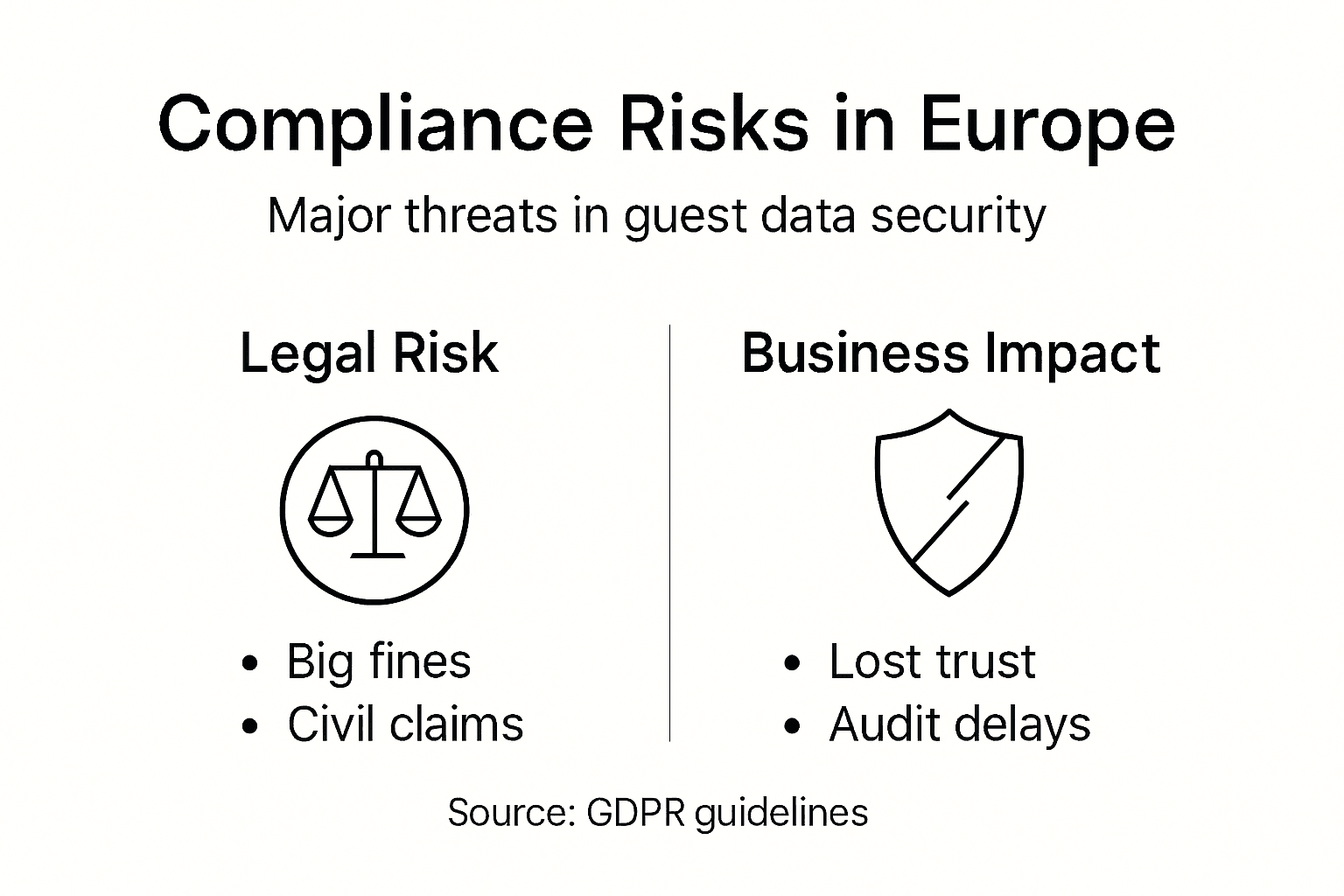
Many short-term rental operators underestimate these risks. They assume small fines or think “it won’t happen to us.” Reality is harsher.
Financial Penalties That Sting
GDPR fines are substantial and structured in tiers. The maximum penalty reaches €20 million or 4% of annual turnover—whichever is higher. Lesser violations trigger €10 million or 2% of turnover.
But even “minor” breaches carry real costs. GDPR non-compliance risks include significant financial penalties, alongside operational disruptions and reputational damage that compounds the financial impact.
For a property management business, these fines aren’t abstract numbers. They represent months or years of revenue disappearing in regulatory sanctions.
Operational Disruptions and Audits
Non-compliance triggers regulatory investigations. Authorities conduct audits, demand documentation, and require immediate corrective actions. These processes consume time and resources across your entire business.
Investigations often reveal additional violations, snowballing the original problem. What started as one complaint becomes multiple regulatory inquiries.
Reputational Damage That Lasts
Guests research property managers before booking. A public data breach or regulatory fine becomes searchable information that deters new bookings.
Trust, once lost, is remarkably difficult to rebuild. Negative reviews from concerned guests spread quickly through booking platforms.
One data breach can eliminate months of bookings and permanently alter how potential guests perceive your business.
Common Failures That Lead to Breaches
Most non-compliance stems from predictable oversights:
- Unencrypted guest data stored locally or emailed between staff
- No clear data retention policies—keeping records indefinitely
- Missing Data Processing Agreements with third-party platforms
- Staff lacking training on data protection responsibilities
- No incident response procedures when breaches occur
- Inadequate access controls allowing any employee to view all guest records
These aren’t technical secrets. They’re basic organisational practices that many property managers skip.
Compare the main types of data security failures and their long-term impact:
| Failure Type | Immediate Effect | Long-Term Consequence |
|---|---|---|
| Data Breach | Guest privacy violated | Legal action, loss of bookings |
| Poor Retention Policy | Excess data stored | Increased liability, higher audit risk |
| Negligent Staff | Unauthorised data access | Reputational damage, regulatory fines |
| Vendor Mismanagement | Data leaks via third parties | Challenging investigations, damages |
Legal Liability Beyond Fines
Affected guests can sue for damages if their data is compromised. These civil claims exist separately from regulatory fines, creating dual financial exposure.
Compensation claims accumulate quickly when breaches affect hundreds of guests.
Pro tip: Conduct a data protection audit now—document what guest information you collect, where it’s stored, who accesses it, and how long you keep it—then address gaps before regulators find them.
Best Practices for Hospitality Data Protection
Protecting guest data requires a structured approach that combines technology, policies, and staff accountability. Property managers who implement these practices reduce breach risk, demonstrate regulatory compliance, and build guest trust.
The good news: these practices aren’t exotic or expensive. They’re straightforward measures that any property manager can adopt.
Data Minimisation—Collect Only What You Need
The first principle is simple: don’t collect data you don’t require. Many property managers gather extensive information out of habit, creating unnecessary security risks.
Ask yourself: do you truly need guests’ full employment history? Their telephone number in addition to email? Their birth date beyond age verification?
Data minimisation in hospitality involves limiting collection to necessary information and implementing transparent privacy notices. Fewer data points mean fewer targets for thieves and fewer records to secure.
Start by auditing your guest forms. Remove fields that don’t serve a legitimate business purpose.
Transparent Communication About Data
Guests deserve clarity about how you handle their information. Provide a straightforward privacy notice explaining:
- What data you collect and why
- How long you retain it
- Who has access to it
- How they can request access or deletion
This transparency builds trust and satisfies legal requirements simultaneously.
Encryption and Access Controls
Guestdata must be encrypted both in transit (moving between devices and servers) and at rest (stored on servers). Additionally, implement access controls so only relevant staff members can view specific guest records.
A receptionist doesn’t need access to accounting records. A cleaner shouldn’t see booking details.
Effective data protection means giving each staff member only the information they need to perform their specific role.
Staff Training on Data Responsibilities
Your strongest security measure can fail if staff members don’t understand their responsibilities. Provide regular training covering:
- Password hygiene and multi-factor authentication
- Recognising phishing attempts
- Proper handling of physical documents
- When and how to report security concerns
- Data deletion procedures
Staff often represent the biggest security vulnerability—not through malice, but through negligence.
Regular Audits and Risk Assessments
Conduct annual reviews of your data handling practices. Document what guest information you hold, where it’s stored, who accesses it, and for how long.
Identify vulnerabilities and address them before incidents occur. This proactive approach demonstrates compliance commitment if regulators investigate.
Managing Third-Party Vendors
Your booking platforms, payment processors, and communication tools all handle guest data. Verify each vendor has:
- A Data Processing Agreement in place
- Appropriate security measures
- Breach notification procedures
Don’t assume reputable platforms handle security automatically—confirm it in writing.
Pro tip: Start with data minimisation—delete unnecessary data collection fields from your guest forms—then implement encryption and staff training as your next priority.
Secure Your Property Management Data with Confidence
Protecting guest data in line with European regulations is a critical challenge for every property manager in the short-term rental market. The article highlights key pain points such as GDPR compliance, the need for strong organisational and technical safeguards, and the risks of breaches that could damage your reputation and business. You can avoid these risks by adopting systems designed specifically to handle sensitive guest information securely while automating compliance obligations.
GuestAdmin.io is a dedicated SaaS platform tailored to property owners and managers like you who need to safeguard guest data, streamline regulatory reporting, and reduce administrative burdens. With features such as multi-property management, AI-powered data processing, and secure GDPR-compliant access from any device, GuestAdmin empowers you to uphold the highest standards of data security and legal compliance effortlessly.
Explore detailed insights and practical advice on securing hospitality data in our Stratus Archives – Guest Registration Services and broaden your understanding through our Uncategorized Archives – Guest Registration Services.
Take control of your guest data protection today with GuestAdmin. Visit GuestAdmin.io to experience how a purpose-built platform can transform your operations and ensure you meet every European regulatory requirement without hassle.
Frequently Asked Questions
What is data security in property management?
Data security in property management refers to safeguarding guest information, booking records, payment details, and identification documents from unauthorised access and misuse.
Why is data security important for property managers?
Data security is crucial because compromised guest data can lead to identity theft, regulatory fines, reputational damage, and legal liabilities. Protecting personal data is both a business responsibility and a legal obligation under GDPR.
What are the key components of effective data security?
Effective data security rests on three pillars: technical measures (like encryption and firewalls), organisational measures (like access policies and staff training), and continuous improvement through regular audits and monitoring.
What should property managers do in the event of a data breach?
In the event of a data breach, property managers must notify the relevant authorities within 72 hours and inform affected individuals promptly to avoid additional penalties and ensure compliance with GDPR.
6 Comments
Real-time booking dashboards cut compliance work by 50% in 2026
[…] property management data security requirements helps you evaluate vendor security claims critically. Encryption alone is […]
Property management software types for short-term rentals
[…] 2026 regulations introduce new requirements for data security in property management and interoperability standards. Ensure your chosen solution supports automated reporting to […]
Why digital onboarding benefits property managers in Europe
[…] Property Management Data Security in Europe – Why It Matters […]
Streamline booking workflows for rental compliance 2026
[…] host must handle guest data lawfully, store it securely, and be able to produce it on request. European data security standards are not optional for any […]
Booking data processing: secure automation for compliance
[…] data security in Europe demands that property managers implement access controls, use encrypted storage, maintain clear […]
Role of PMS in hospitality: a guide for European rentals
[…] Property Management Data Security in Europe – Why It Matters […]