

Managing short-term rental properties across multiple European countries can quickly become overwhelming. Between juggling bookings, staying compliant with different national regulations, and keeping track of guest details, it is easy to lose sight of crucial tasks or miss important deadlines. Each new property and regulation adds a fresh layer of complexity to your daily workload.
The right approach can transform this chaos into a streamlined process. By adopting smart, actionable strategies, you can simplify compliance submissions, reduce manual work, and oversee every property with confidence. Get ready to discover practical methods that will save you time, minimise errors, and help your business grow smoothly—no matter how many properties or countries you cover.
Table of Contents
- 1. Centralise All Property Data for Quick Access
- 2. Automate Guest Data Capture and Submission
- 3. Integrate with Leading PMS and OTA Platforms
- 4. Monitor Bookings in Real-Time with Dashboards
- 5. Ensure GDPR and Legal Compliance at Every Step
- 6. Streamline Onboarding and Staff Training
Quick Summary
| Takeaway | Explanation |
|---|---|
| 1. Centralise all data | A unified dashboard allows quick access to all property data, improving decision-making and guest response times. |
| 2. Automate guest data capture | Automation reduces errors and speeds up compliance submissions by seamlessly transferring guest information. |
| 3. Integrate booking platforms | Integration prevents double bookings by synchronising availability and rates across all booking channels instantly. |
| 4. Use real-time dashboards | Real-time dashboards provide immediate visibility into occupancy, revenue, and maintenance needs, facilitating proactive management. |
| 5. Ensure GDPR compliance | Compliance with GDPR is mandatory; proper data protection and handling procedures protect both guests and your business. |
1. Centralise All Property Data for Quick Access
Managing multiple short-term rental properties means juggling information from different booking platforms, accounting systems, and guest communications. A unified dashboard puts all your critical data in one accessible location, transforming how you work across your portfolio.
When your property information is scattered across spreadsheets, emails, and various software platforms, decision-making becomes slow and error-prone. Centralising data allows you to see your entire portfolio’s performance at a glance, spot trends quickly, and respond to guest needs immediately.
Real benefits of centralisation include:
- Faster response times to guest inquiries and booking requests
- Clear visibility of occupancy rates across all properties simultaneously
- Simplified financial tracking and revenue analysis
- Reduced administrative time spent searching for information
- Better identification of operational bottlenecks
A unified dashboard consolidates data from multiple sources—your property management system, booking channels, and maintenance records—into one interactive view. This eliminates the frustrating task of switching between different platforms to answer a simple question about guest arrival times or maintenance status.
Your team benefits significantly from this approach. Different staff members need different information: owners want revenue summaries, property managers need guest details and maintenance schedules, whilst field staff require specific task lists and property-specific instructions. A centralised system tailors what each person sees, so everyone gets relevant, actionable information without information overload.
Centralised data access reduces the time your team spends on administrative tasks, freeing them for guest relations and property optimisation.
The technical foundation matters here. APIs and data integration tools connect your existing systems seamlessly, so information updates automatically rather than requiring manual data entry. This real-time synchronisation means the numbers you’re looking at are always current.
Your European compliance obligations also become more manageable. Guest data, booking records, and regulatory submissions sit in one place, making it straightforward to verify compliance with local regulations and prepare documentation when needed.
Pro tip: Start by identifying which three data points matter most for your daily operations—occupancy rates, revenue per property, or guest communication status—then configure your dashboard to display these metrics prominently so you can assess your portfolio health in seconds.
2. Automate Guest Data Capture and Submission
Manual guest data entry is where property managers lose countless hours each week. Automation transforms this tedious process into a seamless system that captures guest information automatically and submits it to regulatory authorities without human intervention.
When guests book through your property management system or online channels, their data—names, contact details, identification numbers, arrival dates—should flow directly into your compliance submissions. Manual entry introduces errors, creates delays, and leaves you vulnerable to regulatory penalties across different European jurisdictions.
Why automation matters for your business:
- Eliminates human errors that could trigger compliance issues
- Reduces submission time from hours to minutes
- Ensures data consistency across all properties
- Frees your team to focus on guest relations rather than data entry
- Guarantees timely submissions within regulatory deadlines
API-enabled solutions facilitate seamless integration between your booking platforms, property management system, and compliance submission tools. When a guest completes their booking, the system automatically captures their information and routes it to the correct authorities based on local requirements.
Your different properties operate under varying regulations. A guest staying in France has different reporting requirements than one staying in Germany or Spain. Automated systems handle these jurisdictional differences intelligently, applying the correct submission rules to each property without requiring manual oversight.
The practical result is remarkable: what once required checking emails, cross-referencing spreadsheets, and manually filling forms now happens automatically. Your compliance submissions arrive on time, consistently, and accurately.
Automation reduces manual errors and submission time whilst ensuring your guest data always reaches authorities within required timeframes.
You maintain complete visibility throughout the process. Dashboard reports show you which guests have been submitted, which are pending, and whether any issues require attention. This transparency means you stay in control whilst benefiting from the efficiency gains.
Consider the difference between managing 50 properties manually versus automatically. Manual processing would require dedicated staff time daily. Automated processing handles the same volume effortlessly, scaling with your portfolio growth without proportional cost increases.
Pro tip: Test your automation workflow with a single property first, verifying that all guest data transfers correctly and submissions complete on schedule before rolling out across your entire portfolio.
3. Integrate with Leading PMS and OTA Platforms
Your guests book through multiple channels—Airbnb, Booking.com, Agoda, your direct website, and countless others. Without proper integration, managing these channels becomes a nightmare of manual updates and conflicting information. Platform integration connects your property management system directly to these booking channels, synchronising everything automatically.
Each booking channel operates independently unless you actively connect them. A guest books on Airbnb, but your calendar in Booking.com still shows the property available. Another guest books through your website simultaneously. Now you have a double booking, angry guests, and a scramble to fix the situation. Integration prevents this entirely.
What integration actually does for you:
- Synchronises availability across all channels instantly
- Updates pricing automatically when you change rates
- Consolidates all bookings into one central dashboard
- Prevents costly double bookings and overbooking errors
- Reduces manual data entry across multiple platforms
- Speeds up confirmation times to guests
OTA integration streamlines room inventory and pricing distribution across Booking.com, Airbnb, Agoda, and other platforms simultaneously. When you update your availability in one place, the change reflects immediately everywhere guests can book from your property.
Real-time data synchronisation means your systems talk to each other constantly. A guest cancels a booking on Airbnb at 2 AM. By 2:01 AM, your calendar updates, your pricing adjusts if you use dynamic pricing rules, and that date becomes available across all channels. No manual intervention required.
For multi-property owners, this multiplies the efficiency gains. Managing ten properties across five different booking channels could mean tracking fifty separate calendars manually. With integration, you manage everything from one dashboard.
Integration eliminates double bookings, reduces administrative work, and ensures every guest receives immediate confirmation regardless of which channel they booked through.
Different properties can have different channel mixes. Your city centre apartment might rely heavily on Airbnb, whilst your rural cottage drives bookings through your direct website. Integration handles these different strategies seamlessly for each property.
The technical side works silently in the background. Your PMS communicates with each platform through secure connections, sharing only the information each channel needs whilst protecting sensitive data throughout.
Pro tip: Start by integrating your two highest-volume booking channels, then gradually add others as you become comfortable with the system rather than attempting to connect everything simultaneously.
4. Monitor Bookings in Real-Time with Dashboards
Imagine checking your business at any moment and instantly knowing how many guests are arriving today, which properties have vacancies, and how much revenue you’ve earned this month. Real-time dashboards make this possible by displaying your entire portfolio’s status in one place, updating continuously as bookings and operations change.
Without dashboard visibility, you rely on checking emails, calling staff, or logging into multiple systems separately. By then, the information is already outdated. A guest might have cancelled an hour ago, but you’re still planning for their arrival. A maintenance issue might need urgent attention, but you don’t know about it.
What real-time dashboards show you:
- Current occupancy rates across all properties simultaneously
- Revenue earned today, this week, and this month
- Upcoming check-ins and check-outs by property
- Maintenance requests requiring attention
- Guest reviews and satisfaction ratings
- Booking source performance across channels
- Outstanding compliance submissions
Real-time dashboards consolidate data from multiple properties and operational systems, providing unified visibility of key performance indicators like occupancy, revenue, maintenance, and service quality. This centralised overview enables you to make decisions quickly based on current information rather than guessing based on yesterday’s data.
Consider a practical scenario: a water leak occurs in property five at 3 PM. Your maintenance team reports it through your system. The dashboard updates immediately showing the issue, priority level, and assigned technician. You see the property now unavailable for new bookings. The system automatically adjusts your channel manager to prevent overbooking. All of this happens within minutes.
Different team members benefit from customised dashboard views. Your accountant sees revenue and expense metrics. Your property managers see booking and guest details. Your maintenance coordinator sees task assignments and completion status. Everyone gets relevant information without information overload.
Real-time visibility transforms reactive management into proactive decision-making, catching problems before they escalate into guest issues.
Scaling your portfolio becomes manageable because dashboards handle the complexity. Managing five properties feels similar to managing fifty when your dashboard summarises everything clearly. You spot trends instantly—which properties perform best, which seasons drive revenue, where operational costs rise.
Guest communication improves dramatically. When a guest contacts you with a question, you see their booking details, property information, and history immediately. You respond with context rather than asking them to repeat information.
Pro tip: Set up dashboard alerts for critical metrics like low occupancy rates or outstanding compliance submissions so you catch issues immediately rather than discovering them during routine checks.
5. Ensure GDPR and Legal Compliance at Every Step
Guest data is valuable, but it’s also heavily regulated. GDPR compliance isn’t optional in Europe—it’s legally mandatory, with penalties reaching up to €20 million or 4% of your annual revenue for serious violations. Every interaction with guest information must follow strict rules from collection through deletion.
When a guest books a property, you collect their name, address, identification details, and payment information. This personal data must be protected at every stage. You can’t simply store it indefinitely, share it freely, or use it for purposes beyond the original booking. The regulations exist to protect guests, but they also protect your business.
Core GDPR obligations for property managers:
- Obtain explicit consent before collecting personal data
- Limit data use to necessary purposes only
- Implement robust security measures protecting guest information
- Maintain transparent privacy policies guests can understand
- Delete data when no longer needed for compliance
- Train staff on data protection responsibilities
- Document your compliance efforts thoroughly
The GDPR significantly impacts property businesses requiring landlords and property managers to manage personal data responsibly through secure storage, controlled access, and regular audits. Compliance means implementing proper consent management, where guests knowingly agree to how their data will be used rather than assuming compliance.
Local European regulations add another layer. France requires guest registration within 24 hours of arrival. Germany has specific data retention periods. Spain mandates certain guest information formats. Your multi-property system must handle these varying requirements automatically.
Automated compliance systems become invaluable here. They capture guest consent when booking, apply the correct retention policies per jurisdiction, and delete data automatically when required. Manual management of these timelines across multiple properties creates significant compliance risk.
Compliance violations don’t just result in fines—they damage guest trust and create operational chaos when authorities investigate.
Your team needs training on data handling. Staff must understand that sharing guest information casually, storing passwords insecurely, or accessing data without legitimate purpose violates regulations. A single careless employee can create serious liability.
Regular audits verify your compliance. You should document who accessed what data, when, and why. This trail demonstrates due diligence if authorities ever question your practices. Systems that log activity automatically make auditing straightforward rather than a scramble through paper records.
Pro tip: Conduct a quarterly data audit reviewing which guest information you still hold, verifying it’s necessary for compliance or legal obligations, and deleting anything no longer needed to minimise your liability exposure.
6. Streamline Onboarding and Staff Training
New team members joining your multi-property operation need to understand your systems, procedures, and compliance requirements quickly. Structured onboarding ensures consistent training across all staff, reducing errors and accelerating their productivity from day one.
Without proper onboarding, new hires waste time figuring out processes independently. They make mistakes that could compromise guest safety or compliance. They feel unsupported and leave within months, costing you recruitment and training time repeatedly. Standardised onboarding prevents this cycle.
When you hire a property manager for your first property versus your tenth, they should follow the same training checklist. They should understand your company culture, compliance obligations, and operational procedures identically. This consistency means guests receive the same service quality regardless of which property they book.
What effective onboarding covers:
- Company culture, values, and expectations
- Compliance requirements and regulatory obligations
- System navigation and tool usage
- Guest communication standards
- Property-specific procedures and protocols
- Emergency response procedures
- Data protection and security responsibilities
- Performance metrics and success indicators
Effective onboarding ensures new hires receive consistent training and understand compliance requirements through structured checklists that enhance retention and productivity. A new property manager knows exactly what systems to access, which guests to expect, and how to handle common situations because the training was thorough and standardised.
Training programmes should incorporate real-life scenarios rather than abstract concepts. Show staff actual guest booking data and ask them to process it correctly. Have them work through a mock compliance submission. Let them practice handling a guest complaint before they encounter their first angry caller.
Ongoing education matters equally. Your team needs quarterly updates on new regulations, system changes, and procedural improvements. What worked last year might not work this year as European regulations evolve. Continuous learning keeps your team confident and compliant.
Well-trained staff reduces operational errors, improves guest satisfaction, and ensures your business stays compliant across all jurisdictions.
Multimedia training resources engage different learning styles. Some staff prefer videos, others prefer written guides or one-on-one mentoring. Offering variety means everyone absorbs information more effectively. Your training investment pays dividends through fewer mistakes and faster decision-making.
Documentation matters tremendously. Your onboarding process should be written down, not dependent on one person’s memory. When a senior team member leaves, their knowledge shouldn’t leave with them. Documented procedures transfer to their replacement seamlessly.
Pro tip: Create a checklist-based onboarding system with mandatory sign-offs for each module, ensuring every team member completes identical training and you have documented proof of their competency before they work independently.
Below is a comprehensive table summarising the main strategies and benefits discussed throughout the article regarding effective multi-property management practices.
| Strategy | Description | Benefits |
|---|---|---|
| Centralising Data | Implementing a unified dashboard to consolidate all property-related information | Quicker decision-making, enhanced visibility, and reduced administrative effort |
| Automating Guest Data Processing | Utilising tools for the automatic capture and submission of guest data to regulatory authorities | Minimized errors, compliance assurance, and time savings |
| Integrating with Platforms | Connecting Property Management Systems (PMS) with Online Travel Agencies (OTAs) to synchronise bookings and data | Prevention of double bookings, streamlined operations, and optimized guest experience |
| Real-Time Dashboard Monitoring | Using continuously updated dashboards to oversee all ongoing operations | Enhanced operational awareness, immediate response capabilities, and ease of collaborative efforts |
| Ensuring GDPR and Legal Compliance | Following strict data protection protocols including automation and staff training | Avoidance of legal infractions, preservation of guest trust, and demonstrated operational integrity |
Simplify Multi-Property Management with Smarter Compliance Solutions
Managing multiple short-term rental properties across Europe involves complex challenges like automating guest data capture, ensuring GDPR compliance, and monitoring bookings in real time. If you find yourself overwhelmed juggling multiple platforms and struggling to meet diverse local regulations, you are not alone. Key pain points include avoiding manual errors, preventing double bookings, and staying compliant with changing laws while maintaining excellent guest experiences.
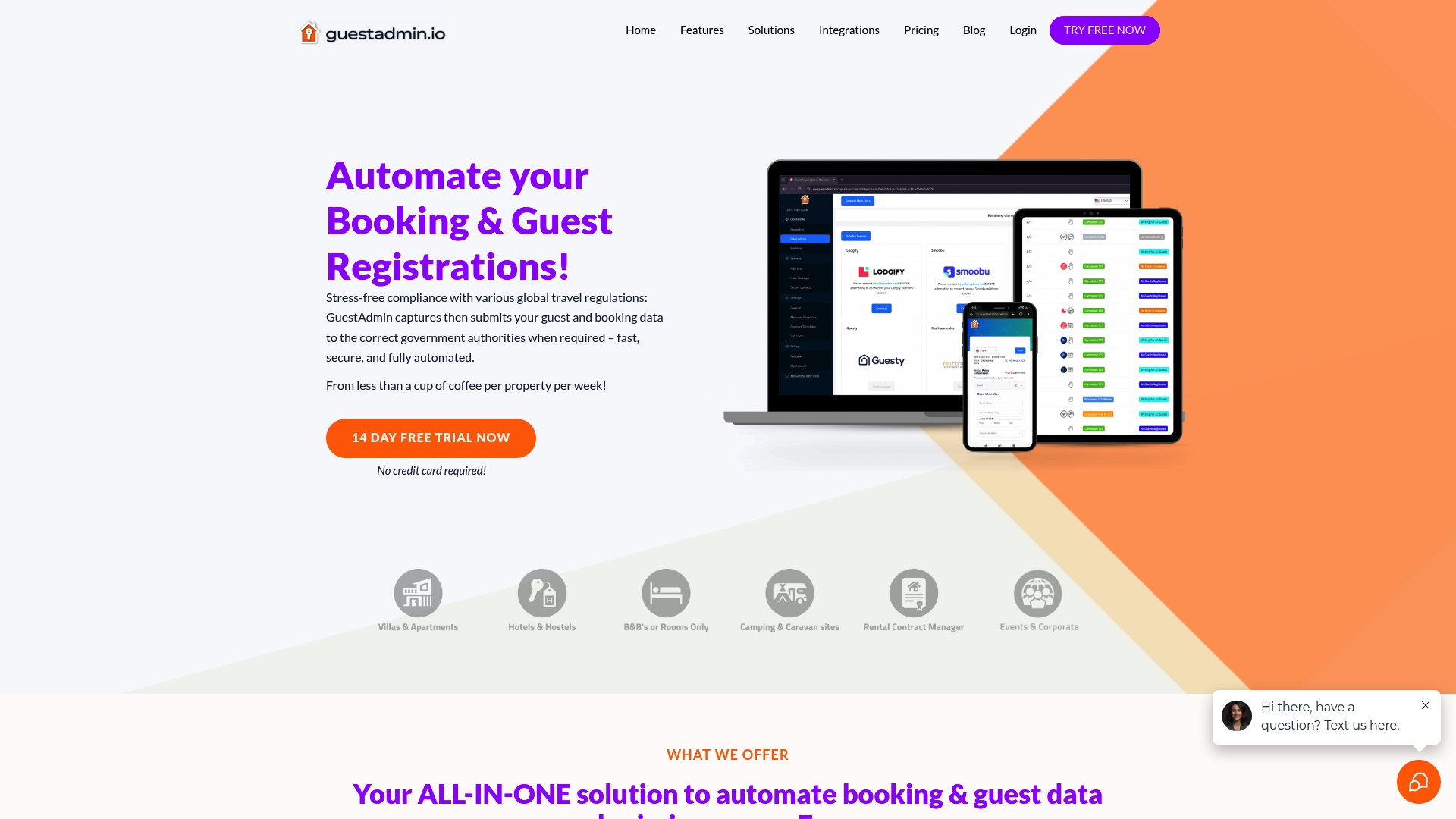
GuestAdmin.io is designed specifically to tackle these challenges. Our SaaS platform offers an intuitive, centralised dashboard tailored for multi-property portfolios that automates the entire guest registration and compliance process across countries. With seamless integration to popular PMS and OTA platforms, AI-powered data processing, and GDPR-secure storage you gain insight and control—freeing your team from administrative overload.
Explore how our solution can streamline your operations by visiting our Stratus Archives – Guest Registration Services for expert insights or browse the Uncategorized Archives – Guest Registration Services for practical tips. Take the first step towards effortless compliance and enhanced portfolio management today by visiting GuestAdmin.io.
Ready to revolutionise your multi-property management with automated compliance and real-time visibility? Discover how GuestAdmin.io can transform your hospitality business now.
Frequently Asked Questions
How can I centralise property data for better access?
To centralise property data, implement a unified dashboard that consolidates information from various sources like booking platforms and financial systems. Begin by identifying your key data points, such as occupancy rates and guest communication status, and set up your dashboard to display these prominently for instant insights.
What are the benefits of automating guest data capture?
Automating guest data capture greatly reduces errors and minimises the time spent on manual entry. Focus on integrating your booking system with compliance tools to ensure accurate submissions within regulatory deadlines, streamlining this process to take only a few minutes instead of hours.
How do I integrate with online travel agencies effectively?
Integrating with online travel agencies (OTAs) ensures that availability and pricing are synchronised in real-time. Start by linking your property management system with your two highest-volume booking channels to prevent double bookings and ensure seamless updates across all platforms.
What should I monitor in real-time dashboards?
Real-time dashboards should track key performance indicators like occupancy rates, revenue, upcoming check-ins, and maintenance requests. Set up alerts for critical metrics, such as low occupancy, to stay ahead of issues and make timely decisions for your properties.
How do I ensure GDPR compliance when handling guest data?
To ensure GDPR compliance, put measures in place to obtain explicit consent for data collection and limit data usage to necessary purposes. Regularly audit your data practices, deleting any unnecessary information to maintain compliance and reduce liability exposures.
What elements should be included in staff onboarding?
A comprehensive onboarding programme should cover company culture, compliance requirements, system navigation, and guest communication standards. Create a checklist for new hires to ensure consistent training and performance metrics to help them become productive within the first few weeks.
Recommended
- Multi-Property Management Explained: Streamlining Compliance
- 7 Essential Multi-Property Management Tips for Managers
- How to Manage Multi-Property Bookings Easily Online
- 7 Property Management Compliance Best Practices Explained
- Understanding HVAC for Property Managers: A Complete Guide – HVAC Service and Repair | Louisville, KY | Project Heating & Cooling
- 7 Essential Landlord Cleaning Tips for Hassle-Free Turnovers
3 Comments
Real-Time Booking Dashboards: Enhancing Rental Compliance
[…] 6 Essential Multi-Property Management Best Practices […]
Webhooks for Property Managers: Automating Compliance
[…] 6 Essential Multi-Property Management Best Practices […]
Implement group-based access control for safer, smarter properties - A To Z Locksmith Inc
[…] multi-property management best practices in larger portfolios, centralized reporting and a single dashboard view across properties […]