

Managing short-term rentals across diverse European cities can feel like juggling regulations, guest expectations, and endless forms all at once. For property managers, staying on top of guest registration and mandatory data submission to government authorities is both a daily challenge and a non-negotiable task. Modern cloud-based platforms now offer solutions that remove the paperwork and manual errors, allowing you to automate compliance and focus on growing your portfolio without missing a step.
Table of Contents
- Defining Property Management SaaS Solutions
- Variations And Integrations In Hospitality Settings
- Core Features For Short-Term Rentals
- Regulatory Compliance And Legal Requirements
- Risks, Costs, And Common Pitfalls
Key Takeaways
| Point | Details |
|---|---|
| SaaS solutions revolutionise property management | Cloud-based platforms streamline operations and reduce upfront costs, enabling smaller firms to compete with larger ones. |
| Integration capabilities enhance operational efficiency | Modern SaaS systems allow seamless data exchange between various hospitality management tools for better decision-making. |
| Compliance management is critical | Property managers must implement robust systems to ensure adherence to complex legal and regulatory standards. |
| Risk mitigation strategies are essential | Thorough vendor due diligence and regular system audits can help minimise potential risks and hidden costs associated with technological ecosystems. |
Defining property management SaaS solutions
Property management Software-as-a-Service (SaaS) solutions represent a transformative digital approach for hospitality professionals managing complex property portfolios. These cloud-based platforms deliver comprehensive tools that centralise and automate critical operational processes across residential and commercial real estate environments.
At their core, property management SaaS platforms provide integrated systems designed to streamline administrative tasks, enhance operational efficiency, and support strategic decision-making. These sophisticated digital solutions offer property managers unprecedented capabilities:
- Centralized data management across multiple properties
- Automated financial reporting and tracking
- Remote access from any internet-connected device
- Real-time maintenance and lease management workflows
- Advanced analytics for performance monitoring
Unlike traditional software models, SaaS solutions operate on a subscription basis, eliminating substantial upfront infrastructure investments. Property managers can now access enterprise-grade technology without significant capital expenditure, enabling smaller organisations to compete effectively with larger property management firms.
Below is a comparison of traditional property management software with modern SaaS solutions to clarify their strategic advantages:
| Approach | Upfront Cost Structure | Accessibility | System Updates and Support |
|---|---|---|---|
| Traditional on-premise software | High initial investment | Limited to local devices | Manual upgrades, slower support |
| SaaS (cloud-based) platform | Monthly or annual subscription | Internet-enabled, remote access | Automatic updates, responsive help |
The technological infrastructure of these platforms typically includes robust features like:
- Secure cloud storage
- Multi-user access controls
- Integrated communication tools
- Automated compliance tracking
- Scalable architecture supporting portfolio growth
Technological sophistication distinguishes modern SaaS solutions from legacy management systems. By leveraging cloud technologies, these platforms provide real-time synchronisation, enhanced security protocols, and seamless integrations with existing hospitality management ecosystems.
Pro tip: Always evaluate a property management SaaS platform’s integration capabilities and scalability before committing to ensure long-term operational flexibility.
Variations and integrations in hospitality settings
Hospitality SaaS platforms represent a complex ecosystem of interconnected technological solutions designed to streamline operational efficiency across diverse accommodation environments. Hospitality technology integrations enable seamless data exchange between critical operational systems, transforming how property managers manage their digital infrastructure.
These sophisticated platforms typically encompass multiple technological domains, including:
- Central reservation systems
- Property management platforms
- Revenue management tools
- Customer relationship management interfaces
- Channel distribution networks
- Financial reporting systems
The modular nature of modern SaaS solutions allows hospitality organisations to construct customised technological ecosystems that precisely match their operational requirements. Unlike traditional monolithic software systems, these platforms offer unprecedented flexibility through open API architectures and pre-configured integration protocols.

Integration capabilities extend across multiple operational dimensions, enabling real-time data synchronisation and automated workflows. Property managers can now connect reservation platforms, payment gateways, guest communication tools, and inventory management systems with remarkable technical sophistication. This interconnectedness allows for dynamic pricing strategies, personalised guest experiences, and comprehensive operational analytics.
Key integration benefits include:
- Centralised data management
- Reduced manual administrative tasks
- Enhanced operational visibility
- Improved guest communication channels
- Real-time performance monitoring
Cloud-based architectures further amplify these integration capabilities by providing scalable, secure, and accessible technological infrastructure. Small boutique hotels and large international chains can leverage identical technological capabilities, democratising advanced hospitality management tools.
Pro tip: Prioritise SaaS platforms with robust API documentation and demonstrated integration histories when selecting your hospitality management technology ecosystem.
Core features for short-term rentals
Short-term rental property management requires sophisticated technological solutions that address the unique challenges of modern hospitality environments. Guest registration requirements form a critical component of these comprehensive management platforms, ensuring legal compliance and operational efficiency.
Essential features for short-term rental management platforms encompass a wide range of technological capabilities designed to streamline administrative processes and enhance guest experiences:
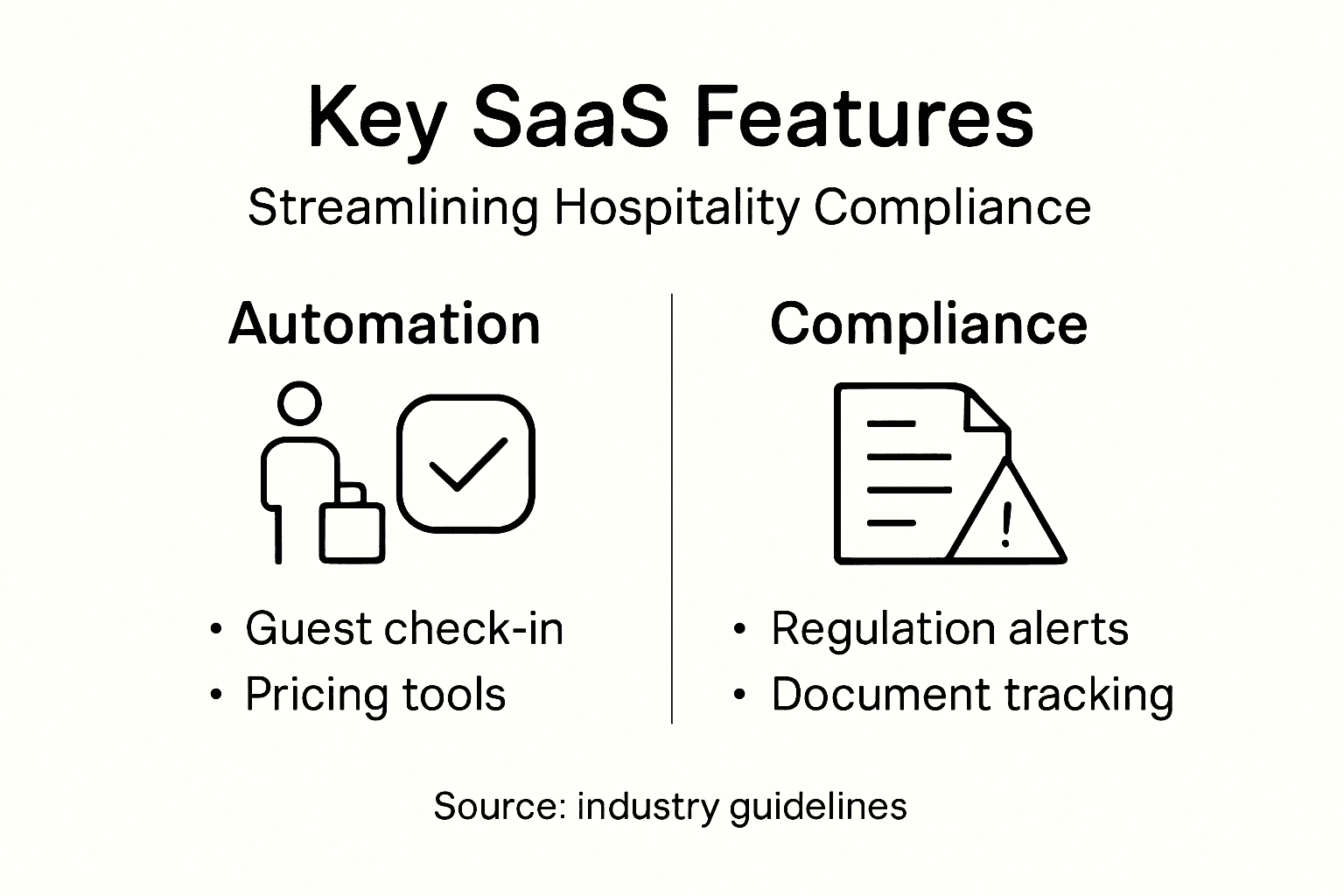
- Automated guest registration and data capture
- Real-time booking management
- Dynamic pricing tools
- Compliance tracking mechanisms
- Multi-platform synchronisation
- Financial reporting and invoicing
- Guest communication interfaces
- Regulatory document management
The digital infrastructure supporting short-term rentals must provide robust functionality across multiple operational domains. Property managers require integrated systems that can handle complex tasks such as reservation synchronisation, guest verification, and regulatory compliance reporting with minimal manual intervention.
Key technological capabilities include:
- Automated guest data collection and submission
- Cross-platform booking synchronisation
- Intelligent pricing algorithms
- Compliance document generation
- Real-time occupancy tracking
Modern platforms differentiate themselves through advanced machine learning technologies that enable predictive analytics, automated decision-making, and seamless operational workflows. These sophisticated systems transform traditional property management from a reactive to a proactive discipline, empowering property owners with unprecedented insights and operational control.
Pro tip: Select a property management platform that offers comprehensive integration capabilities and demonstrates flexibility across multiple regulatory environments.
Regulatory compliance and legal requirements
Hospitality businesses operate within a complex landscape of legal and regulatory frameworks that demand meticulous attention to detail and comprehensive documentation. National licensing policy frameworks establish critical standards that property managers must navigate with precision and strategic understanding.
The primary regulatory domains for short-term rental management encompass several key areas:
- Data protection and privacy regulations
- Guest registration and identification protocols
- Health and safety compliance standards
- Fire safety and emergency preparedness requirements
- Local licensing and operational permissions
- Food hygiene and service regulations
- Insurance and liability documentation
- Taxation and financial reporting obligations
Comprehensive legal compliance requires a systematic approach that integrates multiple regulatory perspectives. Property managers must develop robust mechanisms to track, document, and demonstrate adherence to evolving legal standards across different jurisdictions.
Key compliance management strategies include:
The following table summarises key regulatory areas and impacts for short-term rental management:
| Regulatory Area | Primary Impact | Example Compliance Task |
|---|---|---|
| Data protection | Guest information security | Implement GDPR-compliant processes |
| Health and safety | Guest welfare assurance | Maintain up-to-date safety certificates |
| Local licensing | Legal operation legality | Renew local letting licenses annually |
| Taxation and financial records | Transparent business accountability | Submit accurate quarterly tax returns |
- Regular internal compliance audits
- Automated documentation tracking systems
- Staff training and certification programmes
- Real-time regulatory update monitoring
- Comprehensive record-keeping infrastructure
The consequences of regulatory non-compliance extend far beyond potential financial penalties. Businesses risk reputational damage, legal challenges, and potential operational restrictions that can fundamentally undermine their market positioning. Modern property management platforms must therefore provide sophisticated compliance tracking technologies that enable proactive, dynamic regulatory management.
Pro tip: Implement a centralised compliance management system that offers real-time regulatory tracking and automated documentation processes to minimise administrative burden and legal risks.
Risks, costs, and common pitfalls
Property management technological ecosystems present complex challenges that can significantly impact operational effectiveness and financial performance. Software integration risks represent a critical consideration for hospitality professionals seeking to optimise their technological infrastructure.
The primary risks associated with property management software platforms include:
- Data security vulnerabilities
- Inconsistent system integrations
- Compliance tracking failures
- Vendor dependency challenges
- High customisation costs
- Scalability limitations
- Performance reliability concerns
- Potential technological obsolescence
Financial implications extend beyond direct software procurement expenses. Technological complexity can introduce substantial hidden costs through inefficient workflows, duplicate data entry, and potential compliance violation penalties. Small property management organisations often underestimate the comprehensive financial burden of implementing sophisticated technological solutions.
Key risk mitigation strategies encompass:
- Thorough vendor due diligence
- Comprehensive security auditing
- Phased implementation approaches
- Regular system performance evaluations
- Ongoing staff training programmes
The most significant pitfalls emerge from inadequate planning and insufficient understanding of technological ecosystem requirements. Organisations must develop robust risk management frameworks that anticipate potential integration challenges, security vulnerabilities, and operational disruptions before implementing new technological platforms.
Pro tip: Conduct comprehensive technological audits and maintain flexible implementation strategies to minimise potential risks and unexpected financial burdens.
Simplify Hospitality Compliance with GuestAdmin.io
Managing short-term rental properties across diverse European regulations demands precision and efficiency. As highlighted in this article, one of the biggest challenges in property management SaaS solutions is navigating complex legal requirements like guest registration, data protection, and real-time compliance reporting. Failure to address these pain points can lead to costly penalties and operational disruptions. GuestAdmin.io directly responds to these challenges by automating guest data capture, secure submission to authorities, and providing a centralised dashboard that keeps you compliant effortlessly.
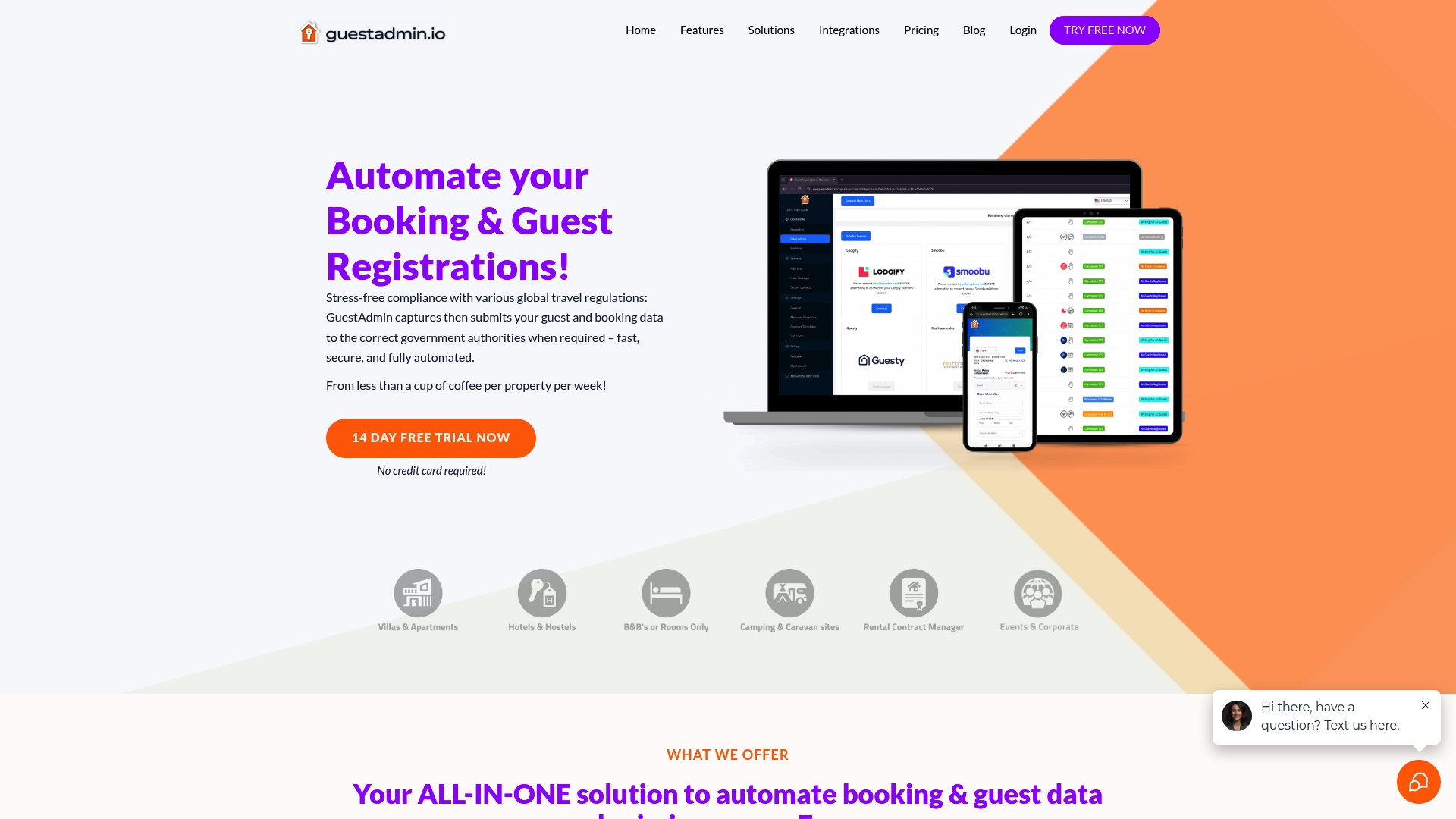
Explore how GuestAdmin.io can transform your property management workflow today. Designed with multi-property managers in mind, this platform integrates seamlessly with your existing systems while ensuring GDPR-compliant access from any device. Visit our Stratus Archives – Guest Registration Services to learn about integration capabilities and system flexibility. Ready to reduce your administrative burden and stay ahead of evolving hospitality compliance demands Take the next step by discovering our comprehensive solutions at GuestAdmin.io or explore related insights through the Uncategorized Archives – Guest Registration Services. Your journey to streamlined hospitality compliance starts now.
Frequently Asked Questions
What are Property Management SaaS solutions?
Property Management SaaS solutions are cloud-based platforms that provide hospitality professionals with comprehensive tools to automate and streamline critical operational processes across property portfolios.
How do SaaS solutions enhance compliance in property management?
SaaS solutions facilitate compliance by offering automated documentation tracking, real-time regulatory updates, and integrated compliance management systems that ensure adherence to legal requirements.
What key features should I look for in a short-term rental management SaaS platform?
Key features include automated guest registration, dynamic pricing tools, compliance tracking mechanisms, and real-time booking management to enhance operational efficiency and guest experiences.
What risks are associated with using Property Management SaaS platforms?
Risks include data security vulnerabilities, inconsistent system integrations, compliance tracking failures, and potential vendor dependency challenges, which can impact operational effectiveness and financial performance.
3 Comments
Automate booking compliance for short-term rentals 2026
[…] Discover how multi-property management explained simplifies operations and explore our property management SaaS for compliance to transform your compliance […]
Legal compliance for rentals in Europe: your 2026 guide
[…] Property management SaaS for hospitality offers comprehensive solutions integrating compliance with broader operational needs. Automation in rental compliance across Europe has become the industry standard for professional operators managing multiple properties. […]
Role of PMS in hospitality: a guide for European rentals
[…] well-configured property management SaaS platform eliminates that fragmentation. Here is what each layer of unification looks like in […]