

TL;DR:
- Effective property management systems must prioritize real-time channel syncing, unified messaging, and compliance to prevent operational failures.
- Deep API integrations and audit-ready security controls are essential to scalable, compliant, and efficient short-term rental management.
A property management system (PMS) is defined as the central software platform that unifies reservations, guest communications, operational tasks, and financial reporting for short-term rental operators. The must-have features for PMS platforms in 2026 go well beyond basic calendar management. Platforms like Hostaway, Guesty, and Hostex have raised the bar considerably, and property managers who settle for less risk overbookings, compliance failures, and guest experience gaps. This guide covers the key functionalities of PMS that genuinely move the needle, from real-time channel syncing to audit-ready compliance architecture.
1. Real-time channel management and calendar syncing
Real-time OTA syncing is treated as a foundational requirement for any credible PMS platform, not an optional add-on. Without it, availability mismatches between Airbnb, Booking.com, and Vrbo create double bookings that damage your reputation and cost real money in cancellation penalties.
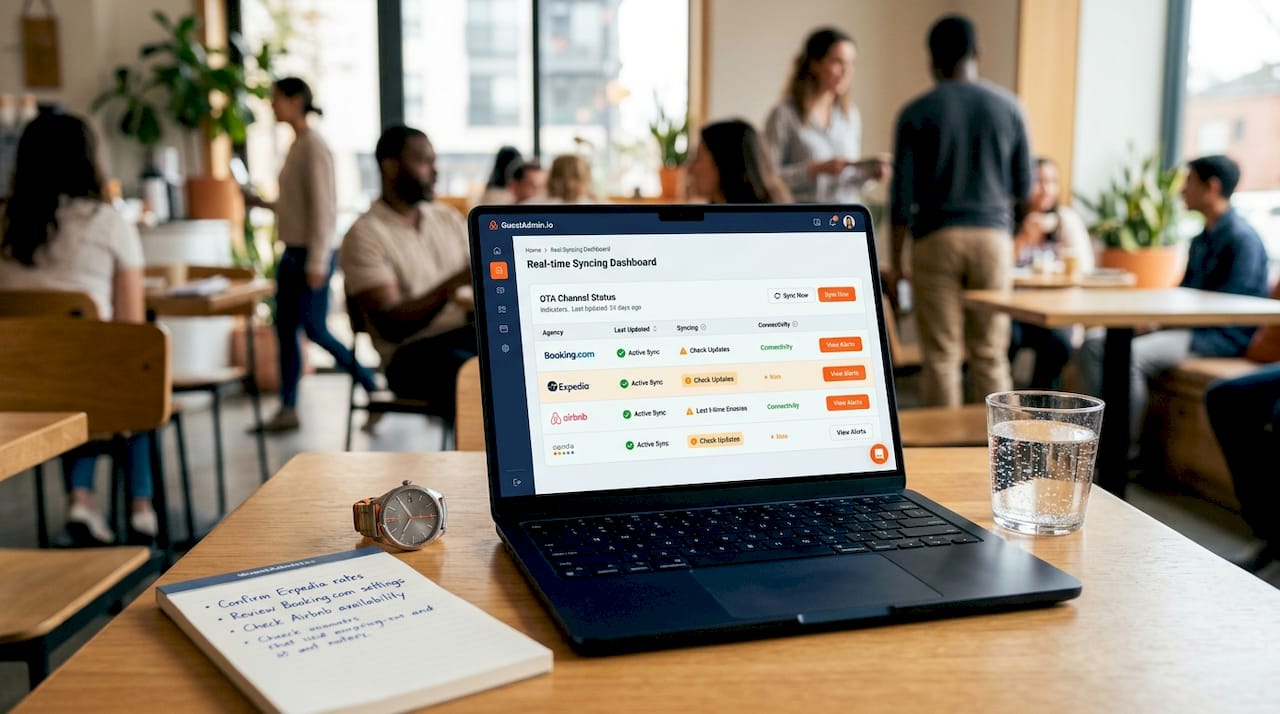
The method of syncing matters enormously. iCal connections update on a delay of anywhere from 15 minutes to several hours, which is too slow for high-demand properties. Direct API integrations, as used by platforms like Hostex and Oracle OPERA, push availability changes in near-real time across all connected channels simultaneously. That difference alone can determine whether you fill a last-minute gap or lose it to a ghost booking.
| Sync method | Update speed | Overbooking risk |
|---|---|---|
| iCal feed | 15 min to several hours | Moderate to high |
| Direct API integration | Near-instant | Very low |
| Manual update | Hours to days | Very high |
Pro Tip: When evaluating a PMS, ask the vendor specifically which OTAs have direct API connections versus iCal feeds. A long list of “integrations” often hides several iCal-only connections that carry real overbooking risk.
2. Unified inbox and AI-powered guest messaging
A unified inbox consolidates all guest messages from Airbnb, Booking.com, direct bookings, and other channels into a single interface. Without it, you are logging into four or five separate portals to answer the same types of questions repeatedly. That is not a workflow. It is a liability.
Automated guest messaging saves property managers one to two hours daily by handling routine communications without manual input. That time compounds quickly across a portfolio of ten or more properties. Tools like Hospitable and Enso Connect take this further with AI-powered responses that handle FAQs, multilingual queries, and check-in instructions without any human involvement.
The most underused feature in this category is the digital guidebook. A guidebook shared automatically at booking confirmation can reduce guest questions by 40 to 60 per cent by answering arrival logistics, Wi-Fi details, and local recommendations before guests even think to ask. That reduction directly improves review scores because guests who feel informed leave better feedback.
Key messaging features to look for in any PMS:
- Event-triggered message templates for confirmations, check-in instructions, mid-stay check-ins, and departure reminders
- AI-assisted responses that handle common questions in multiple languages
- Automated digital guidebook delivery at booking and pre-arrival stages
- Centralised message history across all OTA channels in one thread view
- Read receipts and response-time tracking to protect your platform ratings
Pro Tip: Set up a pre-arrival message sequence that fires 48 hours before check-in, 24 hours before, and on the morning of arrival. This three-touch approach reduces last-minute calls by a significant margin and sets a professional tone before guests even arrive.
3. Automated operational task and turnover management
Operational task automation is the feature that separates a PMS from a glorified calendar. When a booking is confirmed, modified, or cancelled, the system should automatically generate the corresponding cleaning or turnover task, assign it to the right team member, and set the correct deadline without any manual input from you.
Scheduling cleaners directly from PMS triggers avoids the manual errors that occur when booking changes are not communicated to housekeeping teams in time. A late checkout that is not flagged to your cleaner creates a cascade of problems: a delayed check-in, a frustrated new guest, and a negative review that could have been prevented entirely.
The best platforms, including those built on SuiteOp’s operational layer and Oracle OPERA’s housekeeping module, go further with real-time status updates. Cleaners mark tasks complete from a mobile app, and the PMS updates room status automatically. Photo verification and checklist completion add a quality control layer that protects you when a guest disputes the condition of a property.
- Booking event triggers automatic task creation with correct dates and assigned staff
- Real-time status updates push from cleaner mobile apps to the central dashboard
- Photo verification attached to completed tasks creates a timestamped record
- Maintenance requests generated from guest reports or scheduled inspections
- Automated notifications to guests when their room or unit is confirmed ready
This connected workflow removes the manual handoffs that cause most operational failures in short-term rental management. For a deeper look at multi-property workflow compliance, the principles apply directly to how task automation scales across larger portfolios.
4. Financial management and owner reporting
Trust accounting, owner statements, and flexible payment processing are non-negotiable financial features for any PMS handling funds on behalf of property owners. Without trust accounting, you risk commingling funds, which creates legal exposure in most European jurisdictions. Automated owner statements eliminate the monthly manual reconciliation that consumes hours of administrative time.
Payment flexibility matters more than most buyers realise during evaluation. A PMS that accepts only credit cards will create friction with owners and contractors who prefer bank transfers. Look for platforms that support ACH transfers, SEPA direct debits for European operations, and automated payment reminders for outstanding balances.
Integration with QuickBooks or Xero remains critical for accurate financial reporting, because most PMS platforms handle trust accounting well but are not designed to replace dedicated accounting software. The two systems working together give you clean books and a clear audit trail without duplication of effort.
| Financial feature | Why it matters |
|---|---|
| Trust accounting | Legally separates owner funds from operating funds |
| Automated owner statements | Removes monthly manual reconciliation |
| QuickBooks or Xero integration | Maintains accurate books without double entry |
| Multi-currency support | Required for European portfolios with international guests |
| Commission tracking | Automates management fee calculations per property |
5. Security, compliance, and role-based access control
SOC 2 Type II compliance and immutable audit trails are the security benchmarks that enterprise-grade PMS platforms must meet. SOC 2 Type II means an independent auditor has verified that the platform’s security controls work consistently over time, not just at a single point in time. That distinction matters when you are storing guest passport data, payment information, and booking records.
Audit trails deserve particular attention. Compliance audit trails require append-only event logs with full timestamps and user context to be genuinely tamper-proof. A system that allows administrators to delete or edit log entries is not compliant, regardless of what the vendor claims. This architecture must be built into the system at the infrastructure level, not configured as a user setting.
Role-based access control is equally important for growing teams. Role-based access and multi-property dashboards allow cleaners to see only their assigned tasks, finance staff to access only financial reports, and property owners to view only their own properties. This reduces information overload, limits internal data exposure, and satisfies GDPR requirements around data minimisation.
Key security and compliance features to verify before selecting a PMS:
- SOC 2 Type II certification with a current audit report available on request
- Append-only, tamper-resistant audit logs with user and timestamp context
- Role-based permissions with granular access controls per property and function
- GDPR-compliant guest data storage with defined retention and deletion policies
- Multi-language support and locale-specific regulatory adaptability for European operations
For property managers operating across multiple European jurisdictions, hospitality compliance requirements add another layer of complexity that your PMS must be equipped to handle.
6. Reporting, dashboards, and a single source of truth
A PMS that generates data but does not surface it clearly is only half useful. The best platforms provide real-time dashboards that show occupancy rates, revenue per available unit, channel performance, and outstanding tasks in a single view. Avoiding data siloing by treating the PMS as a single source of truth prevents the costly operational inefficiencies that emerge when booking data lives in one system, financial data in another, and guest records in a third.
Reporting depth separates platforms designed for scale from those built for single-property hosts. You need the ability to filter performance by property, by channel, by date range, and by team member. Aggregate views across a portfolio tell you where to focus attention. Property-level drill-downs tell you why a specific unit is underperforming. Both are necessary for informed decisions.
Automation in property management is increasingly tied to how well a PMS surfaces data in real time. Platforms that connect operational, financial, and guest data into a unified dashboard give managers the visibility to act before problems escalate, rather than discovering them in a monthly report.
Key takeaways
A PMS platform delivers genuine operational value only when its core features work together as a connected system, not as isolated modules.
| Point | Details |
|---|---|
| Real-time channel syncing | Direct API connections prevent overbookings that iCal delays cannot reliably avoid. |
| Automated guest messaging | Event-triggered messages and digital guidebooks cut daily admin by one to two hours. |
| Task automation | Booking-triggered housekeeping tasks remove the manual handoffs that cause most operational failures. |
| Financial controls | Trust accounting and accounting software integration protect legal compliance and owner trust. |
| Audit-ready security | SOC 2 Type II certification and append-only logs are architecture requirements, not optional settings. |
What I have learned about choosing PMS features that actually matter
The most common mistake I see property managers make when evaluating a PMS is counting features rather than testing integrations. A platform with 80 listed features but shallow API connections will underperform a platform with 40 features that are genuinely connected end-to-end. Deep integration is what transforms a PMS from a passive reporting tool into a connected workflow system. That distinction is the difference between a system that saves you time and one that creates a new category of administrative work.
The second pitfall is underestimating the cost of siloed data. When your booking data, financial records, and guest communications live in separate systems that do not talk to each other, every decision requires manual reconciliation. That is not a minor inconvenience. It is a structural inefficiency that compounds as your portfolio grows.
My honest recommendation: prioritise channel management depth, unified communications, and audit-ready compliance architecture above everything else. Those three capabilities determine whether your PMS scales with you or becomes a constraint. Cost and ease of use matter, but they are secondary to whether the platform can actually handle the operational and regulatory demands of a growing short-term rental business.
— Alex
Explore the right PMS for your portfolio with Guestadmin
Choosing a PMS is one of the most consequential decisions you will make as a property manager, and the feature gap between platforms is wider than most vendor demos reveal.
Guestadmin has compiled a detailed PMS platform comparison for 2026 that cuts through the marketing language and evaluates platforms on the features that matter most: channel management depth, compliance architecture, financial controls, and integration quality. If you manage multiple properties across Europe, Guestadmin also automates guest data compliance and regulatory submissions, removing one of the most time-consuming obligations from your workflow entirely. Start with the comparison, then build a shortlist based on what your portfolio actually needs.
FAQ
What are the most important features to look for in a PMS?
Real-time channel management, a unified guest messaging inbox, automated task generation, trust accounting, and role-based access control are the core PMS platform must-haves. These features collectively prevent overbookings, reduce manual workload, and protect financial and regulatory compliance.
How does iCal syncing compare to direct API integration in a PMS?
iCal feeds update availability on a delay of 15 minutes to several hours, creating a meaningful overbooking risk on busy properties. Direct API integrations push changes in near-real time, making them the preferred method for any property with moderate to high booking volume.
Why do PMS platforms need SOC 2 Type II compliance?
SOC 2 Type II certification confirms that a platform’s security controls have been independently audited and verified over a sustained period. For property managers storing guest passport data and payment information, this certification is the minimum standard for data protection and regulatory credibility.
Can a PMS replace dedicated accounting software like Xero or QuickBooks?
Most PMS platforms handle trust accounting and owner statements well, but they are not designed to replace dedicated accounting software. Integration with Xero or QuickBooks remains the recommended approach for accurate financial reporting and clean audit trails.
How does automated guest messaging improve review scores?
Automated messaging reduces the information gaps that lead to guest frustration. When check-in instructions, local guides, and departure reminders arrive automatically and on time, guests feel supported throughout their stay, which directly correlates with higher review scores and fewer inbound queries.