

TL;DR:
- Real-time booking dashboards eliminate double bookings and streamline operations across multiple platforms. They enhance guest experience, automate compliance, and enable data-driven pricing to boost revenue efficiently. Adopting integrated systems transforms property management into a proactive, error-resistant process.
Managing short-term rentals across multiple platforms without a centralised system is a recipe for errors. Double bookings, missed compliance submissions, and poor communication with housekeeping teams cost property managers both time and money every week. The advantages of real-time booking dashboards go well beyond simple calendar visibility. They touch every aspect of how you run your properties, from guest communication to regulatory reporting. This article breaks down the specific gains you can expect when you move from fragmented tools to a single, live dashboard built for short-term rental management.
Table of Contents
- Key takeaways
- 1. Advantages of real-time booking dashboards: booking accuracy first
- 2. One dashboard for operations: bookings, cleaning, and maintenance
- 3. Data-driven revenue decisions with live booking analytics
- 4. Automated compliance and guest registration without the paperwork
- 5. Guest experience gains through live availability and smart communication
- 6. Faster risk detection and proactive problem resolution
- My perspective on adopting real-time booking dashboards
- How Guestadmin supports real-time visibility and compliance automation
- FAQ
Key takeaways
| Point | Details |
|---|---|
| Prevent double bookings | API-based sync updates availability in seconds, eliminating the risky delay caused by iCal methods. |
| Unify daily operations | Consolidating bookings, cleaning, and maintenance in one dashboard reduces miscommunication and turnaround time. |
| Drive smarter pricing | Live booking analytics allow dynamic rate adjustments that lift occupancy and revenue. |
| Automate compliance reporting | Real-time dashboards can submit guest registration data to authorities automatically, reducing manual errors. |
| Improve guest satisfaction | Instant calendar accuracy and automated notifications reduce no-shows and increase buyer confidence. |
1. Advantages of real-time booking dashboards: booking accuracy first
One of the most immediate real-time booking benefits is the elimination of double bookings. When you list a property across multiple OTAs, such as Airbnb, Booking.com, and Vrbo, every platform holds its own version of your availability calendar. Without instant synchronisation, a booking confirmed on one platform can still appear as available on another for up to four hours.
iCal-based sync operates on a pull method, refreshing only every 15 to 30 minutes and sometimes as infrequently as every four hours. API-based two-way synchronisation, by contrast, updates availability across all connected channels within seconds. For a busy property manager, that difference is the gap between a satisfied guest and a damaging cancellation.
The practical impact extends further than the booking itself:
- Overbooking damages your review scores and triggers penalties on most OTA platforms.
- Manual calendar management across five or more listings can consume an hour or more each day.
- Guest trust drops sharply when a confirmed stay is cancelled at short notice.
Pro Tip: When evaluating dashboard systems, confirm they use API connections rather than iCal feeds to your top OTAs. Many platforms advertise “real-time sync” but still rely on iCal for certain channels, which reintroduces latency.
Real-time channel management across 100 or more OTAs can save property managers over eight hours per week while increasing occupancy by 20 to 30 percent. That is the kind of operational gain that compounds quickly across a portfolio.
2. One dashboard for operations: bookings, cleaning, and maintenance
Operational silos are one of the most common reasons short-term rental businesses stall as they grow. Your front-desk team knows when a guest checks out, but your cleaning crew is waiting on a WhatsApp message. Maintenance issues get logged in a spreadsheet nobody checks until something goes wrong. A real-time dashboard closes these gaps.

Successful operators integrate booking, cleaning, maintenance, and financial data into a single dashboard to avoid these silos and the guest dissatisfaction they cause. When a booking is confirmed or modified, every relevant team member sees the update instantly.
Here is what that looks like in practice:
- Housekeeping schedules auto-update when check-out dates shift or early check-ins are confirmed.
- Maintenance tasks triggered by guest reports appear in the same view as upcoming arrivals.
- Revenue data sits alongside occupancy data, so you can assess whether a property is performing as expected.
Pro Tip: Use your dashboard’s workload forecasting features to plan staff allocation in advance. A spike in weekend bookings three weeks away is visible today, giving you time to arrange additional cleaning cover before it becomes urgent.
Business intelligence dashboards enable 60 to 80 percent faster decision-making cycles compared to batch reports by providing live operational visibility. For property managers handling ten or more units, that speed is not a luxury. It is what separates proactive management from constant reactive problem-solving.
3. Data-driven revenue decisions with live booking analytics
Booking analytics tools that update in real time give you a fundamentally different view of your business than weekly or monthly reports. You are no longer describing what happened. You are seeing what is happening and responding before the opportunity passes.
The most useful metrics to track regularly in your dashboard include:
- Occupancy rate by property — identifies underperforming listings before they drag down monthly revenue.
- Average daily rate (ADR) — tracked live against local market rates to guide pricing decisions.
- Revenue per available night (RevPAN) — the clearest single indicator of overall listing health.
- Lead time by booking channel — tells you which platforms attract last-minute bookers versus advance planners.
- Cancellation rate by source — highlights which OTAs or rate types carry the most risk.
PMS-integrated booking data provides more precise market benchmarking than publicly scraped listings, because it reflects actual confirmed bookings rather than advertised prices. That distinction matters when you are trying to set competitive rates with confidence.
The table below summarises the revenue impact you can realistically expect from shifting to real-time data:
| Metric | Batch reporting | Real-time dashboard |
|---|---|---|
| Decision-making speed | Hours to days | Minutes |
| Pricing adjustment frequency | Weekly | Daily or as needed |
| Occupancy impact | Baseline | Up to 30% improvement |
| Revenue cycle efficiency | Reactive | Proactive |
Live operational visibility delivers 10 to 15 percent higher revenue impact compared to batch-based analysis. For a portfolio generating £200,000 annually, that is an additional £20,000 to £30,000 with no increase in properties or marketing spend.
4. Automated compliance and guest registration without the paperwork
Regulatory compliance is one of the most underestimated pressures facing short-term rental operators in Europe. Many countries require guest registration data to be submitted to local authorities within 24 hours of check-in. Managing this manually across multiple properties and jurisdictions is both time-consuming and error-prone.
Real-time booking dashboards that integrate with compliance tools address this directly:
- Guest registration data captured at check-in flows automatically into the dashboard and triggers submission to the relevant authority.
- Errors caused by manual data entry, such as incorrect passport numbers or missing arrival times, are significantly reduced.
- GDPR-compliant data storage protects guest information while meeting retention requirements.
- Cross-border property portfolios can manage different regulatory frameworks from a single interface.
Understanding how real-time booking monitoring ties directly into compliance obligations is increasingly important for managers operating across multiple European jurisdictions. The rules differ by country, and in some cases by municipality, making automation the only practical way to stay consistently compliant.
Dashboards reduce operational risk by increasing visibility, improving coordination, and supporting trend identification before issues escalate. In a compliance context, this means you see missed submissions or incomplete guest records before they become regulatory violations, not after an inspector knocks on your door.
5. Guest experience gains through live availability and smart communication
From the moment a guest searches for accommodation, accuracy matters. If your calendar shows availability that no longer exists, or if a confirmed booking triggers no automated communication, you are creating friction at the earliest stage of the guest relationship.
The real-time booking advantages for guest experience are straightforward but significant:
- Instant calendar accuracy builds buyer confidence. Guests who see live availability are more likely to complete a booking without hesitation.
- Automated pre-arrival messages sent immediately after confirmation set clear expectations and reduce inbound enquiries.
- 24-hour booking availability means guests can confirm stays at any time without waiting for manual approval.
- Reduced no-show rates come from automated reminder messages sent in the days before arrival.
Online booking systems reduce no-show rates to near zero in well-documented cases while saving property managers up to two hours daily in booking management. That recovered time is real. Across a month, it adds up to two full working days that can be redirected toward guest experience improvements or portfolio growth.
The connection between booking dashboard efficiency and guest satisfaction is direct. Faster confirmations, accurate information, and timely communication all reduce the reasons a guest might leave a negative review. And in short-term rentals, reviews are revenue.
6. Faster risk detection and proactive problem resolution
One of the less discussed advantages of dashboard systems is how quickly they surface problems that would otherwise fester. A property with an unusual pattern of late cancellations, a listing where occupancy has dropped 15 percent in three weeks, or a guest complaint logged at midnight — all of these become visible in real time rather than during a Monday morning report review.
BI dashboard monitoring in occupancy-sensitive environments reduced undetected risk events by 14.3 percent and cut average response time from 4.7 hours to 1.8 hours. While this research comes from a hospital setting, the underlying principle applies directly to short-term rental portfolios. The faster you detect a problem, the less damage it causes.
For property managers overseeing ten or more properties, the value of tracking dashboards for both operational and compliance purposes is compounded. A single missed submission or a booking discrepancy that goes unnoticed for a week can trigger penalties. A live dashboard makes those situations visible immediately.
My perspective on adopting real-time booking dashboards
I’ve worked alongside property managers who added a real-time dashboard to their workflow and immediately focused on the calendar sync. That matters, but it is not where the real transformation happens.
What I’ve found is that the managers who extract the most value treat their dashboard as an operational command centre, not just a booking tool. They connect it to their cleaning schedules, their financial tracking, and their compliance reporting. When those data streams converge in one place, the decisions you make are faster and more grounded.
My honest advice: do not evaluate a dashboard purely on its OTA integrations. Ask specifically how it handles regulatory data submission, how it alerts you to compliance gaps, and whether it supports multi-property visibility from a single login. Those are the features that will matter most six months after you sign up.
The property managers I respect most are not the ones with the most listings. They are the ones who have built systems that run accurately without requiring their constant attention. A well-implemented real-time dashboard is the foundation of that kind of operation.
— Alex
How Guestadmin supports real-time visibility and compliance automation
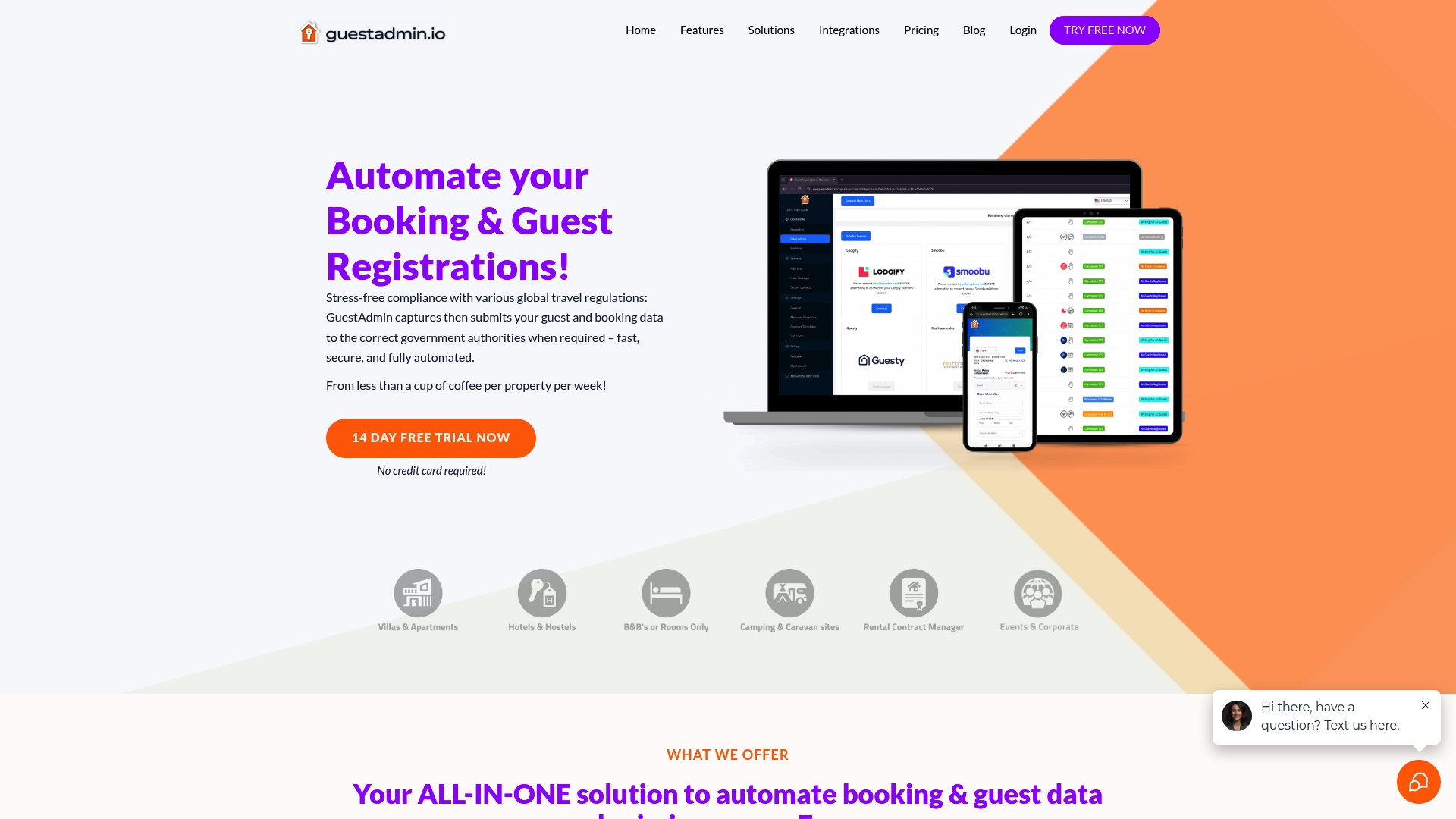
Guestadmin was built specifically for property owners and managers who need more than a booking calendar. The platform combines a real-time booking dashboard with automated guest registration, multi-property management, and direct submission of compliance data to government authorities across Europe.
If you manage properties across multiple jurisdictions, Guestadmin removes the need to log in to separate portals or maintain manual records for each location. Guest data captured at check-in is processed using AI-powered tools and submitted to the relevant authorities within 24 hours, with full GDPR-compliant archiving included.
For those looking to understand the broader picture, the guide to automating hospitality compliance covers the full process from onboarding to ongoing reporting. Managers overseeing multiple properties will also find the multi-property management tips a practical starting point for structuring operations efficiently.
Guestadmin integrates with the major PMS and OTA platforms, supports API and webhook connections, and is accessible securely from any device. It is designed to reduce your administrative burden, not add to it.
FAQ
What are the main advantages of real-time booking dashboards?
Real-time booking dashboards prevent double bookings through instant API synchronisation, consolidate operational data across bookings and housekeeping, automate compliance reporting, and provide live analytics that support smarter pricing decisions.
How does real-time booking work differently from iCal sync?
API-based real-time sync updates availability across all connected platforms within seconds, while iCal synchronisation refreshes only every 15 to 30 minutes, creating a window where double bookings can occur.
Why use booking dashboards for regulatory compliance?
Booking dashboards that integrate with compliance tools automatically submit guest registration data to authorities, reducing manual errors and ensuring submissions happen within required timeframes across multiple jurisdictions.
Can real-time dashboards improve my rental revenue?
Yes. Live booking analytics tools enable dynamic pricing adjustments and occupancy tracking that can increase revenue by 10 to 30 percent compared to managing decisions based on batch or weekly reports.
How much time can a dashboard save property managers each week?
Real-time channel management saves managers over eight hours per week, and automated booking systems can recover up to two hours daily previously spent on manual calendar and communication tasks.
One Comment
Why integrate PMS with OTA: a 2026 guide
[…] across all properties removes the need for property-by-property platform checks. Guestadmin’s real-time booking dashboard is one example of how centralised data visibility translates directly into faster, more confident […]