

TL;DR:
- APIs are essential for connecting hospitality systems, enabling real-time automation and reducing manual tasks.
- Implementing a phased, hybrid API architecture improves flexibility, security, and AI readiness across operations.
APIs, or Application Programming Interfaces, are the core technology enabling modern hospitality automation by connecting software systems such as Property Management Systems (PMS), Customer Relationship Management (CRM) platforms, Revenue Management Systems (RMS), and Point of Sale (POS) terminals into a single, coordinated operation. Without APIs, these systems operate in isolation, forcing staff to re-enter data manually and respond to guests more slowly. Investment in AI-driven technology in global hospitality will reach $750 billion over the next decade, yet only 7% of hotel chains have a comprehensive enterprise-wide strategy. That gap exists largely because most operators have not yet built the API foundations that make automation and AI viable at scale.
How do APIs enable automation in hospitality operations?
APIs enable automation by creating structured communication channels between software components, so that data entered once flows automatically to every system that needs it. When a guest completes an online booking, an API-connected reservation engine can simultaneously update room inventory in the PMS, trigger a welcome message from the CRM, and alert housekeeping to prepare the room. No manual handoff is required at any stage.

The API-first approach reduces integration time by 75% and promotes real-time data flow across core systems. That speed advantage matters because hospitality operations run on tight margins and tighter schedules. A rate change pushed through an API reaches the booking engine, the channel manager, and the revenue management system within seconds rather than hours.
Practical examples of API-driven automation in hotels include:
- Dynamic pricing updates: RMS platforms like IDeaS or Duetto push rate changes to the PMS and all connected OTAs automatically, removing the need for manual rate loading.
- Housekeeping scheduling: Room status changes in the PMS trigger task assignments in housekeeping apps, so staff receive real-time room-ready notifications on mobile devices.
- Guest communication: AI chatbots connected via API to the PMS can answer room availability queries, process upgrade requests, and send pre-arrival instructions without staff involvement.
- POS reconciliation: Food and beverage charges post directly to the guest folio in the PMS, eliminating end-of-day manual reconciliation.
APIs free staff from repetitive tasks, enabling them to focus on high-value guest engagement and loyalty building. This is the practical argument for automation: not replacing people, but redirecting their time toward interactions that genuinely require human judgement.
Pro Tip: When evaluating any new hospitality software, request the vendor’s API documentation before signing a contract. Well-documented, open APIs signal a platform built for integration. Proprietary or undocumented APIs are a warning sign that future connections will be costly and slow.
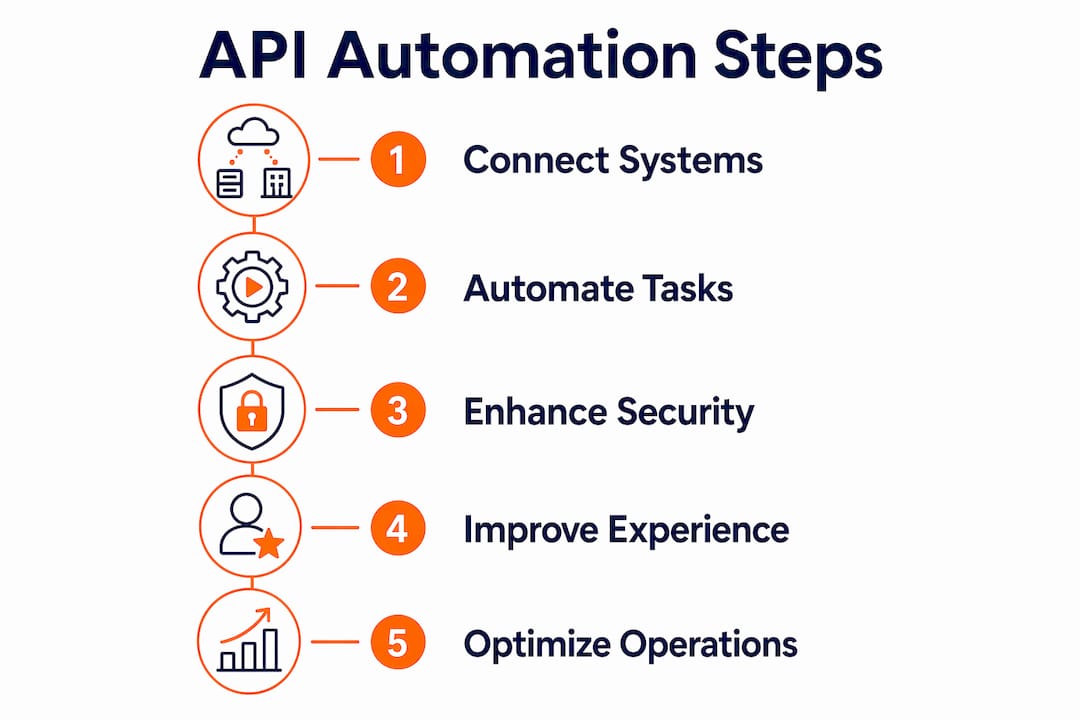
What are the technical and security challenges in API-based hospitality automation?
API integration in hospitality is not plug-and-play. The sector operates across a patchwork of legacy systems, proprietary data formats, and regulatory requirements that create genuine complexity for technology decision-makers.
Oracle OPERA integration, for example, requires compliance with partner programme rules and adherence to hospitality data standards including HTNG (Hospitality Technology Next Generation) and the Open Travel Alliance (OTA) schema. These standards exist to promote interoperability, but navigating them demands dedicated technical expertise and planning time. Developers integrating with major PMS platforms routinely encounter lengthy compliance processes that can delay go-live dates by weeks or months.
Security is a separate and equally serious concern. 31% of hospitality operators cite data security and the integration of sensitive guest information as their primary concern in digital transformation. APIs that handle payment data must comply with PCI-DSS, while those processing personal guest data in Europe must meet GDPR requirements. The security architecture for any API integration should include:
- OAuth 2.0 for authentication, ensuring only authorised systems can access data endpoints.
- Role-based access control to limit what each connected system can read or write.
- TLS 1.3 encryption for all data in transit between systems.
- Detailed audit trails to log every API call for compliance and incident investigation.
These API security best practices are not optional extras. They are the baseline for any production-grade hospitality integration.
Legacy systems present a particular challenge. Older PMS platforms were not designed with open APIs in mind, and connecting them to modern tools often requires middleware or custom-built adapters. This adds cost and maintenance overhead that operators should factor into their technology budgets from the outset.
Pro Tip: Treat back-of-house automation and guest-facing automation as separate risk categories. A pricing engine that misfires affects revenue but can be corrected quietly. A guest-facing chatbot that provides wrong check-in information damages trust in real time. Apply stricter testing and fallback protocols to any API integration that touches the guest directly.
Best-of-breed vs integrated suites: which approach suits your hotel?
The architectural choice between best-of-breed and integrated suites is the most consequential decision a hospitality technology team makes. It determines how easily you can adopt new tools, how well your data flows, and how AI-ready your operation will be in three to five years.
Best-of-breed means selecting the strongest specialist tool for each function: a dedicated RMS, a standalone CRM, a purpose-built channel manager. Each tool connects to the others via APIs. Integrated suites bundle multiple functions under one vendor, such as Oracle Hospitality or Agilysys, reducing the number of API connections required but potentially limiting flexibility.
The emerging consensus is a structured hybrid model: a modern open-API core platform handling the PMS and central data layer, with specialist best-of-breed tools connected via middleware. This approach combines the reliability of a unified core with the competitive flexibility of specialist applications.
| Factor | Best-of-breed | Integrated suite | Structured hybrid |
|---|---|---|---|
| Functionality depth | High per category | Moderate across all | High where it matters |
| Integration complexity | High | Low | Medium |
| Vendor lock-in risk | Low | High | Low to medium |
| AI readiness | Depends on data layer | Moderate | High with CDP |
| Implementation cost | Higher upfront | Lower upfront | Medium |
The AI readiness column deserves particular attention. Fragmented or siloed data causes AI adoption failures. A Customer Data Platform (CDP) or unified data orchestration layer normalises data from all connected systems, giving AI tools a clean, consistent feed to work with. Vendors such as Cloudbeds, Shiji, and Oracle each take different positions on this spectrum, and understanding their API openness is critical before committing to any of them.
The Model Context Protocol (MCP), an emerging standard that enables AI assistants to interact directly with hotel systems via APIs in real time, is beginning to appear in forward-looking vendor roadmaps. Properties that have already built clean API architectures will adopt MCP-enabled AI tools far more quickly than those still managing manual integrations.
How to implement API-driven automation in your property
Implementation works best when treated as a phased programme rather than a single project. Attempting to connect every system simultaneously creates dependency risks and makes troubleshooting difficult.
A practical four-phase approach:
- Discovery: Audit every system currently in use, document existing data flows, and identify the manual handoffs that cost the most staff time. This baseline assessment determines which integrations will deliver the highest return.
- Core integration: Connect the PMS to the reservation engine and channel manager first. These are the highest-frequency data exchanges and the foundation for everything else. Verify data accuracy rigorously before moving on.
- Expansion: Add CRM, RMS, and housekeeping management integrations. At this stage, introduce a unified data layer or CDP if your volume of properties and data sources justifies it.
- Optimisation: Connect guest-facing tools such as digital check-in, AI chatbots, and in-room automation. Monitor API performance, set up alerting for failed calls, and review audit logs regularly.
When evaluating vendors at any stage, prioritise three criteria: API openness (is the documentation public and comprehensive?), data format compatibility (do they support standard schemas such as HTNG or REST/JSON?), and AI readiness (can the platform feed a unified data layer cleanly?). You can explore practical API integration guidance to assess these criteria against your current tech stack.
Pro Tip: Ask every vendor for a sandbox environment before you sign. A sandbox lets your technical team test API calls against real data structures without affecting live operations. Vendors who refuse or delay sandbox access are signalling that their integration process will be difficult.
For property managers handling compliance alongside operations, automating compliance tasks through API-connected platforms removes a significant administrative burden, particularly across multi-jurisdiction European markets where reporting requirements differ by country.
Key takeaways
APIs are the foundational infrastructure for hospitality automation, and properties without a structured API strategy cannot effectively adopt AI, scale operations, or meet rising guest expectations.
| Point | Details |
|---|---|
| APIs connect core systems | PMS, CRM, RMS, and POS exchange data in real time, removing manual handoffs across operations. |
| Security is non-negotiable | OAuth 2.0, TLS 1.3 encryption, and audit trails are the baseline for any production API integration. |
| Hybrid architecture wins | A modern open-API core platform with specialist tools and a unified data layer offers the best balance of flexibility and AI readiness. |
| Phased implementation reduces risk | Starting with core PMS integrations before expanding to guest-facing tools prevents cascading failures. |
| AI readiness requires clean data | Fragmented data across siloed systems is the primary reason AI adoption fails in hospitality. |
Why most hotels are getting their API strategy backwards
I have spent considerable time working with property managers and technology teams across Europe, and the pattern I see repeatedly is this: operators invest in individual tools before they have built the data infrastructure to connect them. They buy an AI chatbot before their PMS has a stable API. They add a revenue management system before their channel manager is properly integrated. The result is a collection of expensive software that does not talk to each other.
The 78% of hotel chains that have deployed some AI-driven technology but lack a comprehensive strategy are, in most cases, suffering from exactly this problem. The tools exist. The strategy to connect them does not.
My view is that the API layer is not a technical detail to delegate to IT. It is a strategic asset that determines what your property can and cannot do operationally for the next decade. The hotels that treat API architecture as a board-level conversation, not a procurement afterthought, will be the ones that can adopt MCP-enabled AI tools, personalise at scale, and protect sensitive guest data without scrambling to retrofit security into poorly designed integrations.
The human element matters too. API-driven automation should redirect staff time toward genuine hospitality, not eliminate the people who deliver it. The best-performing properties I have observed use automation to handle the transactional and the repetitive, while their teams focus on the moments that build loyalty. That balance is a deliberate design choice, not an accident.
— Alex
Take the next step with Guestadmin
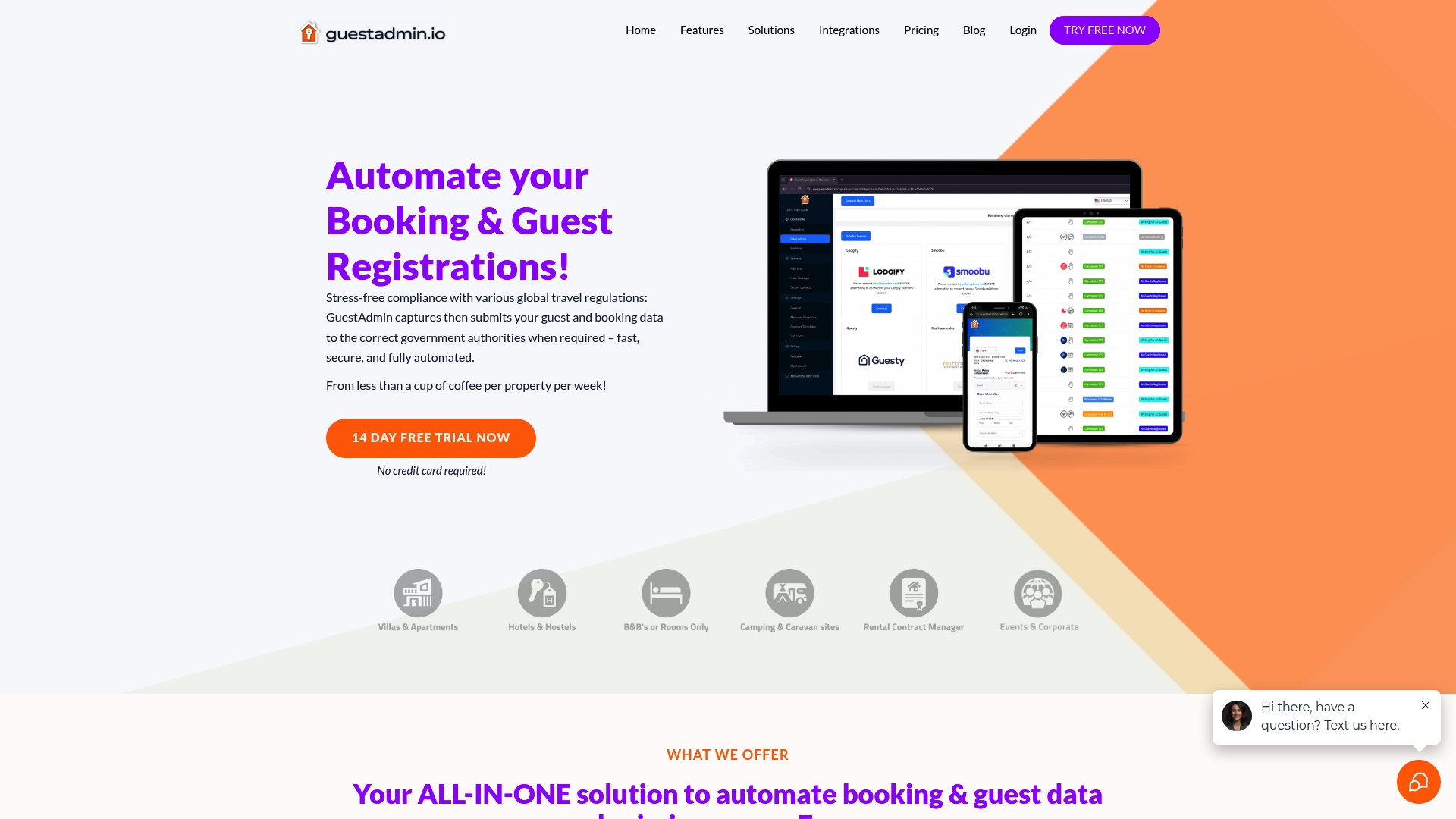
Guestadmin is built specifically for property owners and managers operating in the European short-term rental market, where regulatory compliance adds a significant layer of complexity to daily operations. The platform connects directly with popular PMS and OTA platforms via API, automating the capture, processing, and submission of guest data to government authorities within 24 hours. For managers overseeing multiple properties, Guestadmin’s real-time dashboards and multi-property management tools provide the visibility and control that manual processes simply cannot match. Explore the full range of API integration capabilities and see how Guestadmin can reduce your administrative burden while keeping you compliant across every jurisdiction you operate in.
FAQ
What is the role of APIs in hospitality automation?
APIs connect core hospitality systems such as PMS, CRM, RMS, and POS, enabling real-time data exchange that automates processes including reservations, pricing updates, housekeeping scheduling, and guest communications without manual intervention.
How do APIs improve the guest experience in hotels?
APIs allow guest data to flow between booking, check-in, and service systems automatically, enabling personalised communications, faster check-in, and real-time service requests that would otherwise require staff to manually transfer information between platforms.
What security standards apply to hospitality API integrations?
Hospitality API integrations should implement OAuth 2.0 for authentication, role-based access control, TLS 1.3 encryption for data in transit, and detailed audit trails. Payment-related APIs must also comply with PCI-DSS, and guest data handling in Europe requires GDPR compliance.
What is the difference between best-of-breed and integrated suite approaches?
Best-of-breed selects specialist tools for each function connected via APIs, offering greater flexibility. Integrated suites bundle multiple functions under one vendor, reducing integration complexity but increasing vendor lock-in. A structured hybrid combining both is the approach most recommended for AI readiness.
How long does API integration typically take in hospitality?
An API-first approach reduces integration time by 75% compared to traditional methods. Core integrations between PMS and reservation engines can be completed in days with well-documented APIs, though compliance with standards like HTNG or Oracle OPERA partner programmes can extend timelines significantly.
2 Comments
How webhooks work in hospitality: a practical guide
[…] calls per hour and only processes requests when genuine events occur. For property managers running hospitality automation across multiple properties, that efficiency compounds […]
OTA Booking Data Integration for Rental Hosts - Guest Registration Services
[…] API connection is usually the most structured option when it is available. It can pass booking creation, […]