

Managing short-term rentals across Europe demands extraordinary time investment, often consuming dozens of hours monthly per property. Between guest communications, compliance reporting, pricing adjustments, and operational coordination, property managers face relentless administrative pressure. Automation offers a practical solution to reclaim time whilst maintaining regulatory compliance and service quality. This article presents actionable strategies to help property managers systematically reduce workload, prioritise compliance automation, and implement tools that deliver measurable time savings without sacrificing the personal touch guests expect.
Table of Contents
- Key takeaways
- How to prioritise automation for compliance and operations
- Top automation solutions for guest communication and dynamic pricing
- Comparing automation tools: efficiency, error rates and suitability
- Making informed automation decisions for property managers
- Discover GuestAdmin’s automation solutions for property managers
- FAQ
Key Takeaways
| Point | Details |
|---|---|
| Compliance automation first | Prioritise compliance automation to address EU regulatory demands and avoid penalties. |
| Testing workflows | Thoroughly test new workflows with dummy data to identify gaps before deployment. |
| Human in the loop | Maintain a human in the loop to handle complex or sensitive guest interactions. |
| KPI tracking | Use KPI tracking to measure automation impact and drive continuous improvement. |
How to prioritise automation for compliance and operations
Selecting the right automation tools requires strategic thinking. Start with compliance automation to address the increasingly complex EU regulatory landscape. Compliance best practices demand immediate attention because regulatory penalties carry significant financial and reputational consequences. The fragmented nature of European travel regulations means property managers must navigate different reporting requirements across jurisdictions, making automation essential rather than optional.
Before deploying any automation system, test workflows thoroughly using dummy data. Create fictional bookings, generate sample guest profiles, and run complete submission cycles to identify gaps in your processes. This testing phase reveals integration issues, data formatting problems, and workflow bottlenecks before they affect real guests or compliance deadlines. Most compliance tools offer sandbox environments specifically for this purpose.
Once compliance automation functions reliably, layer operational tools gradually. Prioritise compliance automation first for EU 2024/1028 preparation, then add guest communication platforms, dynamic pricing engines, and maintenance coordination systems. This phased approach prevents overwhelming your team whilst building confidence in automated processes. Each new tool should integrate seamlessly with existing systems to avoid creating data silos or duplicate workflows.
Maintain a human-in-loop approach for nuanced situations. Automation excels at routine tasks but struggles with complaints, service recovery, and complex guest requests requiring empathy and judgement. Designate team members to monitor automated systems, review flagged interactions, and intervene when situations demand personal attention. This balanced approach maximises efficiency whilst preserving service quality.
Pro Tip: Create a decision matrix scoring potential automation tools against your specific compliance requirements, portfolio size, and existing technology stack before making purchasing commitments.
Top automation solutions for guest communication and dynamic pricing
Guest communication automation delivers substantial time savings. Property managers can automate 60-96% of guest communications to save hours weekly per property whilst maintaining response quality. Automated messaging handles booking confirmations, check-in instructions, house rules reminders, and post-stay reviews without manual intervention. Smart systems personalise messages using guest data, creating the impression of individual attention whilst operating at scale.

Implementing communication automation requires careful setup. Begin by mapping your current guest journey from initial enquiry through checkout. Identify every touchpoint where you currently send manual messages. Draft template messages for each touchpoint, incorporating personalisation tokens for guest names, property addresses, check-in times, and booking-specific details. Configure trigger conditions based on booking status, time before arrival, and guest actions. Test thoroughly with internal bookings before activating for real guests.
Dynamic pricing automation simultaneously saves time and boosts revenue. Automated pricing tools analyse market demand, competitor rates, local events, and seasonal patterns to adjust nightly rates in real time. Property managers using dynamic pricing typically see 18% revenue increases whilst eliminating hours spent on manual rate research and adjustments. These systems respond to market changes faster than humans can, capturing booking opportunities that manual pricing misses.
Artificial intelligence handles initial guest screening and frequently asked questions effectively. AI chatbots respond instantly to common queries about amenities, policies, and local recommendations. They validate booking information, flag suspicious patterns, and escalate complex issues to human staff. However, AI must have human backup for complaints and service issues. Automated responses to guest dissatisfaction often sound dismissive, damaging relationships and generating negative reviews. Configure your systems to route any message containing complaint keywords directly to experienced team members.
To automate guest management successfully, follow this implementation sequence. First, audit your current communication workload to establish baseline time investment. Second, select tools compatible with your property management system. Third, configure automated workflows starting with low-risk touchpoints. Fourth, monitor performance metrics and guest feedback closely. Fifth, refine templates and triggers based on results. Sixth, gradually expand automation scope as confidence grows.
Comparing automation tools: efficiency, error rates and suitability
Effective automation dramatically reduces operational workload. Property managers should aim for 15-20 minutes per property weekly post-automation, down from several hours with manual processes. This efficiency gain comes from eliminating repetitive data entry, automatic regulatory submissions, and streamlined communication workflows. However, achieving these results requires selecting appropriate tools and maintaining them properly.
Error rates serve as critical quality benchmarks. Maintain error rates below 2% to ensure automation quality matches or exceeds manual processes. Higher error rates indicate configuration problems, inadequate data validation, or tool limitations requiring attention. Track errors by category: data formatting issues, missed submissions, incorrect guest information, and system integration failures. This categorisation reveals patterns guiding improvement efforts.
Portfolio size influences automation benefits significantly. Large portfolios gain substantial absolute time savings from automation, whilst small portfolios see the highest percentage reductions in workload. A 50-property portfolio saving 3 hours weekly per property reclaims 150 hours monthly. A 5-property portfolio saving the same percentage reclaims 15 hours monthly but represents a larger proportion of total management time. Both scenarios justify automation investment, though payback periods differ.
| Tool category | Efficiency gain | Typical error rate | Best for | Limitations |
|---|---|---|---|---|
| Compliance automation | 85-95% | <1% | All portfolio sizes | Requires jurisdiction-specific configuration |
| Guest messaging | 60-80% | 2-3% | Properties with high booking volume | Struggles with complex requests |
| Dynamic pricing | 100% | <1% | Competitive markets | Requires market data access |
| Maintenance coordination | 40-60% | 3-5% | Large portfolios | Needs vendor integration |
Over-automation creates distinct risks. AI fails on complaints and service issues, generating dismissive responses that escalate situations rather than resolving them. Professional management often delivers better outcomes after accounting for time and stress costs. Balance automation levels to preserve human judgement where it matters most: guest satisfaction, service recovery, and relationship building.
Pro Tip: Implement automation incrementally, measuring impact at each stage before adding complexity. This approach isolates what works and quickly identifies problems.
Making informed automation decisions for property managers
Assess portfolio size and regulatory complexity before selecting automation tools. A 10-property portfolio spanning three countries faces different challenges than a 50-property portfolio in one jurisdiction. Multi-jurisdictional portfolios require tools supporting varied reporting formats, submission deadlines, and data requirements. Single-jurisdiction portfolios can use simpler, specialised solutions. Property automation examples demonstrate how different portfolio profiles benefit from different tool combinations.
Fragmented regulations demand multi-jurisdictional compliance tools as the EU-wide regulatory push intensifies. Each European country maintains unique registration systems, reporting requirements, and data specifications. Some cities impose additional local rules beyond national requirements. Automation tools must accommodate these variations whilst maintaining centralised management. Proactive automation protects against penalties as enforcement increases across Europe.
Balance automation levels carefully to avoid overdependence causing missed complaints or errors. Automation should enhance human capabilities, not replace judgement entirely. Configure systems to flag unusual situations, route sensitive issues to experienced staff, and maintain audit trails for compliance verification. Regular reviews ensure automated processes remain aligned with current regulations and operational standards.
Follow this decision checklist to finalise tool selection:
- List your compliance obligations by jurisdiction, including submission deadlines and data requirements
- Calculate current time investment across compliance, communication, pricing, and operations
- Identify pain points where manual processes create bottlenecks or errors
- Research tools supporting your specific jurisdictions and property management system
- Request demonstrations focusing on your use cases rather than generic features
- Verify integration capabilities with your existing technology stack
- Compare pricing models against projected time savings and error reduction
- Check customer reviews from property managers with similar portfolios
- Confirm data security standards meet GDPR requirements
- Negotiate trial periods allowing real-world testing before commitment
Understanding property owner responsibilities helps frame automation priorities. Owners expect managers to handle compliance, maintain occupancy rates, and deliver positive guest experiences. Automation supports these expectations by reducing administrative burden, improving response times, and ensuring consistent regulatory submissions. Tools that strengthen your ability to meet owner expectations justify their cost through improved client retention.
The multi-property management process becomes more efficient with appropriate automation. Centralised dashboards provide visibility across your entire portfolio. Automated alerts notify you of issues requiring attention. Standardised workflows ensure consistent service delivery regardless of property location. These benefits compound as portfolio size grows, making automation increasingly valuable for expanding businesses.
Discover GuestAdmin’s automation solutions for property managers
GuestAdmin specialises in regulatory compliance automation for European short-term rental managers. Our platform handles the complex, time-consuming work of capturing guest data, formatting submissions correctly, and meeting jurisdiction-specific deadlines automatically. Property managers using GuestAdmin reclaim hours previously spent on manual compliance tasks whilst reducing regulatory risk.
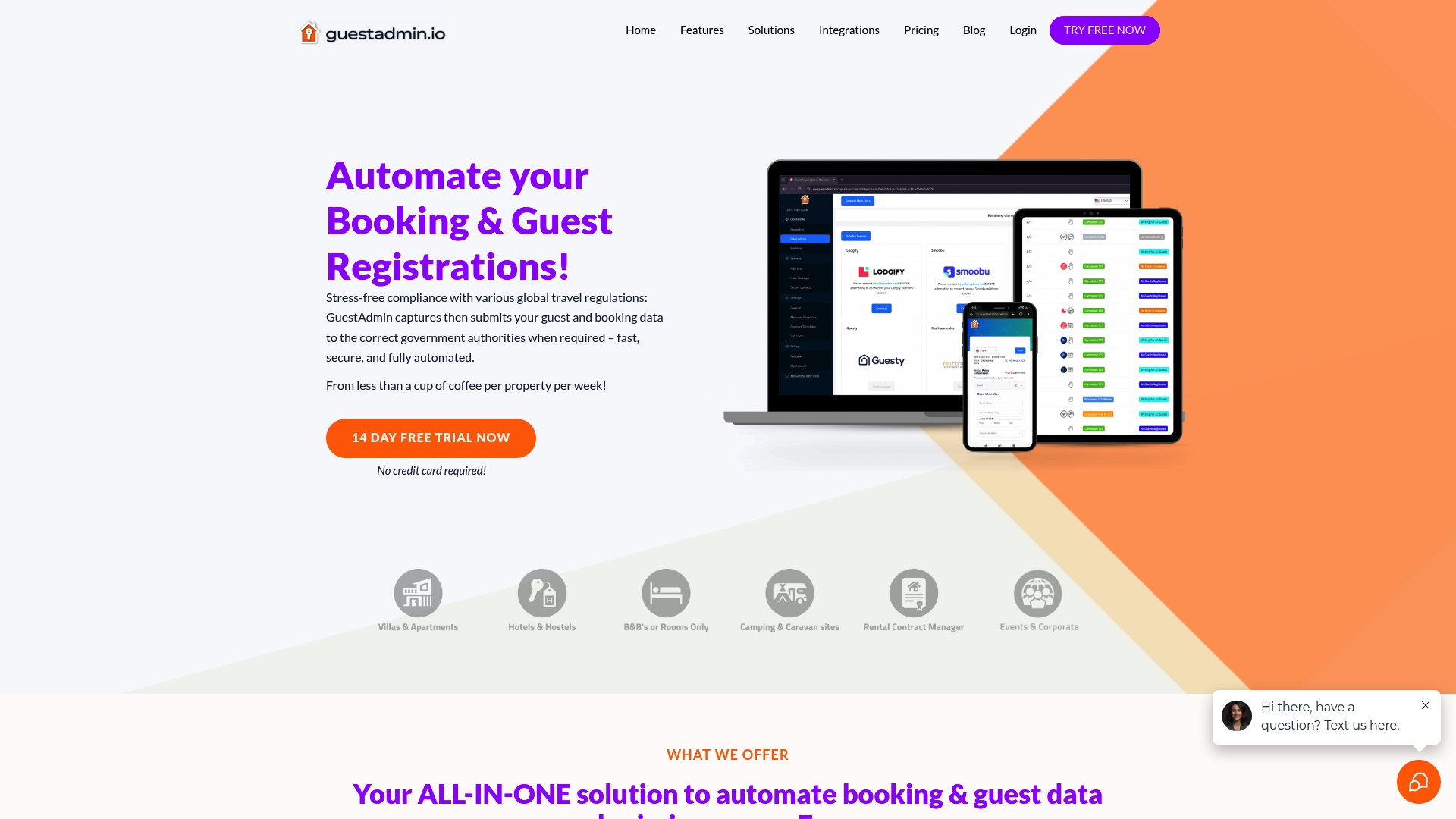
Integrating GuestAdmin with your existing workflows takes minutes, not weeks. Our platform connects seamlessly with major property management systems and booking channels, pulling guest data automatically without duplicate entry. Real-time dashboards show submission status across your entire portfolio, whilst automated alerts flag any issues requiring attention. This visibility gives you confidence that compliance obligations are met consistently.
Explore our comprehensive resources to understand how automation transforms property management. Learn about multi-property management explained to grasp portfolio-wide automation benefits. Discover how to automate guest management whilst maintaining service quality. Review multi-property management tips from experienced professionals who have successfully scaled their operations. Visit GuestAdmin today to see how our automation solutions can reduce your workload whilst strengthening compliance.
FAQ
What are the best time-saving automation tips for property managers?
Prioritise compliance automation first to meet EU regulatory demands and reduce legal risk. Once compliance systems function reliably, automate guest communications and dynamic pricing to reclaim additional hours weekly. Maintain human oversight on complaints, service recovery situations, and edge cases requiring empathy and judgement rather than automated responses.
How much time can automation save per property each week?
Automation reduces workload by 50-60%, saving 2-6 hours per property weekly depending on portfolio size and automation scope. Guest communication automation delivers the largest share of these savings by handling routine messages automatically. Compliance automation saves additional time by eliminating manual data entry and submission processes.
Can small portfolios benefit from automation despite lower volume?
Small portfolios gain the highest percentage time savings despite lower absolute hours reclaimed. A 5-property portfolio saving 3 hours weekly per property reclaims 15 hours monthly, representing a substantial proportion of total management time. Automation tools scale to fit portfolios of all sizes, with many offering pricing tiers suitable for smaller operators. Compliance risk reduction benefits small portfolios equally, as regulatory penalties apply regardless of portfolio size.
What error rate should property managers target with automation?
Target error rates below 2% to ensure automation quality matches or exceeds manual processes. Higher error rates indicate configuration problems, inadequate data validation, or tool limitations requiring immediate attention. Track errors by category to identify patterns and guide improvement efforts. Regular audits of automated submissions verify accuracy and maintain compliance standards.
How do property managers balance automation with personal service?
Configure automation to handle routine, predictable interactions whilst routing complex situations to experienced staff. Use automation for booking confirmations, check-in instructions, and standard enquiries. Reserve human attention for complaints, service recovery, unique guest requests, and relationship building. This balanced approach maximises efficiency whilst preserving the personal touch that generates positive reviews and repeat bookings.
2 Comments
Why automate hotel compliance: Boost efficiency, cut risks
[…] automation time-saving tips available to property managers today exist precisely because manual processes are so fragile. A […]
Essential types of rental compliance for short-term lets
[…] and variability of local rules make human error almost inevitable without technology to support it. Automation tips for managers running properties across borders show just how much time and risk can be removed from the […]