

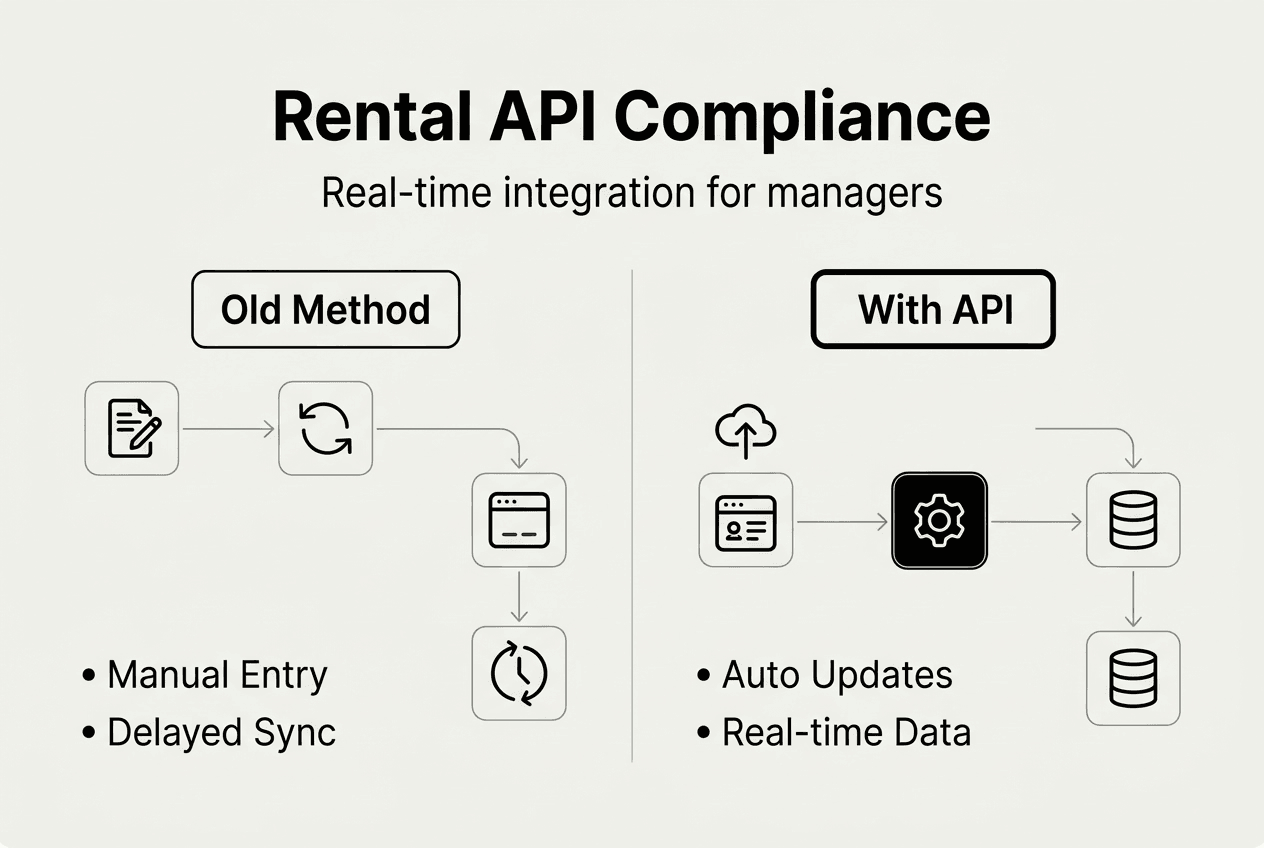
Managing short-term rentals across multiple platforms whilst staying compliant with evolving regulations feels overwhelming. Many property managers assume their existing channel manager handles everything, but polling-based systems often create gaps that lead to double bookings and compliance failures. Custom API development connects PMS to booking sites for real-time synchronisation, eliminating manual data entry and ensuring instant updates across all channels. With Regulation (EU) 2024/1028 mandating interoperable registration and monthly data reporting via national single digital entry points, API integration has become essential for European property managers seeking both operational efficiency and legal compliance.
Table of Contents
- Understanding Api Integration For Property Managers
- Why Channel Managers Fall Short And How Apis Solve Double Booking
- Navigating Eu Regulations: Compliance Through Api Integration
- Planning And Executing A Successful Api Integration Project
- Discover Seamless Property Management Automation
Key takeaways
| Point | Details |
|---|---|
| Real-time synchronisation | API integrations eliminate double bookings by updating availability instantly across all booking channels. |
| EU compliance mandate | Regulation 2024/1028 requires standardised data sharing through interoperable systems for short-term rentals. |
| Custom flexibility | Tailored API development offers property-specific rules and dynamic pricing beyond traditional channel managers. |
| Technical planning | Early engagement with developers and clear integration scope prevent costly implementation issues. |
| Operational efficiency | Automated data validation and multi-channel coordination reduce manual work and human errors. |
Understanding API integration for property managers
API integration represents the automated exchange of data between software systems through Application Programming Interfaces, creating seamless communication channels that transform how property managers handle bookings. When you implement custom API development, your property management system connects directly to booking platforms for instant updates of availability, rates, and reservations without human intervention. This differs fundamentally from manual processes where staff copy information between systems, risking errors and delays.
The technical architecture relies on asynchronous calls that trigger immediate responses when events occur, such as a new booking or cancellation. Instead of waiting for scheduled checks, your system receives notifications the moment changes happen on any connected platform. This event-driven approach ensures your inventory reflects reality across all channels simultaneously, preventing the costly overlap that damages guest relationships and revenue.
Modern API integrations handle multi-property bookings online with sophisticated validation rules that verify data accuracy before processing. The system checks guest information, payment details, and booking parameters against your requirements, flagging inconsistencies for review rather than accepting flawed data. This automated quality control eliminates the manual verification burden whilst maintaining high standards.
Key features that distinguish effective API integration include:
- Instant availability updates across all connected booking channels
- Automated validation of guest data and payment information
- Multi-channel synchronisation maintaining consistent rates and inventory
- Flexible configuration supporting property-specific business rules
- Real-time reporting for operational insights and compliance tracking
Understanding how channel manager systems compare to direct API integration helps you evaluate which approach suits your operational needs. Traditional channel managers act as intermediaries, whilst API integration creates direct connections that reduce latency and improve control over data flows. The technical difference translates to measurable improvements in booking accuracy and guest satisfaction.
Why channel managers fall short and how APIs solve double booking
Traditional channel managers rely on polling mechanisms that check for updates at fixed intervals, typically every 5 to 15 minutes, creating windows where booking conflicts can occur. Channel managers often use polling, checking updates every 5 to 15 minutes, risking double bookings especially in high-demand areas where properties receive multiple enquiries simultaneously. During peak booking periods, this delay proves particularly problematic as eager travellers secure reservations on different platforms before your system registers the first booking.

The consequences extend beyond operational inconvenience. When two guests arrive expecting the same room, you face immediate costs for alternative accommodation, potential compensation, and the reputational damage that spreads through reviews and social media. Guest dissatisfaction creates long-term harm that affects future bookings, whilst the immediate financial impact includes lost revenue from cancellations and emergency rebooking expenses.
Event-driven API architectures eliminate these risks by pushing updates instantly when changes occur. Your property management system receives notifications within seconds of any booking activity, allowing immediate inventory adjustments across all connected channels. This architectural difference transforms booking management from reactive to proactive, preventing conflicts before they materialise.
A 30-room hotel in a high-demand area can face significant costs due to double bookings, including emergency accommodation expenses, compensation payments, and lasting reputational damage that reduces future occupancy rates.
Property managers evaluating technology solutions should consider:
- Polling frequency and the resulting data latency in channel manager systems
- Event-driven notification capabilities in API integrations
- Historical performance data showing booking conflict rates
- Vendor transparency about technical architecture and update mechanisms
- Scalability as your property portfolio grows
The shift towards API rental compliance in Europe reflects growing recognition that real-time data accuracy serves both operational and regulatory requirements. Compliance authorities increasingly expect immediate reporting capabilities that polling-based systems struggle to deliver consistently. Understanding these technological distinctions helps you choose solutions that support both current operations and future regulatory demands.
Examining real-time booking synchronisation examples demonstrates how instant updates create smoother guest experiences whilst reducing administrative burden. The technical infrastructure supporting these systems represents a meaningful investment in operational reliability that pays dividends through reduced conflicts and improved guest satisfaction.
Navigating EU regulations: Compliance through API integration
The regulatory landscape for short-term rentals across Europe underwent fundamental transformation with Regulation (EU) 2024/1028 mandating interoperable registration and monthly data reporting via national single digital entry points. This framework replaces fragmented national approaches with standardised requirements that affect every property manager operating in the European market. Understanding how API integration supports compliance helps you avoid penalties whilst streamlining administrative processes.
| Compliance aspect | Previous approach | New EU framework |
|---|---|---|
| Registration | Varied by country | Standardised through digital entry points |
| Data reporting | Manual monthly submissions | Automated API-based sharing |
| Verification | Inconsistent enforcement | Interoperable validation systems |
| Platform obligations | Limited accountability | Mandatory data transmission |
API integrations facilitate automatic sharing of registration numbers and booking data with national authorities through standardised protocols. Your system transmits required information without manual intervention, ensuring timely compliance whilst reducing administrative workload. The regulation establishes specific data formats and transmission standards that properly configured APIs handle automatically, eliminating the formatting errors that plague manual submissions.
The regulation standardises enforcement infrastructure across EU Member States for short-term rentals, creating consistent expectations regardless of property location. This harmonisation simplifies multi-country operations for managers with diverse portfolios, as your API integration can handle varied national requirements through a single technical framework. The interoperability requirements ensure your compliance data flows seamlessly to relevant authorities without requiring separate submissions for each jurisdiction.
Verification methods enforced by the regulation include automated cross-checks between registration databases and booking platform data, identifying discrepancies that trigger enforcement actions. API integrations support these verification processes by maintaining accurate, timestamped records that demonstrate compliance when authorities conduct audits. The digital trail created through automated data sharing provides robust evidence of regulatory adherence.
Pro Tip: Begin planning your API integration at least six months before national compliance deadlines to allow proper testing and configuration alignment with specific requirements in each jurisdiction where you operate properties.
Property managers must recognise that compliance extends beyond initial registration to ongoing monthly reporting obligations. Your 2026 EU rental compliance guide should include provisions for automated data transmission that maintains compliance without requiring constant manual attention. The technical infrastructure supporting these requirements represents a strategic investment in operational sustainability.
Implementing solutions to automate booking compliance for short-term rentals in 2026 positions your business to meet current regulations whilst adapting to future requirements as enforcement mechanisms evolve. The flexibility inherent in properly designed API integrations allows configuration updates that address regulatory changes without requiring complete system overhauls.
Planning and executing a successful API integration project
Successful API integration requires systematic planning that addresses technical, operational, and business requirements before implementation begins. Project scope depends on existing PMS API quality and number of booking channels to integrate, with complexity scaling based on your property portfolio size and operational requirements. Following a structured approach reduces implementation risks whilst ensuring your integration delivers expected benefits.
Implement your API integration through these essential steps:
- Assess your current PMS API capabilities and documentation quality to determine integration feasibility.
- Define clear scope and goals including specific booking channels, compliance requirements, and performance targets.
- Engage experienced developers with proven expertise in property management API integrations.
- Conduct rigorous testing across all booking scenarios before launching live operations.
- Monitor post-launch performance using defined KPIs such as booking accuracy and compliance reporting efficiency.
Verifying API documentation quality proves critical because incomplete or outdated documentation creates implementation delays and increases development costs. Request sample API calls and responses from vendors, examining whether documentation covers error handling, rate limits, and data validation requirements. Developer support availability matters equally, as integration challenges inevitably arise requiring vendor assistance for resolution.
Pro Tip: Consult technical experts before committing to specific PMS or API providers, as switching systems after discovering integration limitations proves far more expensive than thorough upfront evaluation.
Custom API development offers flexibility benefits allowing property-specific rules and dynamic pricing adjustments that generic solutions cannot accommodate. Clear integration strategies improve outcomes, such as eliminating double bookings and supporting real-time price updates, by aligning technical implementation with business objectives. Your integration should reflect your unique operational requirements rather than forcing your processes to match system limitations.
Establishing clear KPIs before implementation provides measurable benchmarks for evaluating integration success. Track metrics including booking synchronisation speed, data accuracy rates, compliance reporting timeliness, and reduction in manual data entry hours. These measurements demonstrate return on investment whilst identifying areas requiring optimisation.
Property managers should explore multi-property management best practices that leverage API capabilities for portfolio-wide efficiency gains. Centralised dashboards fed by integrated APIs provide comprehensive visibility across your entire operation, supporting strategic decisions based on real-time data rather than delayed reports.
Developing a multi-property workflow for compliance ensures your API integration supports regulatory requirements whilst streamlining operations. The technical foundation established through proper integration planning creates scalability that accommodates portfolio growth without requiring system replacements.
Discover seamless property management automation
GuestAdmin transforms how property managers handle compliance and booking coordination through API-based automation that eliminates manual data entry whilst ensuring regulatory adherence. Our platform connects directly with your existing property management system, synchronising booking data across channels and automatically submitting required information to national authorities within mandated timeframes. You reduce administrative burden, avoid legal penalties, and gain operational visibility through real-time dashboards that track compliance status across your entire portfolio.
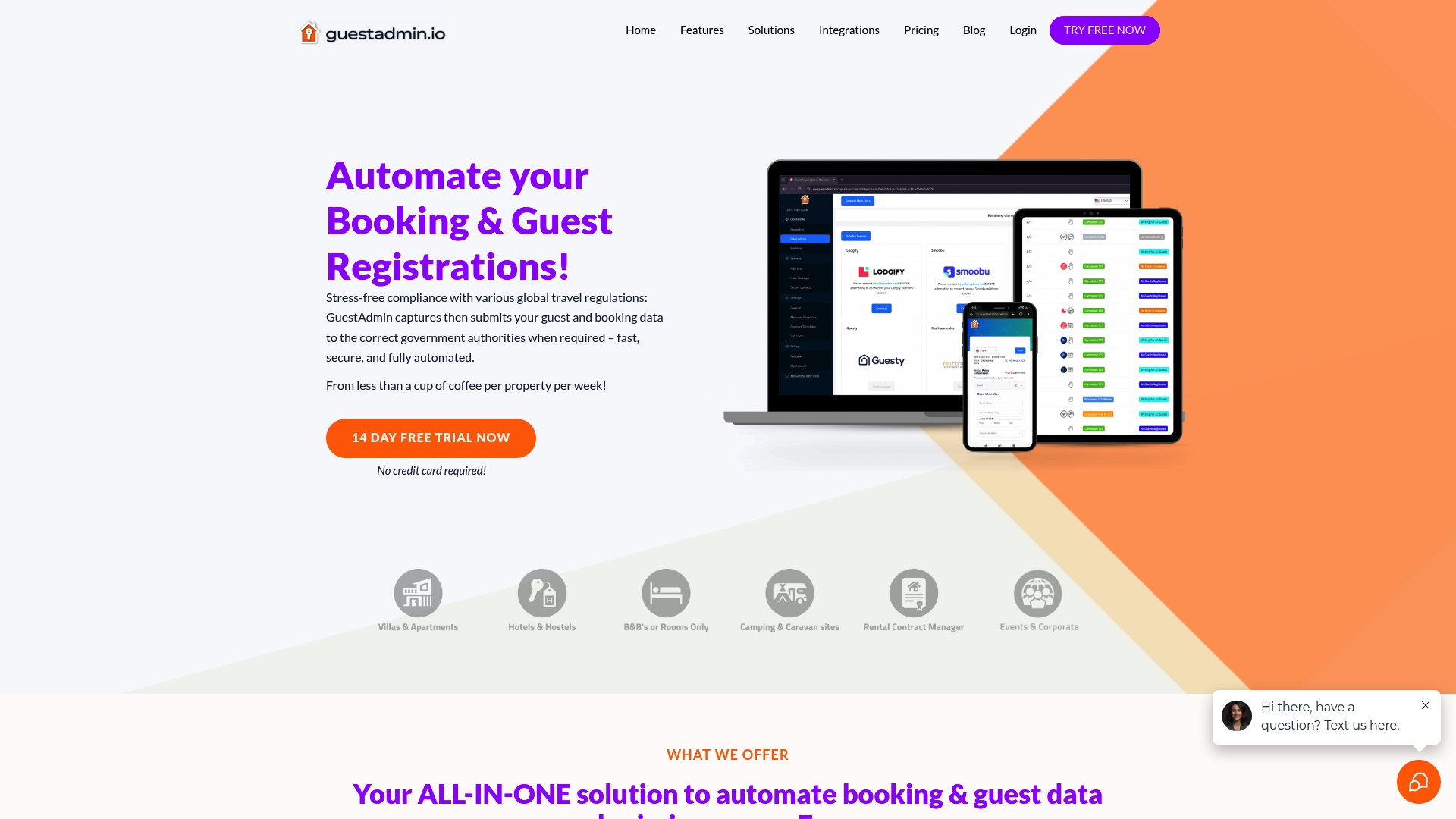
The integration supports multi-property operations with centralised control that simplifies complex regulatory landscapes. AI-powered data processing verifies guest information accuracy before submission, catching errors that manual processes miss. GDPR-compliant data handling protects both your business and guest privacy whilst meeting stringent European requirements.
Pro Tip: Assess your current systems against upcoming compliance deadlines and consider integrating GuestAdmin to improve operational efficiency whilst ensuring regulatory compliance across all jurisdictions where you operate.
Explore our detailed resources on automating booking compliance solutions to understand how API integration transforms daily operations. Our multi-property management explained guide demonstrates portfolio-wide benefits, whilst our legal compliance 2026 guide keeps you informed about evolving requirements.
Frequently asked questions
What is API integration, and why is it critical for property managers?
API integration allows automatic, real-time data exchange between property management systems and booking platforms, eliminating manual processes that create errors and delays. It prevents double bookings through instant availability updates, automates legal data reporting to comply with EU regulations, and improves operational efficiency by reducing administrative workload. Learn more about API rental compliance explained to understand implementation benefits.
How does EU Regulation 2024/1028 affect short-term rental management?
Managers must share booking and registration data using standardised interoperable systems that connect to national digital portals. The regulation mandates interoperable data systems and monthly reporting through digital entry points, creating consistent compliance requirements across all EU member states. Non-compliance risks significant penalties and potential operating restrictions. Review our legal compliance 2026 guide for detailed requirements.
What should I consider before starting API integration for my properties?
Assess your PMS API quality and compatibility with channels you want to integrate, as poor documentation or limited functionality creates implementation challenges. Define clear goals such as eliminating double bookings and maintaining accurate pricing across platforms. Strong API documentation and developer support are essential to avoid bugs and delays, so verify vendor capabilities before committing. Explore multi-property management tips for additional guidance.
How long does API integration typically take to implement?
Implementation timelines vary from four to twelve weeks depending on PMS complexity, number of booking channels, and customisation requirements. Simple integrations with well-documented APIs and standard requirements complete faster, whilst complex multi-property setups requiring custom business rules need extended development and testing periods. Allocate additional time for thorough testing before launching live operations to prevent disruptions.
Can API integration work with my existing property management system?
Most modern property management systems offer API capabilities, though functionality and documentation quality vary significantly between providers. Request API documentation from your current PMS vendor and have technical experts evaluate whether it supports your integration requirements. If your existing system lacks adequate API support, consider migrating to platforms designed for seamless integration with booking channels and compliance systems.
22 Comments
allopurinol 100mg price
allopurinol 100mg price
allopurinol 100mg price
zoloft pill
zoloft pill
zoloft pill
lasix water pill generic
lasix water pill generic
lasix water pill generic
PMS integration explained: boost compliance and efficiency
[…] difference in performance between these methods is significant. API-based integrations outperform polling by reducing booking overlaps, because data is exchanged the moment a change occurs rather than at […]
kamagra kaunas
kamagra kaunas
kamagra kaunas
domperidone bangladesh
domperidone bangladesh
domperidone bangladesh
semaglutid tabletter uten resept
semaglutid tabletter uten resept
semaglutid tabletter uten resept
semaglutid köpa online sverige
semaglutid köpa online sverige
semaglutid köpa online sverige
cheap viagra india
cheap viagra india
cheap viagra india
levitra reviews forum
levitra reviews forum
levitra reviews forum
metronidazole gel after effects
metronidazole gel after effects
metronidazole gel after effects
bupropion hydrochloride er xl 150
bupropion hydrochloride er xl 150
bupropion hydrochloride er xl 150
toradol migraine relief overview
toradol migraine relief overview
toradol migraine relief overview
minoxidil foam vs liquid regrowth insights
minoxidil foam vs liquid regrowth insights
minoxidil foam vs liquid regrowth insights
minoxidil mechanism explained
minoxidil mechanism explained
minoxidil mechanism explained
sildenafil unsafe combinations
sildenafil unsafe combinations
sildenafil unsafe combinations
insurance coverage insights
insurance coverage insights
insurance coverage insights
orlistat mode of action
orlistat mode of action
orlistat mode of action
Managing Compliance Across Property Portfolios - Automated guest check-in for short term rental, hotels & campsites
[…] business, not after a guest arrives. If the booking is imported from an OTA, PMS, iCal calendar, API or direct booking form, the compliance system should receive the core reservation data automatically. It can then […]
How to Automate Guest Check-Ins Without Gaps - Automated guest check-in for short term rental, hotels & campsites
[…] reservations prevents this. Use integrations, APIs or webhooks to bring booking information into one compliance workflow as soon as it is created or changed. For […]
Duration Terminology Guide
Duration Terminology Guide
Duration Terminology Guide
Duration Variability Analysis
Duration Variability Analysis
Duration Variability Analysis