

Manual guest data submissions cause audit failures in 63% of European short-term rental cases, yet most property managers still rely on spreadsheets and manual entry. As 2026 regulations tighten across Europe, automation and AI have become essential for staying compliant. This guide explores emerging compliance trends, the role of technology in streamlining guest data management, GDPR privacy requirements, and solutions for managing multiple properties efficiently.
Table of Contents
- 2026 Compliance Regulation Overview
- Automation and AI in Guest Data Management
- Integration with PMS and OTA Platforms
- GDPR and Data Privacy Compliance
- Challenges of Multi-Property Compliance
- Streamline Your Compliance with GuestAdmin.io
- Frequently Asked Questions
Key Takeaways
| Point | Details |
|——-|———||
| European Reporting Mandates | 24+ European countries require 24-hour guest data reporting with strict penalties for delays. |
| Automation Efficiency Gains | AI reduces manual errors by 85% and cuts administrative time by 60% compared to manual processes. |
| GDPR Data Security | GDPR violations account for 35% of regulatory fines, secure retention for 5-10 years is mandatory. |
| Integration Benefits | PMS and OTA platform integration reduces regulatory penalties by 40% through real-time synchronization. |
| Multi-Property Risks | Managing 10+ properties manually exponentially increases compliance failure risk, automation is critical. |
2026 Compliance Regulation Overview
European short-term rental regulations have evolved dramatically. Mandatory 24-hour guest data reporting now applies in 20+ European countries, creating unprecedented compliance pressure for property managers. Each jurisdiction enforces unique requirements, reporting formats, and submission protocols.
Country-specific variations create significant operational complexity. Italy, Spain, France, and Germany each maintain distinct regulatory frameworks requiring tailored compliance approaches. Property managers operating across borders face the challenge of tracking multiple deadlines, data fields, and submission portals simultaneously.
Financial penalties for non-compliance have escalated sharply. Fines now range from €500 to €50,000 per violation depending on jurisdiction and severity. Repeat offenders face property listing suspensions and potential criminal charges in some regions. The financial risk alone makes compliance automation a business necessity rather than a convenience.
Key regulatory requirements by region include:
- UK: Mandatory registration schemes with council authorities and HMRC reporting for income exceeding thresholds
- Italy: CIN codes for all properties, immediate guest data submission to local police portals
- Spain: Regional tourism registry compliance with varying reporting windows from 24 to 48 hours
- France: Declaration numbers required, tourist tax collection and remittance with detailed guest records
- Germany: Municipal registration requirements with guest data retention for tax authority audits
Understanding these UK short-term rental law changes helps property managers anticipate compliance evolution across Europe. Regulations continue tightening as governments seek tax revenue and oversight of the growing short-term rental market.
Automation and AI in Guest Data Management
AI-powered compliance tools have transformed guest data management from a manual burden into an automated workflow. Modern platforms capture guest information directly from booking channels, validate data fields in real time, and submit reports to government portals without human intervention. This technology shift addresses the core problem: human error in manual data entry.
The benefits are quantifiable and substantial. AI reduces manual errors by 85% and cuts submission delays from days to under 24 hours, ensuring property managers meet strict reporting deadlines consistently. Administrative staff previously spending hours on compliance tasks can redirect their efforts to guest experience and business growth.

Automation excels at handling the 24-hour reporting deadline challenge. Systems monitor new bookings continuously, extract required data fields, format submissions according to jurisdiction requirements, and transmit reports automatically. This reliability eliminates the risk of missed deadlines due to staff oversight or workload spikes during peak booking periods.
Pro Tip: Review your automation workflows monthly to identify exceptions requiring manual intervention, such as incomplete guest profiles or unusual booking scenarios that AI flags for human review.
Audit failure rates drop dramatically when property managers implement AI-driven systems. Manual processes leave gaps in record retention, inconsistent data formatting, and missed submissions that trigger regulatory scrutiny. Automated systems maintain complete audit trails, standardized data formats, and proof of timely submission that satisfy regulatory inspections.
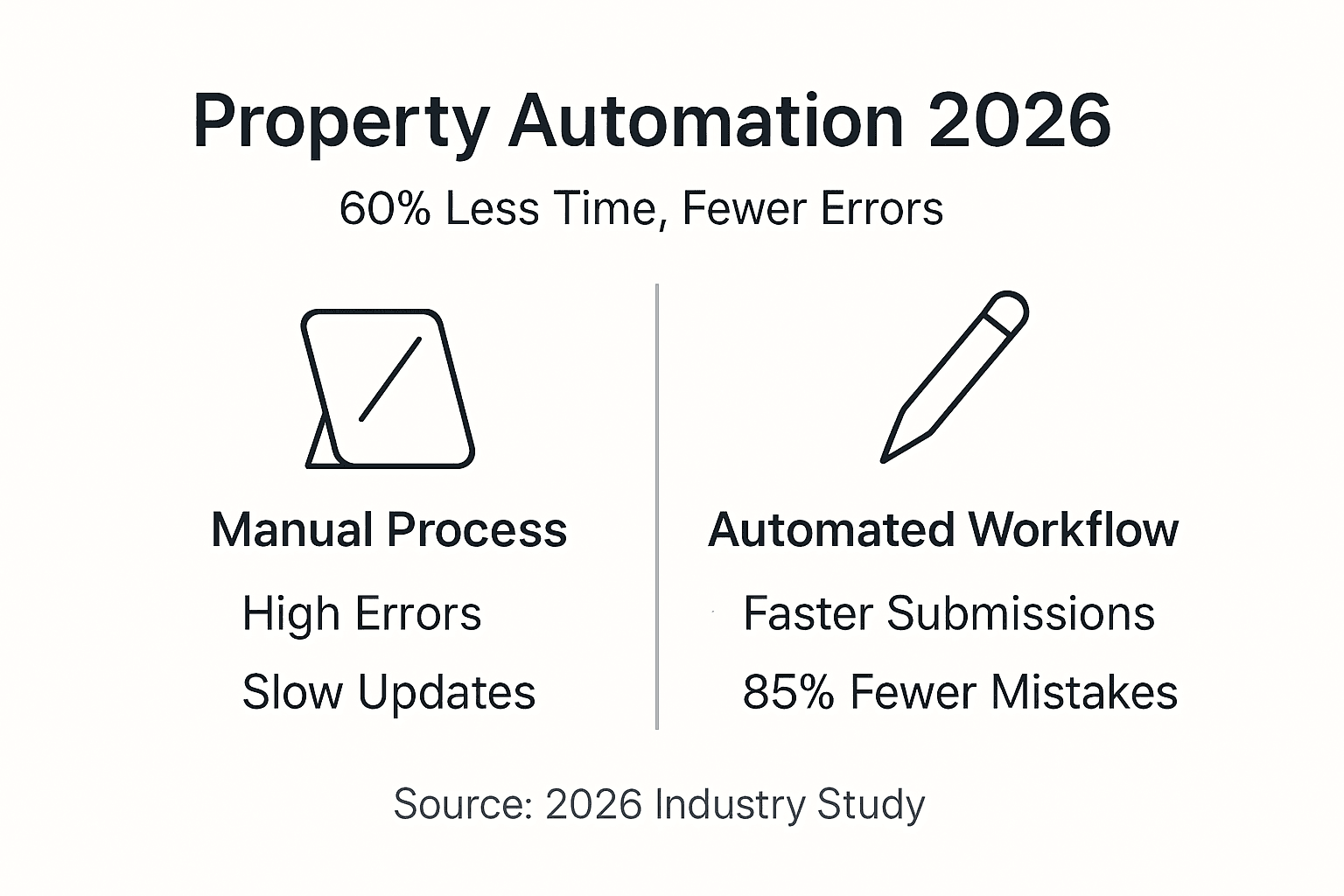
Exploring automation in rentals compliance reveals diverse property automation examples that demonstrate measurable compliance improvements across European markets.
Integration with PMS and OTA Platforms
Seamless integration between compliance software and existing property management systems eliminates data silos that cause compliance failures. When your PMS, OTA channels, and compliance platform communicate automatically, guest data flows without manual transfers or duplicate entry. This integration creates a unified workflow from booking confirmation to regulatory submission.
| Workflow Type | Error Rate | Admin Time | Penalty Risk |
|---|---|---|---|
| Manual Entry | 18-25% | 12 hrs/week | High |
| Integrated Automated | 2-4% | 5 hrs/week | Low |
Integrating compliance software with PMS and OTAs reduces administrative time by 60% and cuts regulatory penalties by 40%, making it one of the highest-return technology investments for property managers. Real-time booking data synchronization ensures compliance systems access complete, current guest information the moment reservations are confirmed.
Key integration benefits include:
- Automatic guest data extraction from Airbnb, Booking.com, Vrbo, and direct bookings
- Real-time synchronization eliminating lag between booking and compliance submission
- Centralized dashboard displaying compliance status across all properties and booking channels
- Reduced staff training requirements as systems handle technical complexity
- API connectivity supporting custom PMS platforms and regional booking channels
Multi-property managers benefit most from integration. Coordinating compliance across dozens of properties and multiple OTA channels becomes unmanageable manually. Integrated systems scale effortlessly, processing hundreds of bookings daily while maintaining consistent compliance across jurisdictions.
Choosing integration-friendly platforms requires evaluating API documentation, supported PMS/OTA connections, webhook capabilities, and vendor technical support quality. Platforms offering pre-built connectors to major European booking channels reduce implementation time and technical complexity.
Learn how a multi-property management workflow leverages technology integration benefits to maintain compliance at scale.
GDPR and Data Privacy Compliance
GDPR fundamentally shapes how short-term rental operators handle guest data. The regulation mandates specific protections for personal information collected during bookings, imposing strict requirements on data processing, storage, and retention. Property managers must balance regulatory reporting obligations with guest privacy rights, a challenge that requires robust technical safeguards.
Essential GDPR compliance steps include:
- Implement end-to-end encryption for all guest data in transit and at rest
- Establish role-based access controls limiting data visibility to authorized personnel only
- Maintain lawful retention periods based on jurisdiction (5-10 years for tax and regulatory purposes)
- Document data processing activities and maintain records of consent where applicable
- Establish procedures for guest data access requests and deletion after retention periods expire
- Conduct regular security audits and vulnerability assessments of data systems
Cloud SaaS platforms with GDPR-compliant encryption enable secure, 24/7 guest data access without risking data breaches that trigger regulatory penalties. Modern platforms handle encryption, access logging, and security updates automatically, removing the technical burden from property managers.
EU digital compliance laws mandate guest data retention from 5 to 10 years depending on country and data type. Tax authorities require extended retention for financial records, while police registries may have different timeframes for guest registration data. Automated systems track retention schedules and archive data appropriately, ensuring compliance without manual calendar tracking.
Pro Tip: Schedule quarterly reviews of data access logs and retention policies to catch unauthorized access attempts early and verify automated deletion processes are functioning correctly.
Neglecting GDPR standards carries severe consequences. Data privacy violations account for 35% of regulatory fines levied against hospitality operators, with penalties reaching 4% of annual revenue for serious breaches. Beyond financial costs, data breaches damage guest trust and brand reputation.
Implementing comprehensive data security in Europe starts with following a thorough GDPR compliance checklist and choosing platforms with proven SaaS security features aligned with EU data retention laws.
Challenges of Multi-Property Compliance
Compliance complexity grows exponentially with portfolio size. Managing a single property requires tracking one set of regulations, one reporting deadline, and one government portal. Adding properties across different cities or countries multiplies these requirements, creating an operational burden that overwhelms manual processes.
Managing more than 10 properties manually creates severe compliance risks. Each property may operate under different regional regulations with unique reporting formats, varying deadlines, and separate government portals. Staff juggling spreadsheets across multiple jurisdictions inevitably miss deadlines, submit incomplete data, or apply wrong reporting formats.
Jurisdictional challenges include:
- Regional regulation variations requiring different data fields and submission formats
- Inconsistent reporting deadlines ranging from 24 hours to weekly submissions
- Multiple government portals with different login credentials and interface designs
- Language barriers in local compliance documentation and portal instructions
- Changing regulations requiring constant monitoring of multiple jurisdictions
Property managers operating 10+ units across multiple European jurisdictions without automation face compliance failure rates exceeding 40%, compared to under 5% for those using centralized automated systems.
Centralized multi-property management platforms solve these scalability challenges. A single dashboard displays compliance status across all properties, flags upcoming deadlines, and automates submissions to the correct portals in the required formats. This centralization transforms compliance from a distributed headache into a manageable workflow.
Key features required for effective multi-property compliance technology:
- Unified dashboard showing real-time compliance status across entire portfolio
- Jurisdiction-specific rule engines handling regional regulatory variations automatically
- Bulk data processing capabilities managing hundreds of bookings simultaneously
- Automated deadline tracking with alerts for exceptions requiring attention
- Multi-currency and multi-language support for international property portfolios
- Detailed audit logs proving compliance across all properties during regulatory inspections
Discover practical multi-property management tips that help operators scale their portfolios while maintaining consistent regulatory compliance.
Streamline Your Compliance with GuestAdmin.io
Navigating 2026’s compliance landscape requires technology purpose-built for European short-term rental regulations. GuestAdmin.io automates the entire guest data compliance workflow, from booking capture through government submission, eliminating manual errors and missed deadlines.
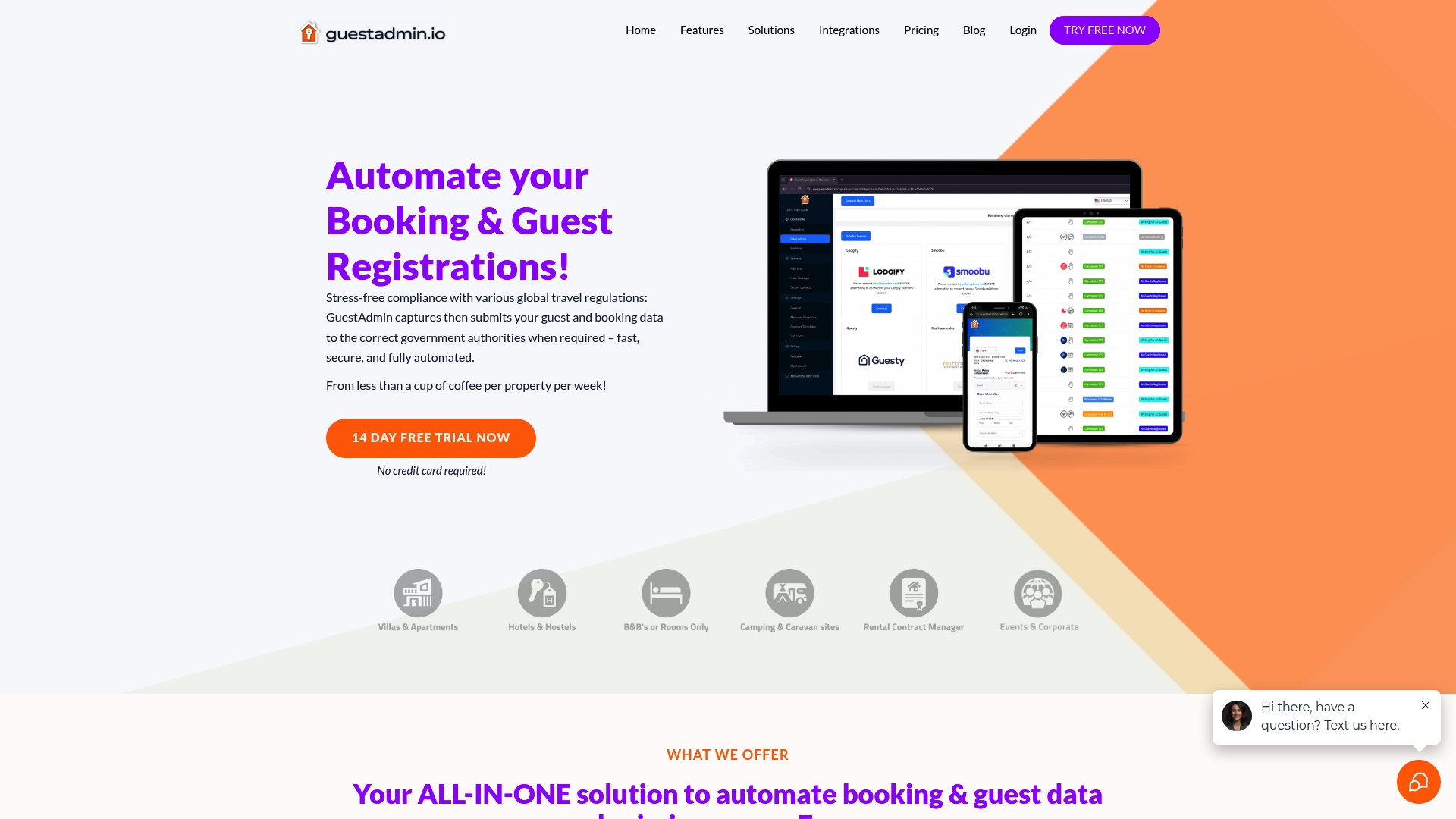
The platform integrates seamlessly with your existing PMS and OTA channels, providing AI-powered data processing, GDPR-compliant secure storage, and centralized control across unlimited properties. Property managers report 60% reductions in administrative time while virtually eliminating compliance failures.
Whether you manage a single property or a diverse European portfolio, GuestAdmin handles jurisdictional complexity automatically. Explore essential multi-property management tips and discover how automation in rentals compliance Europe transforms your operations. Ready to eliminate compliance headaches? Learn how multi-property management explained can simplify your regulatory obligations.
Frequently Asked Questions
What are the top compliance deadlines short-term rental managers in Europe must meet in 2026?
Most European jurisdictions require guest data submission within 24 hours of check-in, though some regions allow 48-hour windows. Property managers must also meet quarterly or annual reporting deadlines for tax authorities, tourist tax remittance schedules, and property registration renewal dates that vary by country.
How does AI improve accuracy in guest data submissions?
AI validates data fields in real time, flagging incomplete or incorrectly formatted information before submission. It automatically maps guest data to jurisdiction-specific requirements, eliminating format errors that cause rejections, and learns from corrections to improve accuracy over time.
What key GDPR rules must property managers follow for guest information?
You must implement encryption for data storage and transmission, limit access to authorized personnel only, and retain guest data only for legally required periods. You’re required to process data lawfully with documented purposes, respond to guest access requests within 30 days, and report breaches to authorities within 72 hours.
How can I integrate compliance workflows with my existing PMS and OTA channels?
Modern compliance platforms offer pre-built connectors to major PMS systems like Guesty, Hostaway, and Lodgify, plus direct OTA integrations with Airbnb, Booking.com, and Vrbo. API and webhook support enables custom integrations for specialized systems, creating automated data flow without manual exports or imports.
What automation features best support managing multiple properties under different regulations?
Look for jurisdiction-specific rule engines that automatically apply correct reporting formats per property location, centralized dashboards showing compliance status across your portfolio, bulk processing for high booking volumes, and automated deadline tracking with exception alerts for issues requiring manual review.
One Comment
Role of PMS in hospitality: a guide for European rentals
[…] shift from reactive to proactive compliance is perhaps the most significant property management automation trend of the current period. Managers who treat compliance as a monthly crisis will struggle as […]