

Starting May 2026, Regulation (EU) 2024/1028 mandates interoperable digital registration and monthly data reporting for short-term rental platforms and hosts across Europe. Property managers face fragmented rules and manual compliance burdens that consume hours each week. This guide explores how real-time booking dashboards address these challenges, automate reporting obligations, and improve operational efficiency while ensuring you meet the new regulatory requirements.
Table of Contents
- Understanding Real-Time Booking Dashboards
- Key Compliance Requirements For European Short-Term Rentals
- Integration And Automation Benefits Of Real-Time Dashboards
- Common Misconceptions About Real-Time Booking Dashboards
- Operational Insights And Risk Management Through Dashboards
- Implementing Real-Time Booking Dashboards In Your Property Management
- Summary And Next Steps For Compliance Success
- Streamline Your Compliance With GuestAdmin’s Real-Time Dashboard Solutions
- Frequently Asked Questions About Real-Time Booking Dashboards
Key takeaways
| Point | Details |
|---|---|
| Real-time booking dashboards provide live booking, occupancy, and revenue data essential for regulatory compliance | These tools capture instant updates using APIs and webhooks to synchronise multiple platforms |
| EU Regulation 2024/1028 requires monthly data reporting starting May 2026 | Property managers must submit guest, booking, and registration data to national authorities |
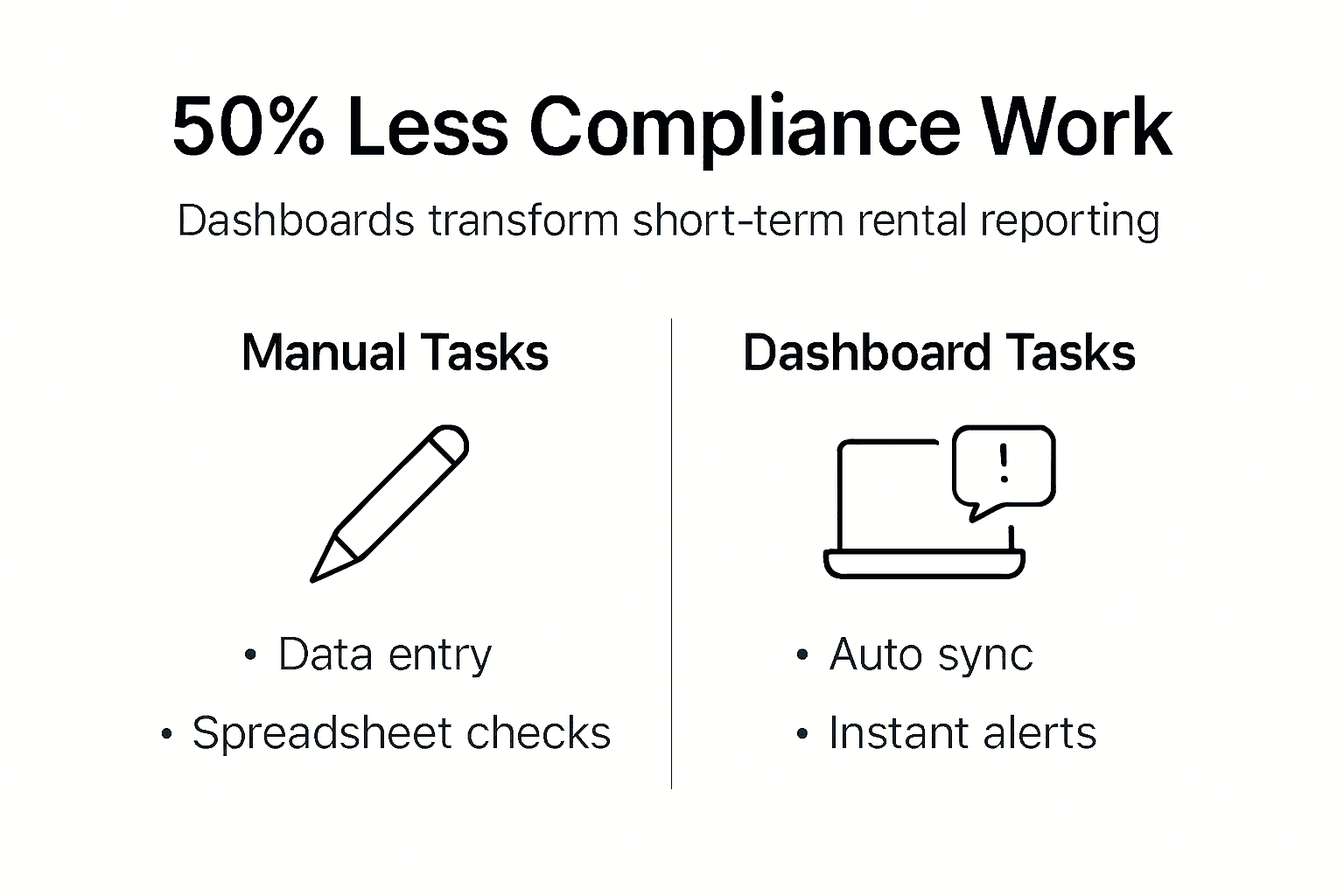
| Automation reduces administrative workload by up to 50% | Dashboards eliminate manual data entry and minimise compliance errors |
| Dashboards improve operational efficiency and risk management | Early alerts help avoid fines from data mismatches or missing registrations |
| GDPR-compliant data handling is essential | Modern dashboards use encryption and follow 18-month retention limits |
Understanding real-time booking dashboards
Real-time booking dashboards are centralised platforms that provide live booking, occupancy, and revenue data across your entire property portfolio. Unlike traditional management systems that update periodically, real-time dashboards capture instant updates on bookings, occupancy, and revenue using APIs and webhooks to synchronise multiple platforms instantly.
These systems use advanced technology to connect your property management system (PMS) and online travel agency (OTA) platforms. APIs enable seamless data exchange between systems, whilst webhooks push instant notifications whenever bookings occur, are modified, or cancelled. This ensures your compliance data remains accurate without manual intervention.
Key features that support compliance:
- Centralised view of all properties with instant booking updates
- Automated data accuracy across multiple platforms simultaneously
- Real-time synchronisation with Airbnb, Booking.com, Vrbo, and other OTAs
- Immediate visibility into occupancy patterns and guest information
The impact extends beyond simple visibility. Real-time dashboards fundamentally change how you manage compliance by providing the instant data feeds required for regulatory submissions. You gain complete oversight of booking status, guest details, and registration numbers across all properties from a single interface.
Pro tip: Ensure your dashboard integrates with all your OTAs and PMS for full data coverage, preventing gaps that could trigger compliance violations.
Key compliance requirements for European short-term rentals
The regulatory landscape for short-term rentals across Europe has transformed dramatically. Regulation (EU) 2024/1028 mandates interoperable digital registration and monthly data reporting starting May 2026, creating uniform obligations whilst respecting national variations.
The regulation establishes five critical mandates:
- Digital registration systems: All Member States must implement interoperable platforms for property registration by May 2026
- Monthly data reporting: Platforms and hosts must submit booking data, guest numbers, and registration information monthly to national authorities
- Activity reporting: You must report the number of nights and guests per booking, total nights available, and your unique registration number
- Verification processes: National and municipal systems must verify registration details before listings go live
- Penalty frameworks: Non-compliance triggers fines, listing suspensions, or criminal prosecution depending on jurisdiction
National and municipal authorities maintain additional requirements beyond the EU framework. Cities like Paris, Barcelona, and Amsterdam enforce strict day limits, neighbour notification rules, and primary residence requirements. Your dashboard must accommodate these local variations whilst meeting baseline EU obligations.
Deadlines matter critically. The EU Regulation 2024/1028 implementation begins 24 months after publication, with platforms facing immediate reporting duties. Missing monthly submission windows can trigger automatic fines or listing removals, making automated, timely data delivery essential.
Real-time booking dashboards facilitate accurate submissions by automatically collecting required data fields as bookings occur. This eliminates the scramble at month-end to compile guest numbers, booking dates, and registration details manually. Your system captures everything at the point of booking and formats it for regulatory submission.
Integration and automation benefits of real-time dashboards
Connecting your real-time dashboard with existing PMS and OTA platforms transforms compliance from a manual burden into an automated background process. Modern dashboards support deep integration with major systems like Guesty, Hostaway, Airbnb, Booking.com, and Vrbo through robust API connections.
Automation delivers measurable operational improvements:
- Eliminates repetitive manual data entry across multiple platforms
- Reduces human errors that trigger compliance violations
- Synchronises guest information and booking details instantly
- Maintains consistent registration data across all listings
Real-world implementations demonstrate significant efficiency gains. Automated compliance solutions with real-time dashboards can reduce administrative workload by up to 50%, freeing property managers to focus on guest experience and business growth rather than paperwork.
| Metric | Manual Process | Automated Dashboard |
|---|---|---|
| Monthly compliance time | 8-12 hours | 2-4 hours |
| Data entry errors | 12-18% | 2-3% |
| Missed submission deadlines | 15-20% | <1% |
| Staff hours per property | 2.5 hours | 1.2 hours |
The error reduction proves particularly valuable. Manual data transfer between systems introduces typos, missed fields, and formatting mistakes that regulators flag as violations. Automated systems capture data at source and validate formats before submission, virtually eliminating preventable errors.

Consider submitting booking data with automation rather than compiling spreadsheets manually. Your dashboard pulls booking details directly from OTA platforms as they occur, ensuring no reservations slip through cracks. When authorities request monthly reports, the system generates compliant files instantly.
Successful property automation examples show managers reclaiming entire workdays each month. One property management company with 45 units reduced compliance administration from three full days monthly to under six hours, allowing staff reallocation to revenue-generating activities.
Pro tip: Choose dashboards with deep API connections for real-time syncing to maximise benefits, avoiding systems that rely on periodic batch uploads which create data gaps.
Common misconceptions about real-time booking dashboards
Several persistent myths prevent property managers from adopting automated compliance solutions. Understanding the facts helps you make informed technology decisions.
Misconception 1: Dashboards only improve operational visibility
Many managers view dashboards purely as business intelligence tools for monitoring occupancy and revenue. Whilst these capabilities matter, dashboards are not just operational tools but critical for legal data submissions under EU regulations. Modern compliance requires instant data access and automated reporting that manual systems cannot deliver reliably.
Misconception 2: Manual compliance tracking suffices for small portfolios
Property managers with fewer than ten units often assume manual processes work adequately. Research contradicts this assumption. Properties using automated systems faced 40% fewer compliance issues than those tracking manually, regardless of portfolio size. Even single-property operators benefit from automation that eliminates forgotten submissions and data errors.
Misconception 3: GDPR makes real-time dashboards legally risky
Some managers fear that centralising guest data in dashboards increases privacy compliance exposure. Modern systems actually enhance GDPR compliance through purpose-built security features. Compliant dashboards employ end-to-end encryption, implement strict access controls, and enforce automatic data retention limits that manual systems struggle to maintain consistently.
Misconception 4: Integration complexity outweighs benefits
The perception that connecting dashboards to existing systems requires extensive technical expertise deters adoption. Contemporary platforms offer plug-and-play integration with major PMS and OTA systems through pre-built connectors. Most implementations complete within hours rather than weeks, with minimal disruption to ongoing operations.
Understanding multi-property management explained reveals how dashboards scale effortlessly from single units to large portfolios. The same automation that supports ten properties handles one hundred with identical efficiency, making early adoption strategically valuable as your business grows.
The EU STR transparency rules explicitly require data sharing capabilities that manual processes cannot fulfil reliably. Authorities expect machine-readable formats, structured data fields, and timely submissions that dashboards deliver automatically. Continuing manual processes after May 2026 creates unnecessary regulatory risk.
Recent enforcement data shows digital monitoring reduces compliance issues substantially compared to traditional approaches. Regulators increasingly use automated systems to cross-reference platform data with registration databases, instantly flagging discrepancies that manual filers miss.
Operational insights and risk management through dashboards
Beyond compliance automation, real-time dashboards provide actionable business intelligence that improves both regulatory adherence and rental performance. These systems consolidate metrics that would otherwise require manual calculation across disconnected platforms.
Key performance indicators available instantly:
- Occupancy rate across individual properties and entire portfolio
- Average daily rate (ADR) with trend analysis and competitor benchmarking
- Revenue per available room (RevPAR) showing true profitability
- Booking lead times revealing demand patterns and pricing opportunities
Compliance tracking features show registration status for each property, upcoming renewal deadlines, and audit readiness scores. You can identify which listings lack required documentation before regulators flag violations. The system highlights registration numbers approaching expiry, prompting timely renewals that avoid listing suspensions.
Early warning capabilities prove invaluable for risk management. Public authorities use real-time data monitoring to detect unlicensed listings, helping compliant managers avoid fines by ensuring their registrations remain visible and current. Your dashboard alerts you to mismatches between platform listings and registration databases before authorities issue penalties.
| KPI Category | Without Dashboard | With Real-time Dashboard |
|---|---|---|
| Data visibility | Delayed 24-72 hours | Instant updates |
| Compliance status clarity | Manual checks required | Automated alerts |
| Risk identification | Reactive after violations | Proactive warnings |
| Audit preparation time | 8-16 hours | 1-2 hours |
The audit readiness advantage matters significantly during regulatory inspections. Authorities can request documentation with minimal notice, requiring you to produce booking records, guest data, and registration correspondence quickly. Dashboards maintain organised archives with instant retrieval, demonstrating compliance professionalism that influences regulatory relationships positively.
Revenue optimisation opportunities emerge from consolidated data visibility. You spot booking pattern shifts across properties, identifying which units perform below potential. Dynamic pricing adjustments based on real-time occupancy data maximise revenue whilst maintaining compliance with any rate restrictions local regulations impose.
Implementing multi-property management tips through your dashboard creates systematic approaches to both compliance and performance improvement. Standardised processes ensure every property meets regulatory obligations whilst optimising guest experience and financial returns.
Pro tip: Regularly monitor compliance alerts within your dashboard to act swiftly on risks, scheduling weekly reviews rather than waiting for monthly deadlines.
Implementing real-time booking dashboards in your property management
Selecting and integrating the right dashboard requires evaluating specific criteria that ensure both regulatory compliance and operational effectiveness. This systematic approach prevents costly mistakes and implementation delays.
Step 1: Evaluate compliance features
Verify the dashboard supports all regulatory requirements for your operating jurisdictions. Essential capabilities include automated monthly reporting, registration number tracking, guest data collection compliant with local rules, and formatting that matches authority submission requirements. Request demonstrations showing actual compliance workflows rather than generic feature lists.
Step 2: Confirm platform integration compatibility
Ensure native integration with your existing PMS and all OTA platforms you use. Check for real-time API connections rather than batch synchronisation that creates data gaps. Verify webhook support for instant booking notifications. Request integration timelines and technical requirements from vendors before committing.
Step 3: Assess user interface and accessibility
Test the dashboard with staff who will use it daily. Intuitive interfaces reduce training time and improve adoption rates. Verify mobile access for managing compliance on the go. Confirm reporting formats provide actionable insights rather than overwhelming data dumps.
Step 4: Validate data security and GDPR compliance
Modern dashboards must implement robust security protecting sensitive guest information. GDPR requires encrypted data storage with retention limited to 18 months post-delisting, with explicit consent mechanisms and data subject rights support. Verify certifications like ISO 27001 and SOC 2 demonstrating security maturity.
Step 5: Plan integration execution
Schedule implementation during low-occupancy periods to minimise disruption. Coordinate with your PMS provider for optimal API configuration. Import historical booking data to establish baseline compliance records. Run parallel operations for two weeks to verify data accuracy before fully transitioning.
Step 6: Establish ongoing monitoring and training
Schedule regular staff training on dashboard features and compliance workflows. Implement monthly audits verifying data accuracy and submission completeness. Review security settings quarterly to maintain access controls as staff changes. Update integration configurations when you add new OTA channels.
Understanding property management data security requirements helps you evaluate vendor security claims critically. Encryption alone is insufficient; seek comprehensive data governance covering access logging, breach notification procedures, and vendor security assessments.
Effective multi-property management workflow implementation starts with standardising processes across your portfolio. Configure identical compliance checks for all properties, ensuring no units receive inconsistent treatment that creates regulatory gaps.
The GDPR compliance details specify retention periods, purpose limitations, and data subject rights your dashboard must support. Verify automatic deletion schedules that remove guest data after regulatory retention periods expire, preventing unnecessary privacy risk.
Pro tip: Schedule regular compliance reviews and dashboard updates to avoid lapses, setting quarterly assessments that verify continued regulatory alignment as rules evolve.
Summary and next steps for compliance success
Compliance with EU and local short-term rental regulations is mandatory starting May 2026. Real-time booking dashboards reduce administrative time by up to 50%, improve data accuracy dramatically, and minimise fine exposure through automated monitoring and alerts.
These systems enhance operational insights supporting business growth beyond mere regulatory adherence. You gain visibility into performance metrics, occupancy patterns, and revenue optimisation opportunities whilst maintaining perfect compliance records. The technology scales effortlessly as your portfolio expands, making early adoption strategically valuable.
Evaluate and implement real-time automated compliance tools promptly. The May 2026 deadline approaches rapidly, and establishing reliable systems before mandatory reporting begins prevents last-minute scrambling. Property managers who automate now gain competitive advantages through superior compliance records and operational efficiency.
Your next action should involve researching dashboard providers, requesting demonstrations, and beginning integration planning. The investment in automated compliance pays dividends immediately through recovered administrative time and reduced violation risk.
Streamline your compliance with GuestAdmin’s real-time dashboard solutions
GuestAdmin offers AI-powered, GDPR-compliant real-time dashboards purpose-built for European short-term rental compliance. Our platform integrates seamlessly with your existing PMS and OTA platforms, delivering automated data collection and regulatory submission that reduces reporting workload by up to 50% whilst enforcing compliance with evolving EU rules.
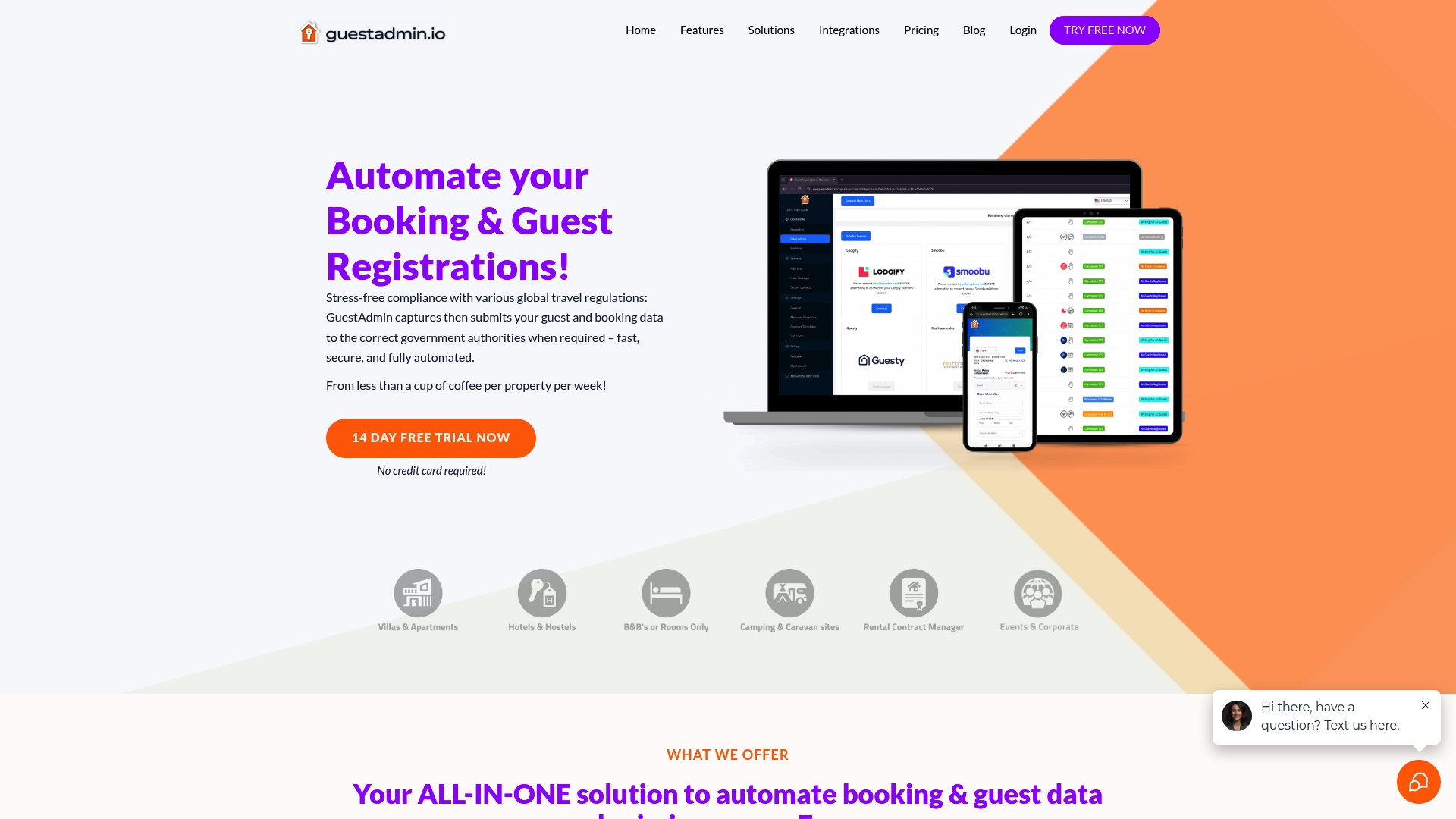
Our multi-property management platform supports portfolios of any size with unified compliance oversight, instant booking synchronisation, and automated monthly reporting to national authorities. You gain complete visibility into registration status, compliance alerts, and audit readiness across your entire portfolio from a single, intuitive interface.
Pro tip: Take advantage of GuestAdmin’s demo and consultation services for personalised setup, ensuring your specific compliance requirements and existing systems integrate optimally from day one.
Frequently asked questions about real-time booking dashboards
What data do real-time booking dashboards collect and report?
Dashboards collect booking dates, guest numbers, nights stayed, registration numbers, and host identification details required by EU Regulation 2024/1028. They capture this information automatically from your PMS and OTA platforms as bookings occur, formatting it for regulatory submission. The system maintains secure archives meeting GDPR retention requirements whilst providing instant access for audits.
How do real-time dashboards ensure GDPR compliance?
Modern dashboards employ end-to-end encryption, implement strict access controls limiting data visibility to authorised personnel, and enforce automatic deletion after the 18-month retention period expires. They maintain detailed audit logs showing who accessed guest data and when. Purpose limitation features ensure guest information is used only for regulatory compliance and operational necessities.
Can dashboards integrate with all major OTA platforms?
Leading dashboards support native integration with Airbnb, Booking.com, Vrbo, Expedia, and other major platforms through pre-built API connectors. They also integrate with popular PMS systems like Guesty, Hostaway, and Lodgify. Real-time synchronisation uses webhooks to capture booking changes instantly rather than periodic batch updates that create data gaps.
What happens if I don’t comply with the new EU STR data reporting rules?
Non-compliance triggers escalating penalties including financial fines proportional to rental income, temporary listing suspensions on major platforms, and potential criminal prosecution for persistent violations. Authorities can access platform data directly, making non-compliance easily detectable. Property managers face reputational damage and competitive disadvantages when regulatory issues force listing removals.
How quickly do dashboards update booking information?
Real-time dashboards update within seconds of booking confirmation using webhook notifications from OTA platforms. API synchronisation runs continuously, capturing modifications, cancellations, and new reservations instantly. This immediate visibility ensures compliance data remains current for monthly reporting requirements and provides accurate operational insights for dynamic pricing and availability management.
One Comment
Booking dashboards for property managers: streamline compliance
[…] effective May 2026, requires monthly guest data submissions to Single Digital Entry Points, and real-time booking dashboards cut compliance work by 50% for managers who adopt them early. This guide breaks down exactly what booking dashboards […]