

TL;DR:
- Managing short-term rentals across Europe requires automated data workflows that ensure compliance and reduce errors. Booking dashboards centralize reservation data, streamline reporting, and provide real-time insights to optimize occupancy and revenue. Prioritizing data accuracy and automation capabilities is crucial for legal adherence and operational efficiency.
Managing short-term rentals across Europe has never been more demanding. Regulatory frameworks like EU Regulation 2024/1028 require structured, timely data submissions that manual spreadsheets simply cannot handle reliably. The booking dashboard benefits available to property managers today go far beyond tidy calendars and colour-coded availability grids. They automate the compliance workflows that used to consume hours each month, reduce human error, and give you real-time visibility across your entire portfolio. If you are still relying on manual processes, the risks are not just inefficiency; they are legal and financial.
Table of Contents
- Understanding booking dashboards in short-term rentals
- Key benefits of automated booking dashboards for compliance and efficiency
- How real-time data enhances occupancy and revenue management
- Choosing the right booking dashboard: Features and compliance considerations
- Implementing booking dashboards for your short-term rental portfolio
- A fresh perspective: Why speed and data integrity trump fancy dashboards
- Streamline your compliance with GuestAdmin’s automated dashboard solutions
- Frequently asked questions
Understanding booking dashboards in short-term rentals
A booking dashboard is a centralised web-based interface that aggregates reservation data from all your connected platforms and presents it in one place. For property managers operating across Europe, that means no more juggling separate portals, reformatted spreadsheets, or copy-pasted guest records. Everything flows in automatically and is available instantly.
The advantages of booking dashboards become especially clear in a compliance context. European short-term rental regulation now requires property managers to report rental activity data monthly through the Single Digital Entry Point (SDEP), which enables ingestion and provision of regulated areas and rental activity data to support monthly reporting workflows under EU regulation. A dashboard that is built to support this framework does not just display your bookings; it structures and formats that data automatically so it is ready for submission.
Here is what a well-built booking dashboard does in practice:
- Centralises booking data from OTA platforms, direct bookings, and property management systems (PMS) into a single view
- Automates data formatting so records meet the structured requirements of regulatory reporting bodies
- Maintains an audit trail of all bookings and guest data for compliance documentation
- Reduces reliance on spreadsheets by replacing manual reformatting with automated workflows
- Alerts managers to gaps or anomalies in booking records before they cause reporting errors
You can unlock efficiency with dashboards when you move away from fragmented tools, or explore further why use dashboards in rentals if you are still weighing the transition.
Now that we understand what booking dashboards are, let us explore the main benefits they deliver to property managers.
Key benefits of automated booking dashboards for compliance and efficiency
The most measurable booking dashboard benefits show up in error reduction and processing speed. Automated workflows in booking dashboards reduce errors by 90% and speed processing by 65%, leading to improved operational efficiency. For a property manager submitting monthly rental activity reports to national authorities, a 90% reduction in data errors is not a minor convenience. It is the difference between a clean submission and a regulatory penalty.
Beyond accuracy, automated dashboards deliver benefits across several operational dimensions:
- Faster reporting cycles: Automated data collection and formatting means monthly reports are ready in minutes rather than hours
- Real-time compliance status: You can see at a glance whether all properties have the required guest data recorded and formatted correctly
- Audit-ready documentation: Every booking action is logged automatically, creating a complete record if authorities request historical data
- Reduced administrative burden: Staff spend less time on data entry and more time on guest experience and revenue management
- Consistent data quality: Automated validation flags incomplete or incorrectly formatted entries before they reach the submission stage
Statistic to note: Automated booking workflows reduce errors by 90% and accelerate processing by 65%, according to B2B travel portal research. For managers handling dozens of properties, that efficiency gain compounds significantly month over month.
Explore how booking dashboards streamline compliance across multi-property portfolios to understand the full operational picture.
With these operational benefits in mind, we can next investigate the power of real-time data offered by these dashboards.

How real-time data enhances occupancy and revenue management
Real-time data is where booking dashboards move from compliance tools to genuine business intelligence platforms. Real-time dashboards provide occupancy alerts, live KPIs, and anomaly detection, enabling faster optimisation of pricing and marketing strategies.
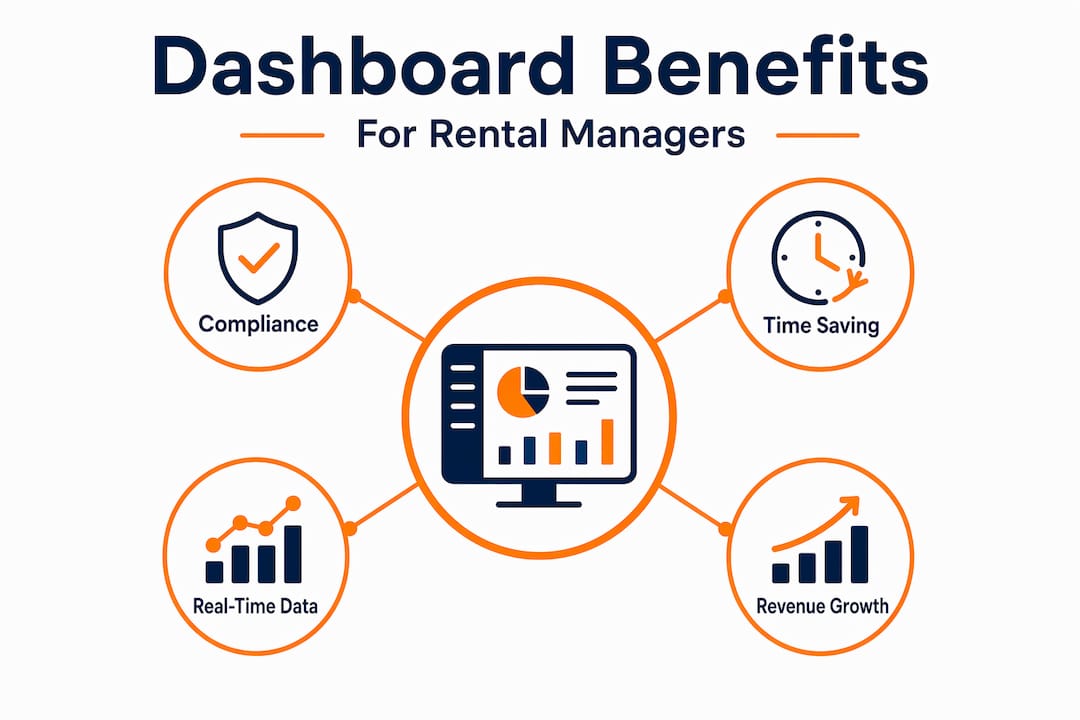
Consider a practical scenario. You manage fifteen apartments across two cities. A local event is announced and demand spikes in one location. Without a real-time dashboard, you might not notice the uptick until the next morning. With one, you receive an occupancy alert immediately, adjust pricing that evening, and capture the higher-rate bookings before competitors react.
Real-time booking dashboards deliver these specific advantages for revenue management:
- Instant occupancy visibility across all properties, with filters by location, property type, or booking channel
- Live KPI tracking including average daily rate (ADR), revenue per available room (RevPAR), and length of stay
- Anomaly detection that flags unexpected drops in bookings, which could indicate a listing issue or payment problem
- Competitive benchmarking by comparing your occupancy and pricing performance against local market averages
- Marketing feedback loops showing which channels and promotions are driving conversions, so you can reallocate spend quickly
See the real-time booking dashboards benefits in action when you connect live analytics to your compliance reporting workflow.
Pro Tip: Set automated occupancy alerts at 70% and 90% thresholds for each property. The 70% alert gives you time to adjust pricing upward before you fill up; the 90% alert is your cue to activate a waiting list or promote last-minute availability on secondary channels.
Understanding the influence of real-time data prepares us to assess how booking dashboards fit into different compliance and operational contexts.
Choosing the right booking dashboard: Features and compliance considerations
Not every booking dashboard is built for the European regulatory environment. When evaluating options, the key features of booking systems that matter most for compliance are structured data output, GDPR-compliant storage, and SDEP compatibility. As the SDEP reference design makes clear, the key benefit of a booking dashboard in this context is ensuring consistent availability of structured data for monthly regulatory submission workflows.
Use this comparison to guide your evaluation:
| Feature | Basic dashboard | Compliance-ready dashboard |
|---|---|---|
| Booking data aggregation | Manual import | Automated via API/webhook |
| Regulatory data formatting | Manual reformatting | Auto-formatted for SDEP |
| GDPR data storage | Unspecified | Verified compliant |
| Audit trail | Limited | Full, timestamped log |
| Reporting deadline alerts | None | Automated notifications |
| Multi-platform integration | 1-2 channels | Multiple OTAs and PMS |
| User access controls | Basic | Role-based permissions |
A compliance-ready dashboard should tick every item in the right-hand column. Anything less, and you are creating manual workarounds that reintroduce the errors and delays you were trying to eliminate.
Key features to prioritise when selecting a dashboard:
- Automated data formatting for submission to national regulatory bodies via SDEP
- GDPR-compliant data transmission and storage, with clear data retention policies
- Integration with your existing OTA and PMS platforms to avoid double entry
- Role-based user access controls to limit who can view or modify sensitive guest data
- Automated alerts for reporting deadlines so nothing falls through the gaps
Learn how to automate booking compliance from the point of data collection, and understand best practices for secure booking data processing before committing to a platform.
Pro Tip: Before signing any software contract, ask the vendor directly: “Does your platform support SDEP-formatted data exports for EU monthly reporting?” If they do not know what SDEP is, keep looking.
Having criteria for selection helps apply practical steps towards improving booking management through the right tools.
Implementing booking dashboards for your short-term rental portfolio
Getting a booking dashboard live across your portfolio requires more than clicking an activation button. Done well, implementation takes two to four weeks and involves careful data migration, team training, and a short parallel-running period where you verify automated outputs against your existing records.
Here is a practical implementation sequence:
- Audit your current data sources: List every platform feeding booking data into your current process, including OTAs, direct booking tools, and any PMS you already use.
- Map your compliance requirements: Identify which national authorities you report to, what data fields they require, and what your monthly submission deadlines are.
- Configure integrations before going live: Connect all data sources via API or webhook and verify that data is flowing correctly before you switch off manual processes.
- Train your team on compliance use cases: Make sure everyone who touches the dashboard understands not just how to read it, but how it feeds into your regulatory reporting.
- Run a parallel period: For the first month, run automated and manual processes side by side to catch any discrepancies before you rely fully on the dashboard.
- Set up alerts and review cycles: Configure deadline alerts, anomaly notifications, and a monthly review calendar to keep compliance monitoring active.
Review time-saving tips to automate compliance for specific workflows you can hand off immediately, and use the compliance checklist for Europe 2026 to make sure nothing is missing before your first automated submission.
Pro Tip: The parallel-running period is where most implementations catch subtle data mapping errors, such as a property identifier that does not match between your OTA and your PMS. Fix these during the parallel period, not after your first regulatory submission.
With integration steps clear, let us explore a unique perspective on maximising your booking dashboard investment.
A fresh perspective: Why speed and data integrity trump fancy dashboards
The market for booking management software is full of platforms competing on interface design. Clean layouts, drag-and-drop calendars, colour-coded charts. These features are visible and easy to demonstrate in a sales call. What is harder to show, but far more important, is the quality of the data flowing underneath.
SDEP’s design makes this point implicitly: the main benefit of booking dashboards for compliance is consistent, reliable data availability for regulatory reporting, not prettier reports. That framing should change how you evaluate any platform.
A dashboard that looks impressive but pulls data inconsistently from your OTA integrations, or silently drops records when a booking is modified, is a compliance liability. The penalty for a missed or inaccurate submission to a national authority is not aesthetic. It is financial and reputational. Speed matters too. When EU regulations require monthly reporting, a platform that processes and formats data within 24 hours gives you meaningful buffer time to review and correct before deadlines.
Many property managers are also underestimating the workflow integration challenge. Connecting a dashboard to three OTA platforms sounds straightforward until you discover that each platform uses slightly different field naming conventions for the same data point. A platform built for automated hotel compliance benefits handles this normalisation automatically. One that does not leaves that mapping work to you.
The honest truth is this: your guests do not care which dashboard you use. Your national authority does not care either. What matters is that the right data arrives in the right format on time, every month, without failure. Prioritise that above everything else, and the operational benefits including the occupancy insights, the pricing alerts, and the revenue analytics will follow naturally from having clean, reliable data at the centre.
Streamline your compliance with GuestAdmin’s automated dashboard solutions
Managing short-term rental compliance across Europe does not have to mean constant administrative pressure. GuestAdmin’s platform is built specifically for property managers who need their booking data to work harder, not just look cleaner.
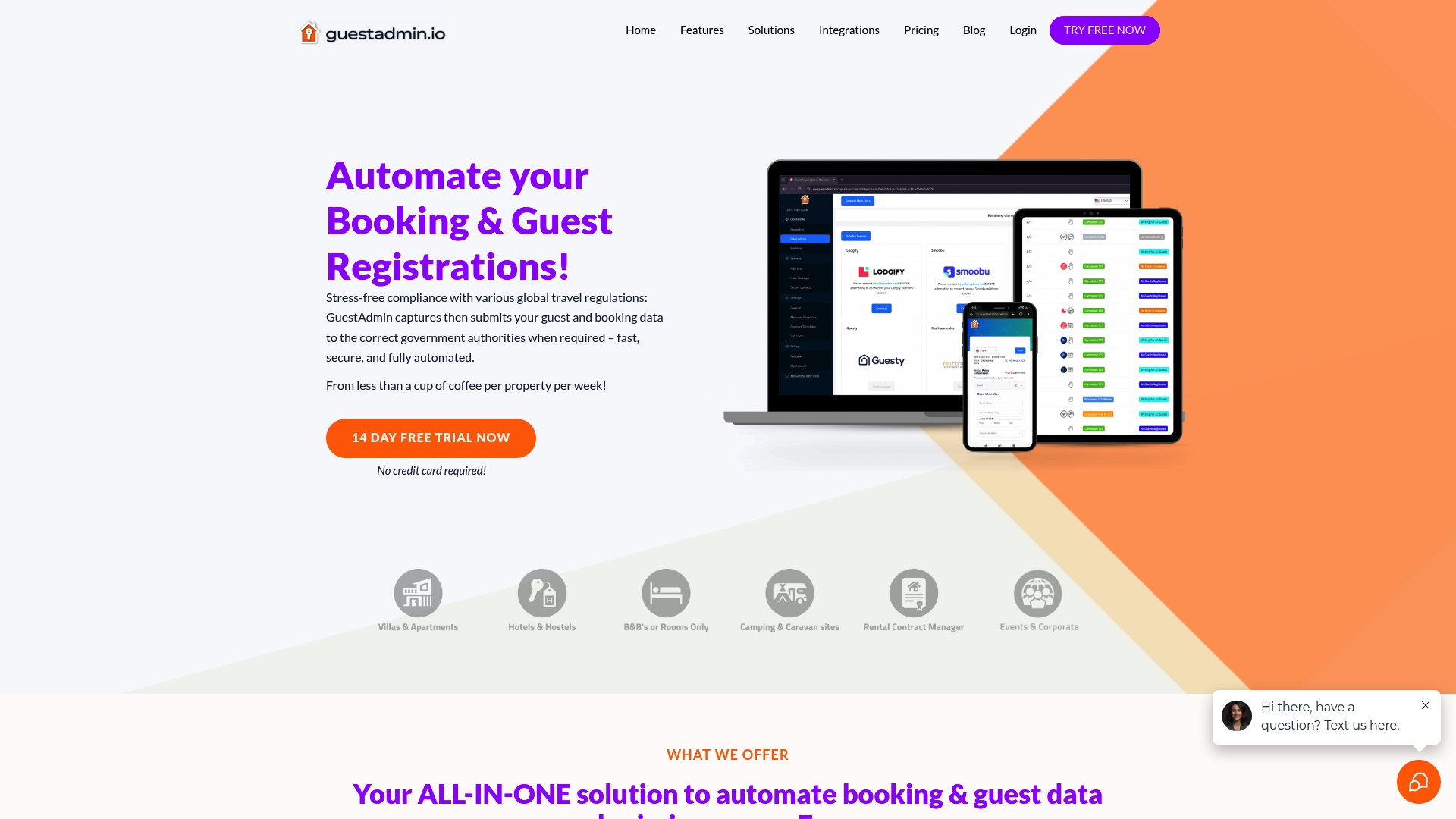
GuestAdmin automates guest compliance from data collection through to regulatory submission, with AI-powered processing that formats records for SDEP-compatible reporting within 24 hours. Real-time dashboards give you live occupancy data, automated deadline alerts, and a full audit trail across every property in your portfolio. Integration with popular OTA and PMS platforms means your data flows in automatically, with no manual reformatting required. If you are ready to boost efficiency with automation and want to explore practical time-saving compliance tips, GuestAdmin is designed to be the last compliance tool you need to evaluate.
Frequently asked questions
What is a booking dashboard in short-term rental management?
A booking dashboard is a digital platform that centralises reservation data and automates workflows to help property managers track bookings, manage compliance, and optimise operations efficiently. Platforms aligned with the SDEP framework process booking data from multiple sources for structured regulatory reporting.
How do booking dashboards reduce errors in rental management?
Automated booking dashboards significantly lower errors by replacing manual data entry with real-time updates and automated workflows, cutting human mistakes by up to 90%. This reduction is particularly valuable when submitting regulatory reports where data accuracy directly affects compliance status.
Can real-time booking dashboards improve rental revenue?
Yes. Real-time dashboards provide instant insights on occupancy and market changes, enabling timely pricing and marketing adjustments. Faster pricing optimisation based on live occupancy data can meaningfully increase revenue per available room across your portfolio.
Are booking dashboards compliant with EU regulations?
Many booking dashboards are designed to comply with EU rules like Regulation (EU) 2024/1028 by providing structured, timely data formatted for submission via SDEP. Platforms that ensure consistent structured data for monthly submission workflows help managers meet their regulatory obligations without manual intervention.
How do booking dashboards support busy property managers?
They automate time-consuming tasks such as tracking bookings across multiple platforms, generating formatted compliance reports, and sending alerts ahead of regulatory deadlines. This frees managers to focus on occupancy performance and guest experience rather than administrative data handling.