

Managing short-term rentals across Europe in 2026 means navigating a complex web of regional regulations, from guest registration mandates to GDPR data protection requirements. Property managers face mounting pressure to maintain legal compliance whilst juggling operational demands across multiple jurisdictions. A structured compliance checklist transforms this challenge into a manageable system, ensuring you meet every regulatory obligation without costly penalties or operational disruptions. This guide delivers a practical, actionable checklist designed specifically for European property managers overseeing short-term rentals, helping you stay ahead of evolving travel regulations and protect your business.
Table of Contents
- Essential Compliance Criteria For Short-Term Rentals In Europe
- Top Checklist Items For Compliant Property Management
- Comparing Automation Tools To Ease Compliance Workload
- Making Informed Compliance Decisions For Multiple Properties
- Streamline Your Compliance With GuestAdmin Automation Solutions
Key takeaways
| Point | Details |
|---|---|
| Structured checklists ensure legal adherence | Detailed compliance frameworks help property managers systematically address regulatory requirements across all rental properties |
| Automation reduces compliance workload | Technology streamlines guest data collection, submission, and monitoring tasks, cutting manual effort by substantial margins |
| GDPR and guest registration are critical | Data privacy obligations and timely guest registration form the foundation of European short-term rental compliance |
| Regional regulations require ongoing monitoring | Travel laws evolve frequently, demanding regular checklist updates and adaptation to new jurisdictional requirements |
Essential compliance criteria for short-term rentals in Europe
Before implementing any compliance checklist, you need to understand the foundational regulatory criteria that govern short-term rentals across European jurisdictions. Short-term rental compliance in Europe includes guest registration, data privacy, and local permits, creating a multifaceted legal landscape that varies significantly between countries and even municipalities.
Guest registration mandates represent the most universal compliance requirement. Most European countries require property managers to collect, verify, and submit guest identification details to local authorities within specific timeframes, typically 24 hours of check-in. These mandates aim to enhance public safety and tourism monitoring, placing direct responsibility on property managers to maintain accurate records.
Data protection obligations under GDPR add another critical layer. You must handle guest information with strict security protocols, obtain proper consent for data processing, and maintain transparent privacy policies. GDPR violations carry substantial penalties, making proper data handling non-negotiable for European property managers.
Licensing and permit requirements vary dramatically across regions. Some cities require specific short-term rental licences, whilst others mandate registration numbers displayed in all property listings. Understanding your local jurisdiction’s permit structure prevents operational shutdowns and legal complications.
Key compliance criteria include:
- Guest identity verification and timely registration with authorities
- Secure data storage systems meeting GDPR encryption standards
- Valid property licences and permits displayed prominently
- Safety equipment inspections and occupancy limit adherence
- Tax registration and proper collection of tourist levies
Staying current with evolving regulations demands continuous monitoring. Compliance best practices emphasise establishing systems that adapt quickly to regulatory changes, protecting your business from unexpected legal exposure.
Top checklist items for compliant property management
Transforming compliance criteria into actionable tasks requires a systematic checklist approach. These specific items form the backbone of legally compliant short-term rental operations across European jurisdictions.
-
Register guest details within mandated timeframes. Collect passport or national ID information immediately upon check-in, verify authenticity, and submit to local authorities within 24 hours where required. Delayed submissions trigger penalties in most jurisdictions.
-
Implement GDPR-compliant data storage systems. Use encrypted databases with access controls, maintain clear data retention policies, and establish protocols for guest data deletion requests. Your storage solution must provide audit trails demonstrating compliance.
-
Obtain and display all required licences prominently. Research your municipality’s specific licensing requirements, complete application processes thoroughly, and display registration numbers on all online listings and property entrances. Keep renewal dates tracked systematically.
-
Conduct regular safety inspections and equipment checks. Schedule quarterly inspections of fire extinguishers, smoke detectors, carbon monoxide alarms, and emergency exits. Document all inspections with dated records, replacing equipment before expiration dates.
-
Submit booking data and tax payments punctually. Where jurisdictions mandate booking reports or tourist tax submissions, establish automated reminders and payment systems. Late submissions often incur compound penalties that escalate quickly.
-
Maintain comprehensive documentation archives. Store copies of guest registrations, licence applications, safety inspection reports, and authority correspondence for the legally required period, typically six years across most European jurisdictions.
-
Update emergency contact procedures regularly. Ensure guests receive clear instructions for local emergency services, property manager contacts, and evacuation procedures in their native language where possible.
Automation reduces time needed for compliance by up to 60%, transforming these checklist items from time-consuming manual tasks into streamlined processes. Implementing a compliance workflow for property managers ensures nothing falls through the cracks whilst freeing your time for strategic business development.
Pro Tip: Create property-specific compliance calendars marking all submission deadlines, licence renewals, and inspection dates. Set automated reminders two weeks before each deadline, allowing buffer time for unexpected complications.
Comparing automation tools to ease compliance workload
Automation technology transforms compliance from a labour-intensive burden into an efficient, reliable process. Understanding how different tools approach compliance tasks helps you select solutions matching your operational needs.
Automated guest management software streamlines compliance by ensuring accurate data collection, eliminating manual data entry errors that trigger regulatory violations. Leading platforms offer distinct feature sets addressing different aspects of compliance management.

| Feature | Basic Tools | Comprehensive Platforms | Enterprise Solutions |
| — | — | — |
| Guest data capture | Manual entry forms | Automated PMS integration | AI-powered data extraction |
| Authority submission | Email templates | Direct API connections | Real-time automated filing |
| Multi-property support | Single property focus | Up to 10 properties | Unlimited properties |
| GDPR compliance tools | Basic encryption | Full audit trails | Advanced security protocols |
| Reporting capabilities | Simple spreadsheets | Dashboard analytics | Customisable insights |
Automation delivers measurable benefits beyond time savings. Reduced human error protects you from compliance violations stemming from data entry mistakes or missed deadlines. Automated systems maintain consistent processes across all properties, eliminating the variability inherent in manual operations.
Key considerations when selecting compliance automation include:
- Integration capabilities with your existing property management system
- Scalability to accommodate business growth and additional properties
- Jurisdiction coverage matching your operational footprint
- Support quality and response times for technical issues
- Pricing structures aligned with your property portfolio size
Automation in rentals compliance Europe continues evolving rapidly, with platforms adding AI-powered features that predict regulatory changes and suggest proactive adjustments. Reviewing property automation examples reveals how early adopters achieve competitive advantages through technology investment.
Pro Tip: Prioritise automation tools offering API access and webhook capabilities, ensuring seamless integration with future technology additions as your compliance needs evolve and regulatory requirements expand.
Making informed compliance decisions for multiple properties
Managing compliance across multiple short-term rentals introduces exponential complexity compared to single-property operations. Each additional property multiplies regulatory touchpoints, documentation requirements, and potential violation risks.
Multi-property compliance challenges centre on maintaining consistency whilst accommodating jurisdictional variations. Properties located in different municipalities often face divergent registration requirements, licensing processes, and submission deadlines. A structured workflow simplifies compliance across multiple properties and prevents errors, creating standardised processes adaptable to local requirements.
Implement these workflow steps for consistent multi-property compliance:
- Conduct comprehensive regulatory audits for each property location, documenting specific requirements in a centralised database
- Create property-specific compliance calendars synchronised with a master timeline showing all deadlines across your portfolio
- Establish standardised guest data collection forms adaptable to varying jurisdictional requirements
- Designate compliance responsibilities clearly, assigning specific properties to team members with backup coverage protocols
- Schedule weekly compliance reviews examining submission status, upcoming deadlines, and regulatory updates affecting any property
Centralising documentation proves essential for multi-property management. Maintain a digital repository organising licences, permits, insurance certificates, and safety inspection reports by property and renewal date. This centralisation enables rapid response to authority requests and simplifies audit processes.
| Compliance Task | Single Property Approach | Multi-Property Strategy |
|---|---|---|
| Guest registration | Property-specific process | Standardised template system |
| Licence tracking | Manual calendar reminders | Automated renewal notifications |
| Safety inspections | Ad hoc scheduling | Coordinated inspection cycles |
| Data storage | Local filing systems | Centralised cloud repository |
| Authority communication | Direct property contact | Unified management interface |
Software platforms designed for multi-property management offer distinct advantages over cobbled-together solutions. Unified dashboards provide portfolio-wide visibility, flagging compliance issues before they escalate into violations. Batch processing capabilities enable simultaneous guest data submissions across multiple properties, dramatically reducing administrative time.
Multi-property management best practices emphasise proactive monitoring over reactive problem-solving. Establish key performance indicators tracking compliance metrics such as on-time submission rates, documentation completeness, and regulatory update implementation speed. Regular KPI reviews identify process weaknesses before they trigger penalties.
Streamline your compliance with GuestAdmin automation solutions
Navigating European short-term rental compliance demands robust systems that eliminate manual errors whilst adapting to evolving regulations. GuestAdmin specialises in automating guest management for effortless compliance, transforming complex regulatory requirements into streamlined, reliable processes that protect your business.
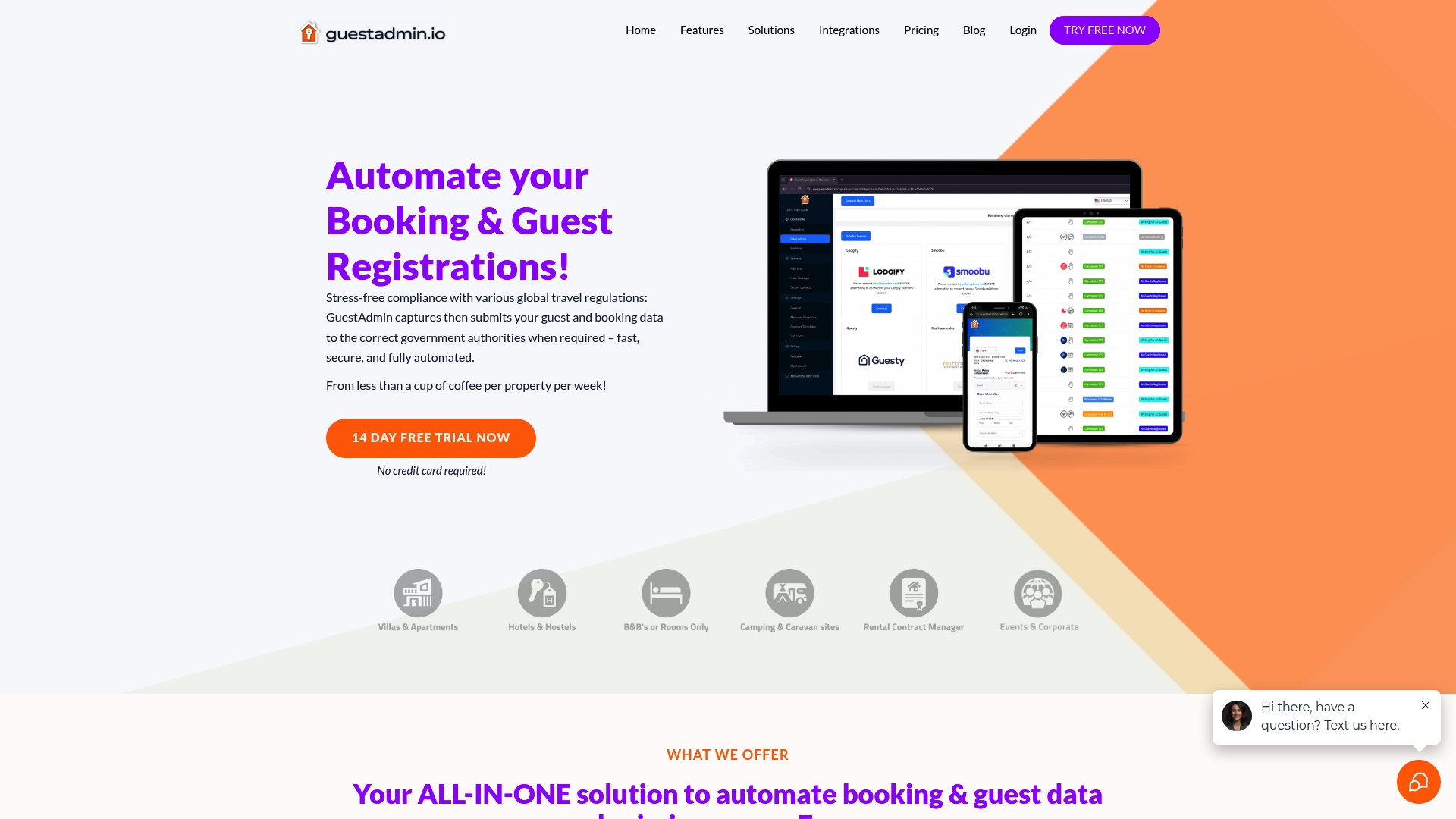
Our platform captures guest data automatically through PMS and OTA integrations, processes information with AI-powered accuracy, and submits to relevant authorities within 24 hours. Whether you manage a single property or an extensive portfolio, GuestAdmin’s automation in rentals compliance Europe adapts to your operational scale whilst maintaining consistent compliance across all jurisdictions.
Exploring different property management software types reveals how purpose-built compliance solutions outperform generic management tools. GuestAdmin’s specialised focus delivers features specifically addressing European regulatory requirements, from GDPR-compliant data archiving to multi-jurisdiction reporting capabilities. Implementing automation prevents costly compliance errors whilst reclaiming valuable time for strategic business growth.
FAQ
What is a property management compliance checklist?
A property management compliance checklist is a structured list of legal and regulatory requirements property managers must follow to keep short-term rentals compliant with local and European regulations. It helps ensure critical tasks such as guest registration, data privacy protocols, licence maintenance, and safety standards are completed consistently across all properties, reducing violation risks and operational disruptions.
How often should I update my compliance checklist?
Update your compliance checklist regularly as local and EU regulations evolve, with recommended reviews at least bi-annually or immediately when notified of regulatory changes. Many jurisdictions introduce new requirements annually, particularly around tourist taxes and data protection standards. Subscribing to regulatory update services and joining property management associations helps you stay informed about changes affecting your operational areas.
Can automation tools handle all compliance tasks?
Automation can streamline guest data collection, verification, submission, and monitoring tasks, dramatically reducing manual workload and error rates. However, property managers must still personally oversee regulatory change monitoring, physical safety inspections, and strategic compliance decisions. The most effective approach combines compliance tools in 2026 with human oversight, leveraging technology for repetitive tasks whilst maintaining managerial control over critical judgements.
What are the penalties for non-compliance with regulations?
Penalties for non-compliance range from monetary fines starting at several hundred euros to suspension of rental licences and legal actions in severe cases. Severity varies by jurisdiction and nature of the compliance breach, with repeated violations triggering escalating consequences. Some municipalities impose daily fines for continued non-compliance, whilst GDPR violations can reach up to 4% of annual turnover. Maintaining rigorous compliance practices protects your business from these substantial financial and operational risks.
21 Comments
Why digital onboarding benefits property managers in Europe
[…] validation catches missing fields, incorrect formats, or expired documents before submission. Your European compliance checklist becomes a built-in safeguard rather than a manual […]
hello world
hello world
hello world
z pack medication
z pack medication
z pack medication
dapoxetine price
dapoxetine price
dapoxetine price
Top tips for short-term rental managers to stay compliant
[…] comprehensive guidance on building your compliance framework, explore our compliance checklist for Europe and legal compliance […]
Short-term rental legal guide: compliance and automation 2026
[…] Property management compliance checklist Europe 2026 […]
GDPR compliance guide for short-term rental managers
[…] a GDPR compliance checklist is a practical starting point, and understanding the broader picture of legal compliance in Europe […]
doxycycline medication acne
doxycycline medication acne
doxycycline medication acne
doxycycline monohydrate skin rash
doxycycline monohydrate skin rash
doxycycline monohydrate skin rash
metronidazole can u drink alcohol
metronidazole can u drink alcohol
metronidazole can u drink alcohol
flagyl injection uses in pregnancy
flagyl injection uses in pregnancy
flagyl injection uses in pregnancy
acyclovir injection price in india
acyclovir injection price in india
acyclovir injection price in india
bupropion xl max dose reddit
bupropion xl max dose reddit
bupropion xl max dose reddit
terbinafine dosage for ringworm
terbinafine dosage for ringworm
terbinafine dosage for ringworm
toradol effect duration
toradol effect duration
toradol effect duration
ivermectin rosacea anti‑demodex
ivermectin rosacea anti‑demodex
ivermectin rosacea anti‑demodex
minoxidil 2% vs 5% performance
minoxidil 2% vs 5% performance
minoxidil 2% vs 5% performance
vardenafil time course
vardenafil time course
vardenafil time course
orlistat food effects
orlistat food effects
orlistat food effects
amoxicillin interaction effects
amoxicillin interaction effects
amoxicillin interaction effects
Pharmacokinetic Variability Guide
Pharmacokinetic Variability Guide
Pharmacokinetic Variability Guide