

Managing short-term rentals across Europe in 2026 demands more than keeping calendars full. New EU regulations require unique property registration numbers, verified guest data sharing within 24 hours, and strict compliance with jurisdiction-specific reporting systems. Property managers face mounting pressure to automate these tasks whilst maintaining operational efficiency and guest satisfaction. Automation offers a clear path forward, transforming how you handle compliance, communication, and revenue optimisation. This article explores the essential automation trends reshaping property management in 2026, helping you navigate regulatory complexity whilst boosting profitability and reducing manual workload.
Table of Contents
- How To Evaluate Automation Tools For Property Management In 2026
- Top Automation Trends Transforming Short-Term Rental Management
- Jurisdiction-Specific Compliance Automation: Meeting Europe’s Diverse Regulations
- Balancing AI Automation With Human Oversight In Property Management
- Explore GuestAdmin For Streamlined Property Management Automation
Key takeaways
| Point | Details |
|---|---|
| EU 2026 compliance mandates | Unique registration IDs and data sharing with Single Digital Entry Points are now compulsory across Europe |
| AI communication automation | AI adoption automates 60-96% of guest interactions, saving up to 6 hours weekly and boosting revenue by 18.3% |
| Compliance error reduction | Automation cuts compliance errors by 60%, reducing fines and platform delistings |
| Jurisdictional flexibility | Diverse local rules across Europe require integrated tools that adapt to Spain’s Parte de Viajeros, Italy’s Alloggiati Web, and other systems |
| AI training requirements | Poor setup causes 23% of AI automation to fail, making human oversight and proper training essential |
How to evaluate automation tools for property management in 2026
Selecting the right automation platform in 2026 requires understanding how EU Regulation (EU) 2024/1028 standardises data sharing without capping local enforcement. Every short-term rental property across Europe must now obtain unique registration numbers and share guest data through Single Digital Entry Points. Platforms that fail to comply face substantial fines and potential delistings, making your choice of compliance tools critical to business continuity. The regulation doesn’t eliminate local variations but creates a baseline framework that your software must navigate seamlessly.
API-first architecture has become essential for property management systems in 2026. Modular software adapts quickly to evolving local requirements, whether you manage properties in Barcelona, Rome, or Berlin. Look for platforms that integrate with your existing property management system and online travel agencies without requiring manual data entry. This flexibility lets you respond to regulatory updates within days rather than months, keeping your properties listed and compliant across all booking channels.
AI capabilities matter, but implementation quality determines success. Prioritise systems that balance automation with robust policy enforcement to avoid the common pitfalls that plague poorly configured tools. Your evaluation should focus on these core capabilities:
- Guest data capture and validation with built-in ID verification
- Automated jurisdiction-specific reporting to local authorities
- Real-time compliance monitoring and alert systems
- Secure GDPR-compliant data storage and transmission
- Multi-property dashboard with centralised oversight
Pro Tip: Request a demonstration using your actual property portfolio to test how the platform handles your specific jurisdictional requirements before committing to a subscription.
The best automation tools don’t just tick compliance boxes. They transform how you operate by reducing manual tasks, minimising error rates, and freeing your team to focus on guest experience rather than paperwork. As property management trends in 2026 continue evolving, choosing scalable, intelligent systems positions your business for sustainable growth whilst maintaining regulatory confidence across every market you serve.
Top automation trends transforming short-term rental management
AI-powered guest communication has revolutionised how property managers interact with guests in 2026. Chatbots now handle 60-96% of routine enquiries, from check-in instructions to local recommendations, without human intervention. This automation saves property managers between 2 and 6 hours weekly per property, allowing teams to focus on complex guest needs and strategic planning. The technology has matured beyond simple FAQ responses to understanding context, managing booking modifications, and even detecting guest sentiment to escalate issues appropriately.

Dynamic pricing algorithms have become sophisticated enough to increase revenue by 18.3% compared to static pricing models. These systems analyse local events, competitor rates, historical booking patterns, and seasonal demand fluctuations in real time. You no longer need to manually adjust prices for festivals, conferences, or school holidays. The software optimises rates automatically, balancing occupancy targets with revenue goals whilst remaining competitive within your market segment.
Compliance automation has shifted from a nice-to-have feature to an operational necessity. Modern platforms automate guest management by capturing passport data, validating information against official databases, and submitting reports to authorities within legal deadlines. This eliminates the risk of human error in data entry and ensures you never miss a submission window, regardless of how many properties you manage across different jurisdictions.
Key automation features transforming operations in 2026:
- Digital guest books that collect verified information during booking confirmation
- Automated ID verification using optical character recognition and facial matching
- Integration with local police systems for seamless data transmission
- Real-time compliance dashboards showing submission status across all properties
- Automated archiving systems maintaining GDPR-compliant guest records
Cloud-based SaaS platforms enable true multi-property scalability without geographic constraints. You can manage a portfolio of 5 or 500 properties from any device with internet access, reviewing performance metrics, compliance status, and guest communications through a unified interface. This flexibility has democratised professional property management, allowing smaller operators to compete with established companies by leveraging the same technological advantages.
“The integration of AI and cloud platforms has fundamentally changed the economics of short-term rental management, reducing operational costs by up to 50% whilst improving guest satisfaction scores across the industry.”
These trends aren’t isolated innovations but interconnected systems that work together to create a seamless operational framework. When your pricing engine communicates with your booking system, which triggers automated guest communication and compliance workflows, you achieve a level of efficiency impossible through manual processes or disconnected tools.
Jurisdiction-specific compliance automation: meeting Europe’s diverse regulations
Europe’s regulatory landscape remains fragmented despite EU-wide standardisation efforts, with each country and often individual cities enforcing unique reporting requirements. Spain’s Parte de Viajeros system demands guest data submission within 24 hours, whilst Italy’s Alloggiati Web requires similar information but with different data fields and submission protocols. Germany adds another layer of complexity with varying requirements across federal states. Automation reduces compliance errors by 60% by handling these jurisdiction-specific nuances automatically, ensuring your properties remain compliant regardless of location.
The new EU regulation mandates that every short-term rental property obtains a unique registration number, but the application process and renewal requirements vary significantly by jurisdiction. Automated systems verify these registration numbers during booking confirmation, flagging properties that require renewal before authorities issue penalties. This proactive monitoring prevents the costly scenario of discovering compliance gaps only after receiving fines or facing platform delistings.
Integrated compliance tools connect directly with local authority systems, eliminating manual data entry and the errors that inevitably accompany it. When a guest books your property in Barcelona, the system automatically extracts passport information, validates it against Spanish requirements, and submits the Parte de Viajeros form before the legal deadline. The same booking in Rome triggers submission to Alloggiati Web with the appropriate Italian data format. You don’t need to understand each system’s technical requirements because the automation handles jurisdictional complexity invisibly.
Common jurisdiction-specific requirements across Europe:
- Guest passport or national ID verification within hours of check-in
- Submission of arrival and departure dates to local police databases
- Recording of guest nationality, birth date, and document numbers
- Validation of property registration numbers against official registries
- Retention of guest data for specified periods (typically 3-5 years)
Pro Tip: Choose platforms that automatically update their compliance rules when jurisdictions change requirements, ensuring you remain compliant without monitoring regulatory updates manually.
GDPR compliance adds another critical dimension to automated booking compliance. Guest data must be collected, stored, and transmitted securely whilst respecting privacy rights and data minimisation principles. Automated systems encrypt sensitive information, limit access to authorised personnel, and automatically delete data after legally required retention periods expire. This protects both your guests and your business from data breaches and regulatory penalties.
| Jurisdiction | Reporting System | Submission Deadline | Key Requirements |
|---|---|---|---|
| Spain | Parte de Viajeros | 24 hours | Full passport details, arrival/departure dates |
| Italy | Alloggiati Web | 24 hours | Guest registry with nationality and document numbers |
| France | COMEDEC | 48 hours | Tourist tax collection and guest declarations |
| Germany | Varies by state | 24-48 hours | Registration confirmation and guest information |
| Portugal | SEF Portal | 24 hours | Accommodation bulletin with guest identification |
The complexity of managing compliance across multiple jurisdictions has historically limited expansion for smaller property management companies. Automation removes this barrier by standardising workflows regardless of location. Whether you manage 10 properties in a single city or 100 properties across five countries, the compliance process remains consistent from your perspective whilst the system handles jurisdictional variations automatically. This scalability transforms European short-term rental regulations from a growth constraint into a manageable operational task.
Balancing AI automation with human oversight in property management
AI excels at processing routine tasks with speed and consistency that humans cannot match, but 23% of AI-driven automation fails due to inadequate training or inability to handle complex scenarios. The technology struggles with ambiguous compliance questions, nuanced guest complaints, and situations requiring judgment beyond predefined rules. A guest requesting an early check-in due to a family emergency needs empathy and flexible problem-solving that current AI cannot reliably provide. Recognising these limitations helps you deploy automation strategically rather than expecting it to replace human expertise entirely.
Successful automation requires continuous training aligned with evolving policies and guest expectations. Your AI systems need regular updates reflecting regulatory changes, new booking patterns, and lessons learned from escalated cases. This isn’t a one-time setup but an ongoing process of refinement. Property managers who treat AI as a static tool rather than a learning system inevitably encounter failures when regulations change or guests present unusual situations that fall outside the AI’s training data.
Human oversight becomes your safety net for edge cases and escalations. Configure your systems to flag complex scenarios for manual review rather than forcing AI to make decisions beyond its capabilities. Key situations requiring human intervention:
- Compliance questions involving interpretation of new regulations
- Guest complaints expressing strong dissatisfaction or legal concerns
- Booking modifications that conflict with existing reservations
- Unusual payment situations or suspected fraudulent activity
- Technical errors in data submission or system integration failures
“The most effective property management operations in 2026 use AI to handle 80% of routine tasks whilst reserving human expertise for the 20% of situations that require judgment, creativity, and emotional intelligence.”
Proper onboarding and clear protocols minimise risks associated with AI failures. Your team needs training not just on how to use automated systems but when to override them. Establish escalation pathways that empower staff to intervene when AI responses seem inappropriate or when guest satisfaction is at risk. This human-in-the-loop approach combines efficiency with quality control, ensuring automation enhances rather than compromises your service standards.
Combining AI with expert review reduces error rates and improves guest satisfaction scores across your portfolio. The AI handles volume whilst humans provide quality assurance and relationship management. This division of labour allows you to scale operations without proportionally increasing headcount, maintaining profitability whilst delivering personalised service. Understanding why property managers need compliance tools helps contextualise how automation fits within a broader operational strategy that balances technology with human judgment.
Explore GuestAdmin for streamlined property management automation
Navigating the complexity of 2026’s regulatory environment whilst maintaining operational efficiency requires purpose-built tools designed specifically for European short-term rentals. GuestAdmin automates guest onboarding, compliance reporting, and property registration across all major European jurisdictions, ensuring you meet legal requirements without manual data entry or submission tracking. The platform’s AI-powered processing handles jurisdiction-specific formats automatically, from Spain’s Parte de Viajeros to Italy’s Alloggiati Web, reducing compliance errors and freeing your team to focus on guest experience rather than paperwork.
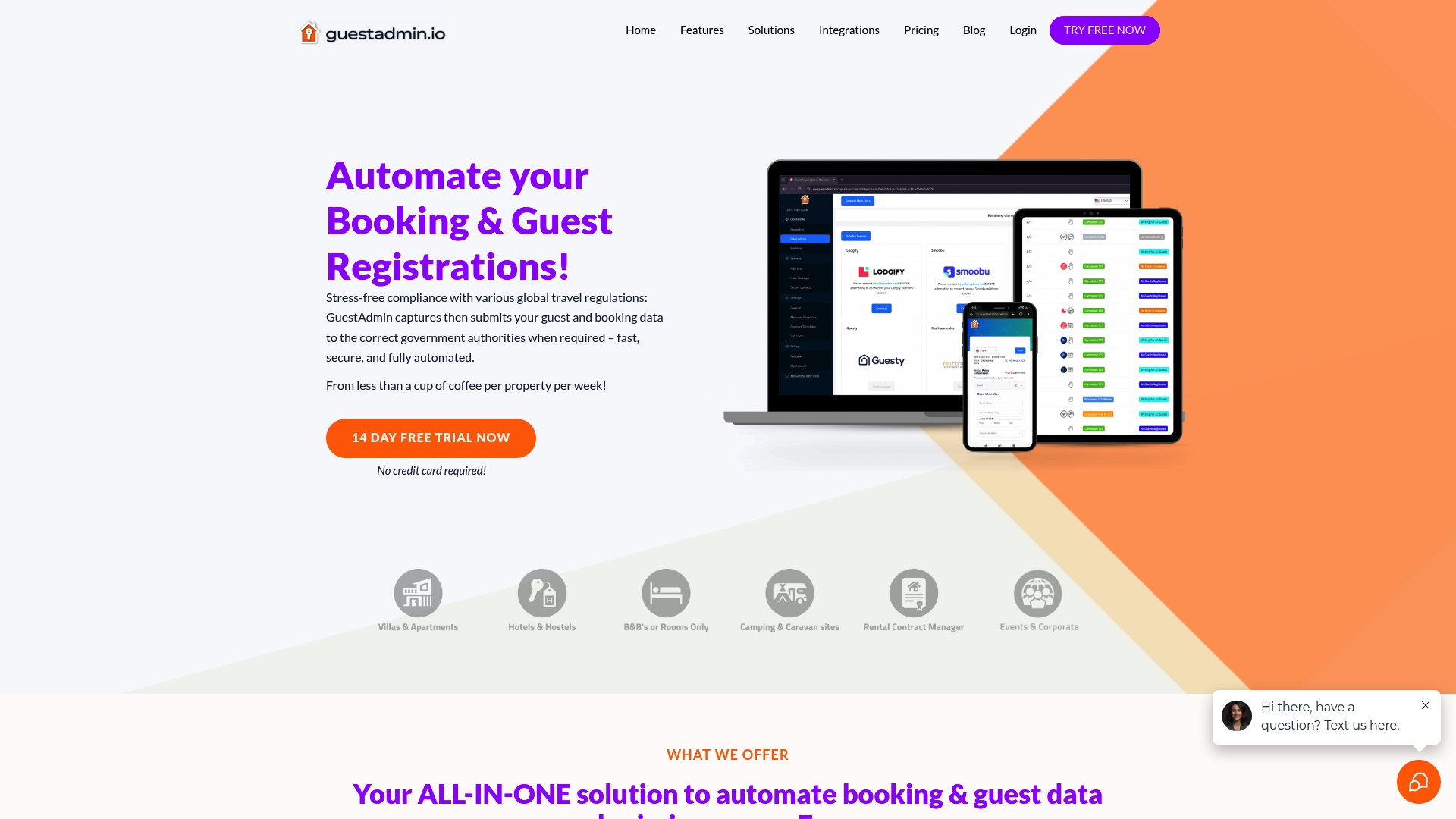
The cloud-based system integrates seamlessly with your existing property management software and booking channels, creating a unified workflow that captures guest data once and distributes it appropriately across all required systems. Multi-property managers benefit from centralised dashboards showing compliance status, upcoming deadlines, and potential issues across entire portfolios. This visibility transforms compliance from a reactive scramble into a proactive process you control with confidence.
GuestAdmin provides practical resources including automated booking compliance guides, a comprehensive property management compliance checklist for Europe 2026, and detailed property management terminology explanations that help you understand regulatory requirements without legal expertise. These tools complement the platform’s automation capabilities, ensuring you make informed decisions about compliance strategy whilst the software handles technical execution.
FAQ
What are the key property management automation trends in 2026?
AI-driven guest communication, automated compliance reporting, and dynamic pricing dominate property management in 2026. These technologies reduce manual workload by 60-96% whilst increasing revenue through optimised pricing strategies. Integration with jurisdiction-specific reporting systems ensures regulatory compliance across diverse European markets.
How does automation help comply with Europe’s complex short-term rental regulations?
Automation ensures timely, accurate submission of guest data to Single Digital Entry Points required under EU regulations. Built-in jurisdiction rule sets reduce error risk and prevent platform fines by automatically formatting data correctly for each local authority system. GDPR compliance is maintained through secure, encrypted data handling protocols that protect guest privacy whilst meeting legal reporting requirements.
What are common challenges with AI in property management automation?
About 23% of AI implementations fail due to poor training or inability to handle complex policy interpretations. The technology struggles with ambiguous situations requiring human judgment, such as nuanced guest complaints or unusual booking scenarios. Regular updates, staff training, and human oversight for escalated cases improve AI accuracy and prevent service quality issues.
Can automation improve revenue and operational efficiency?
Dynamic pricing algorithms boost revenue by over 18% compared to manual pricing strategies. Automated guest communication saves 2 to 6 hours weekly per property, whilst compliance automation reduces operational costs by up to 50% in documented case studies. These efficiency gains allow property managers to scale portfolios without proportionally increasing staffing costs.
16 Comments
viagra for sale
viagra for sale
viagra for sale
what is doxycycline for
what is doxycycline for
what is doxycycline for
dutasteride
dutasteride
dutasteride
moxatag
moxatag
moxatag
stendra 100 mg tablet
stendra 100 mg tablet
stendra 100 mg tablet
Top 5 property management solutions 2026
[…] Master property management automation trends 2026 for compliance […]
lasix pill
lasix pill
lasix pill
tadalafil generic medicine
tadalafil generic medicine
tadalafil generic medicine
orlistat mexico
orlistat mexico
orlistat mexico
semaglutide in voedingscentrum
semaglutide in voedingscentrum
semaglutide in voedingscentrum
cialis kidney problems
cialis kidney problems
cialis kidney problems
minoxidil costco reviews
minoxidil costco reviews
minoxidil costco reviews
bupropion 150 side effects
bupropion 150 side effects
bupropion 150 side effects
ketoconazole cream clinical overview
ketoconazole cream clinical overview
ketoconazole cream clinical overview
toradol overview
toradol overview
toradol overview
ketoconazole indication reference
ketoconazole indication reference
ketoconazole indication reference