

Nearly one-third of short-term rental properties in Europe fail to comply properly with GDPR guest data reporting. Manual data handling exposes property managers to legal penalties, security breaches, and operational chaos. Yet automation can slash those errors by half while accelerating compliance workflows. This article reveals how automated GDPR solutions transform rental data privacy, reduce risks, and simplify multi-jurisdictional obligations across Europe.
Table of Contents
- Understanding GDPR And Its Implications For Short-Term Rentals
- The Challenges Of Manual Data Privacy Compliance In Rental Management
- Automating GDPR Compliance: Features And Benefits For Rental Managers
- Navigating Multi-Jurisdictional Data Privacy Regulations In Europe
- Common Misconceptions About Data Privacy In Short-Term Rentals
- Practical Steps To Implement Automated GDPR Compliance
- Case Studies And Real-World Outcomes Of Automated Compliance
- Summary And Next Steps For Data Privacy Compliance In Rentals
- Streamline Your Rental GDPR Compliance Today
Key Takeaways
| Point | Details |
|---|---|
| GDPR mandates lawful, secure processing of guest data by rental operators | Compliance requires transparency, purpose limitation, and timely reporting to authorities |
| Manual compliance creates errors, delays, and legal exposure | Up to 30% non-compliance rates stem from manual data entry and weak audit trails |
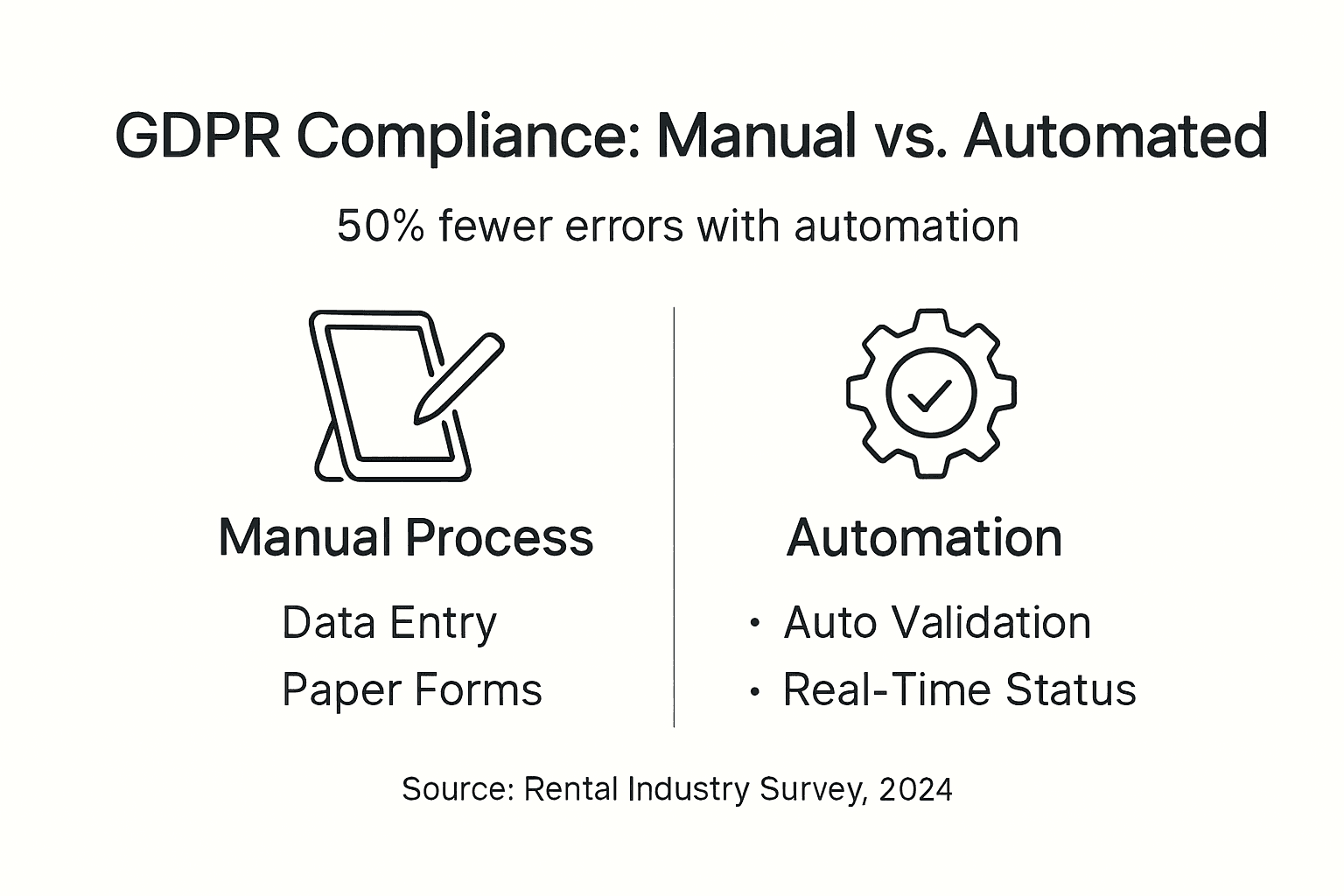
| Automation accelerates submissions and enhances security | Reduces errors by 50%, ensures 24-hour reporting, and protects data with encryption |
| Multi-jurisdictional rules demand flexible GDPR tools | EU member states add unique requirements beyond baseline GDPR obligations |
| Common myths about rental data privacy lead to risky decisions | Understanding legal bases beyond consent prevents costly compliance mistakes |
Understanding GDPR and Its Implications for Short-Term Rentals
The General Data Protection Regulation (GDPR) mandates personal data collected by short-term rental operators be processed lawfully, transparently, and for specified legal purposes including reporting. This framework applies equally to hotels and vacation rentals, establishing strict guidelines for how you handle guest information. Property managers must grasp core GDPR principles to avoid penalties and maintain guest trust.
Key principles shape your compliance obligations:
- Lawfulness requires a valid legal basis such as legal obligation or contract performance, not just consent
- Transparency demands clear communication to guests about what data you collect and why
- Purpose limitation restricts data use to specified, legitimate purposes like regulatory reporting
- Data minimization means collecting only essential guest details needed for compliance
- Storage limitation requires deleting data after legal retention periods expire
Short-term rentals face specific reporting timelines and data accuracy requirements. Your GDPR compliance checklist for hosts must address legal bases for processing, secure storage infrastructure, and transparent guest communication. Many rental operators mistakenly believe consent is their only legal ground. Actually, legal obligations to report guest data to authorities provide lawful processing grounds without requiring consent. Understanding these distinctions prevents operational bottlenecks and ensures you meet regulatory deadlines consistently.
The Challenges of Manual Data Privacy Compliance in Rental Management
Manual guest data reporting in rentals leads to 30% non-compliance and frequent submission delays affecting data security. Property managers juggling multiple bookings face overwhelming administrative burdens when relying on spreadsheets and manual entry. These outdated methods create vulnerabilities that automated systems eliminate.
Manual compliance exposes you to predictable risks:
- Data entry typos compromise accuracy and trigger reporting rejections from authorities
- Missed submission deadlines result from disorganized workflows and calendar confusion
- Weak audit trails leave no evidence of compliance during regulatory inspections
- Security gaps emerge when sensitive guest files sit in unencrypted folders or email attachments
- Regulatory updates slip through without process adjustments, leaving you non-compliant
The administrative burden compounds as your property portfolio grows. Each booking demands manual data extraction from booking platforms, manual formatting to match government requirements, and manual submission to multiple authorities. Staff spend hours copying guest details, cross-checking accuracy, and tracking submission confirmations. This tedious cycle drains resources better spent enhancing guest experiences.
Common manual data mistakes include incomplete passport numbers, incorrect nationality codes, and mismatched booking dates. These errors trigger rejections requiring resubmission, further delaying compliance. Non-compliance fines vary by jurisdiction but can reach thousands of euros per violation. Beyond financial penalties, data breaches erode guest trust and damage your reputation in competitive rental markets.
Automating GDPR Compliance: Features and Benefits for Rental Managers
Automation reduces errors and cyber risks by 50%, enables timely submissions within 24 hours and secures data with encryption and audit trails. Modern compliance platforms transform chaotic manual workflows into streamlined, secure processes. You gain peace of mind knowing guest data flows automatically from booking to regulatory submission.
Automation delivers tangible operational improvements:
- Automatic data capture syncs guest information directly from property management systems and online travel agencies
- Real-time validation checks flag incomplete or incorrect data before submission
- Encrypted cloud storage protects sensitive guest details with bank-level security
- Audit trails record every data access and submission for regulatory inspections
- Dynamic rule updates adapt instantly to changing regulations across jurisdictions
Integrations with popular platforms like Airbnb, Booking.com, and leading property management systems eliminate duplicate data entry. Automation in rental compliance means guest information flows seamlessly from reservation to government portal without manual intervention. This connectivity reduces errors by removing human touchpoints where mistakes occur.
Pro Tip: When evaluating automation platforms, prioritize solutions offering multi-jurisdictional rule engines that update automatically as regulations change. This feature protects you from compliance gaps when governments revise reporting requirements.
Real-time dashboards provide instant visibility into compliance status across all properties. You see which bookings have submitted successfully, which await processing, and which require attention. This transparency helps you address issues proactively rather than discovering problems during audits. Property automation examples demonstrate how managers cut compliance workload by 30% while improving accuracy and security.

Navigating Multi-Jurisdictional Data Privacy Regulations in Europe
Each EU member state may impose unique guest data reporting requirements beyond GDPR, requiring flexible and updateable compliance systems. While GDPR establishes baseline data protection rules, individual countries add specific reporting obligations for tourism and security purposes. Property managers operating across borders must track and comply with varying submission formats, deadlines, and data fields.
Regulatory variations create complexity:
| Country | Guest Data Required | Submission Timeline | Format |
|---|---|---|---|
| Spain | Full passport details, arrival/departure dates, nationality | Within 24 hours of check-in | XML via national portal |
| Italy | Identity document number, birthplace, residence address | Within 24 hours of arrival | Police portal submission |
| France | Identity details, vehicle registration if applicable | Before midnight on arrival day | Prefectural system upload |
These differences demand flexible technology that adapts submissions to local requirements automatically. Multi-jurisdictional compliance workflows eliminate the need to memorize dozens of rule sets or maintain separate processes per country. Automation platforms with built-in rule engines handle formatting, field mapping, and submission routing based on property location.
Updates arrive frequently as governments refine reporting systems and data requirements. Manual processes struggle to keep pace, leaving you vulnerable to non-compliance through no fault of your own. Automated solutions monitor regulatory changes and update submission rules without requiring action from your team. This continuous compliance adaptation protects you from penalties resulting from outdated processes.
Operating multiple properties across EU member states amplifies these challenges. Each property requires accurate, timely submissions to its local authority using jurisdiction-specific protocols. Scalable automation handles hundreds of properties simultaneously, routing each submission correctly without manual oversight.
Common Misconceptions About Data Privacy in Short-Term Rentals
Misunderstandings about GDPR obligations lead property managers to make risky compliance decisions. Clarifying these myths empowers you to implement effective, legally sound data privacy practices. Correcting misconceptions prevents costly mistakes that automated solutions address systematically.
Debunking prevalent myths:
- Hotels and short-term rentals face identical GDPR obligations; rental size does not exempt you from compliance
- Automation enhances security compared to manual handling by eliminating human error and enforcing encryption
- Guest consent is not required when legal obligations mandate data processing for regulatory reporting
- Data minimization means collecting only necessary information, not avoiding data collection entirely
- Legal bases for processing include contractual necessity and legal obligations, not only consent
Many rental operators believe their small scale exempts them from GDPR enforcement. This assumption is false. All entities processing EU resident data must comply regardless of business size. Penalties scale to revenue, making non-compliance costly even for single-property owners.
Another myth suggests automation increases security risks by centralizing data. Actually, reputable platforms implement stronger security controls than typical manual systems. Encryption, access controls, and audit logging exceed what spreadsheets or email provide. Common misconceptions in rental data privacy often stem from unfamiliarity with modern security standards.
Pro Tip: Document your legal basis for processing guest data in your privacy policy and internal procedures. This clarity helps staff understand compliance obligations and provides evidence during regulatory inquiries.
Guest consent confusion causes unnecessary operational friction. While transparency about data use builds trust, you don’t need explicit consent when processing data to fulfill legal reporting obligations. Inform guests about your data practices, but recognize that legal compliance provides sufficient grounds for processing. This understanding streamlines operations and reduces guest friction during check-in.
Practical Steps to Implement Automated GDPR Compliance
Transitioning from manual to automated compliance requires strategic planning and systematic execution. Following proven implementation steps ensures smooth adoption and maximizes the operational benefits automation provides. You can achieve full compliance while reducing workload through methodical deployment.
Implementation roadmap:
- Audit your current compliance processes to identify error-prone steps and bottlenecks requiring automation
- Research platforms offering multi-jurisdictional support, PMS integrations, and security certifications matching your needs
- Select a solution with proven reliability, responsive support, and pricing aligned with your property portfolio size
- Configure integrations with your existing property management system and booking channel connections
- Test data flows with sample bookings to verify accuracy before processing live guest information
- Train staff on dashboard use, exception handling, and guest communication about automated data processing
- Establish regular reviews of compliance reports and update procedures as regulations evolve
Integration with existing systems is crucial for seamless operation. Choose platforms supporting API connections to your property management software and major online travel agencies. This connectivity ensures guest data flows automatically from reservation to regulatory submission without manual file exports or imports.
Secure archiving protects historical guest data while meeting retention requirements. Compliance workflow best practices include automated archiving that deletes data after legal retention periods expire. This approach balances compliance with data minimization principles.
Staff training prevents implementation failures. Team members must understand how automation changes their workflows and what manual oversight remains necessary. Focus training on exception handling, such as addressing flagged incomplete data or resolving submission errors. Clear procedures ensure consistent responses to edge cases automation cannot handle fully.
Regular workflow reviews identify optimization opportunities as your business grows. Schedule quarterly assessments of compliance metrics, error rates, and submission timeliness. These reviews help you refine processes and leverage new platform features as they become available.
Case Studies and Real-World Outcomes of Automated Compliance
Property managers across Europe report measurable improvements after adopting automated GDPR compliance solutions. Real-world outcomes validate the operational and legal benefits automation delivers. These examples illustrate tangible results you can achieve in your own rental operations.
Documented successes:
- Submission error rates dropped 50% within three months of automation deployment
- Administrative time spent on compliance decreased 30%, freeing staff for guest service improvements
- Guest satisfaction scores increased as transparent data handling built trust and streamlined check-in
- Zero compliance penalties recorded after automation eliminated missed deadlines and formatting errors
- Multi-property portfolios achieved consistent compliance across jurisdictions without adding staff
One Barcelona property management company operating 40 vacation rentals eliminated manual submission processes entirely. Previously, staff spent 15 hours weekly copying guest data into government portals. After automation, that workload disappeared. The manager reported:
Automation transformed our compliance from a constant source of stress into a background process we rarely think about. Our team focuses on guest experiences now instead of battling spreadsheets and submission deadlines.
Another case involved a Paris-based manager handling properties across France, Spain, and Italy. Manual compliance across three jurisdictions with different rules proved impossible to sustain accurately. Automated multi-jurisdictional routing solved this challenge, adapting submissions to local requirements automatically. The manager achieved 100% on-time submission rates while reducing compliance costs.
Guest perception improvements matter beyond operational efficiency. Transparent communication about automated, secure data processing reassures guests their information is protected. GDPR impact on hosts checklist emphasizes guest trust as a competitive advantage in crowded rental markets.
Lessons learned highlight integration importance and staff engagement. Successful implementations prioritized thorough PMS integration testing and invested in comprehensive staff training. Properties that rushed deployment without adequate preparation experienced initial hiccups that slowed adoption. Taking time to configure systems properly and prepare teams pays dividends through smoother transitions and faster results.
Summary and Next Steps for Data Privacy Compliance in Rentals
GDPR compliance for short-term rentals demands lawful, secure processing of guest data with timely reporting to government authorities. Manual methods expose you to legal penalties, operational inefficiencies, and security vulnerabilities that automated solutions eliminate systematically. Understanding your obligations and implementing appropriate technology protects your business while improving guest experiences.
Essential compliance insights:
- GDPR establishes baseline data protection rules applied uniformly across all rental operators regardless of size
- Manual processes generate 30% non-compliance rates through errors, delays, and inadequate security controls
- Automation reduces errors by 50%, accelerates submissions to 24-hour timelines, and enhances data security
- Multi-jurisdictional operations require flexible tools adapting to diverse regulatory requirements automatically
- Debunking common myths prevents costly mistakes and enables confident compliance strategies
Starting your automation journey begins with evaluating current processes and researching platforms matching your specific needs. Property managers operating across multiple EU jurisdictions benefit most from solutions offering dynamic rule engines and comprehensive PMS integrations. Single-property owners gain efficiency and risk reduction even at smaller scales.
Guest trust grows when you demonstrate commitment to data privacy through transparent communication and robust security practices. Automated compliance signals professionalism and reliability that differentiate your properties in competitive markets. The operational benefits—reduced workload, eliminated errors, consistent compliance—compound over time as your portfolio expands.
Now is the time to transition from risky manual methods to secure, efficient automated compliance. Evaluate suitable GDPR automation tools, configure integrations with your existing systems, and train your team on new workflows. These steps position your rental business for sustainable growth while maintaining full regulatory compliance across all European jurisdictions where you operate.
Streamline Your Rental GDPR Compliance Today
Managing GDPR compliance manually drains resources and exposes your rental business to unnecessary legal risks. GuestAdmin.io offers a purpose-built platform designed specifically for European short-term rental operators facing complex data privacy obligations. The solution integrates seamlessly with leading property management systems and online travel agencies, capturing guest data automatically and routing submissions to appropriate authorities based on property location.
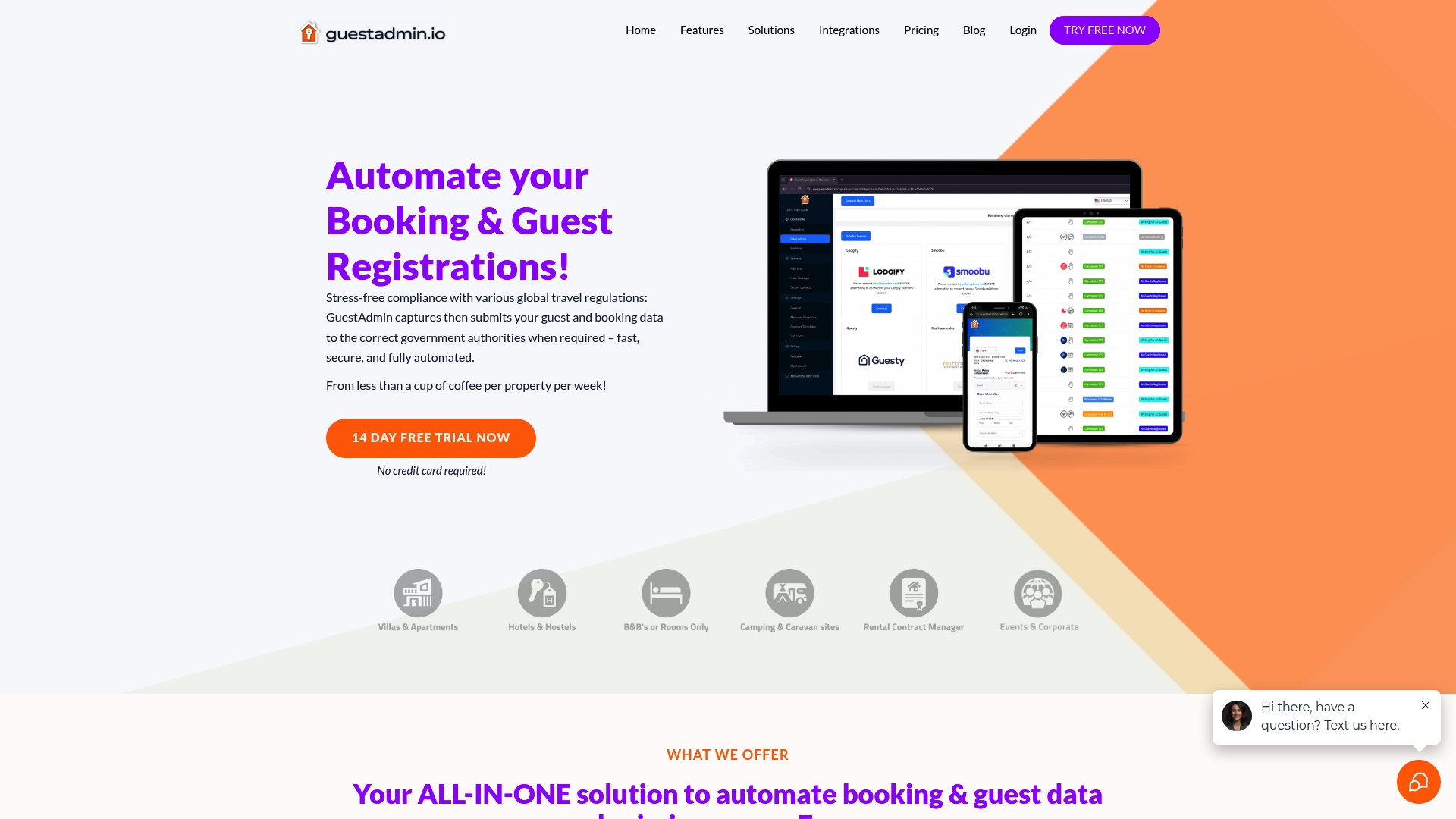
Secure cloud infrastructure protects sensitive guest information with encryption and comprehensive audit trails. Real-time compliance dashboards provide instant visibility into submission status across your entire portfolio. Whether you manage a single property or hundreds across multiple countries, automation in rentals adapts to your scale and regulatory requirements. Automated data submissions eliminate manual workflows, reduce errors, and ensure timely compliance without increasing your workload. Explore property management terminology to deepen your understanding, then discover how GuestAdmin.io transforms your compliance operations today.
Frequently Asked Questions
What is GDPR and why does it matter for short-term rental managers?
GDPR is the EU regulation governing personal data processing, requiring rental operators to handle guest information lawfully, transparently, and securely. It matters because non-compliance triggers substantial fines and damages guest trust. Meeting GDPR obligations protects your business legally while demonstrating professionalism to guests who value data privacy.
How can automation reduce GDPR compliance risks in rentals?
Automation eliminates manual data entry errors that cause submission rejections and regulatory penalties. Platforms validate data accuracy before submission and encrypt sensitive information during storage and transmission. Audit trails provide evidence of compliance during inspections, while automatic rule updates adapt to regulatory changes without requiring manual process adjustments.
Are short-term rental managers required to get guest consent for data processing under GDPR?
Consent is not required when legal obligations mandate guest data reporting to authorities. Rental managers can process data based on legal compliance grounds without obtaining explicit consent. However, you must inform guests transparently about data collection purposes and ensure processing adheres to GDPR principles including data minimization and security.
What are common pitfalls when submitting guest data manually?
Frequent errors include typographical mistakes in passport numbers, incorrect nationality codes, and incomplete booking information. Manual processes lack systematic validation, resulting in submission rejections that require time-consuming corrections. Common manual submission mistakes also include missed deadlines, weak security practices, and absent audit trails that complicate regulatory inspections and increase penalty risks.