

TL;DR:
- European short-term rental regulations require collecting and submitting guest data within strict deadlines.
- Automated check-in tools simplify compliance, reducing errors and ensuring timely submissions.
- Building a structured, digital, and compliant process improves guest experience and avoids legal penalties.
Managing guest arrivals across multiple properties is rarely straightforward. Between coordinating arrival times, verifying identity documents, and ensuring data is submitted to local authorities before deadlines, the process can quickly become overwhelming. For property managers operating in Europe, the stakes are even higher. Regulatory requirements vary by country, and a single missed step can result in fines, licence suspension, or a damaged reputation. This guide gives you a clear, practical framework for compliant guest check-in, from understanding what the law requires to automating the most time-consuming parts of the process.
Table of Contents
- Understanding European guest check-in regulations
- What you need before guests arrive
- Step-by-step guest check-in process
- Common pitfalls and solutions in guest check-in
- A new perspective on guest check-in in 2026
- Streamline check-ins with automated compliance solutions
- Frequently asked questions
Key Takeaways
| Point | Details |
|---|---|
| Know your regulations | Understanding local guest data rules protects your property and business from costly mistakes. |
| Prepare the essentials | Having all documents and tools ready streamlines check-in and avoids last-minute stress. |
| Follow a clear process | A step-by-step flow ensures compliance and provides a smooth guest experience. |
| Leverage automation | Digital systems reduce manual work, speed up check-ins, and cut compliance risks. |
Understanding European guest check-in regulations
Guest check-in compliance in Europe is not optional. Many European countries require guest registration and data submission to local authorities as a condition of operating a short-term rental. This means collecting personal information from every guest and, in many cases, reporting it to police or municipal bodies within a set timeframe.
What regulations typically cover includes identity verification, data storage obligations, and police or government notification. The specifics vary significantly by country, so understanding your local rules is essential before you welcome a single guest.
Key risks of non-compliance:
- Financial penalties, which can be substantial in markets like Spain and Italy
- Suspension or permanent revocation of your rental licence
- Reputational damage from failed inspections or guest complaints
- GDPR violations if guest data is mishandled or stored insecurely
The table below gives a snapshot of guest registration requirements across four major European markets:
| Country | Data required | Submission method | Deadline |
|---|---|---|---|
| Spain | Full name, nationality, ID number, arrival date | Police portal (SES.HOSPEDAJES) | Within 24 hours |
| Italy | Name, ID details, nationality, address | Alloggiati Web portal | Same day |
| Portugal | Name, nationality, ID number, date of birth | SEF/AIMA portal | Within 3 days |
| France | Name, address, nationality | Local authority or platform | Varies by municipality |
Always check with your local authority, as rules can change and regional variations apply. You should also review European entry and exit rules to understand broader travel documentation requirements.
Must-have documents for a legal check-in:
- Valid government-issued photo ID for each adult guest
- Completed guest registration form (physical or digital)
- Signed rental agreement or booking confirmation
- Proof of submission to local authorities where required
Important: Collecting sensitive guest data carries legal responsibility. Only gather what is strictly required by law, store it securely, and never share it with unauthorised parties. Mishandling personal data can trigger GDPR enforcement action regardless of your property’s size.
With the context of why compliance matters understood, let’s clarify what you’ll need before your next guest arrives.
What you need before guests arrive
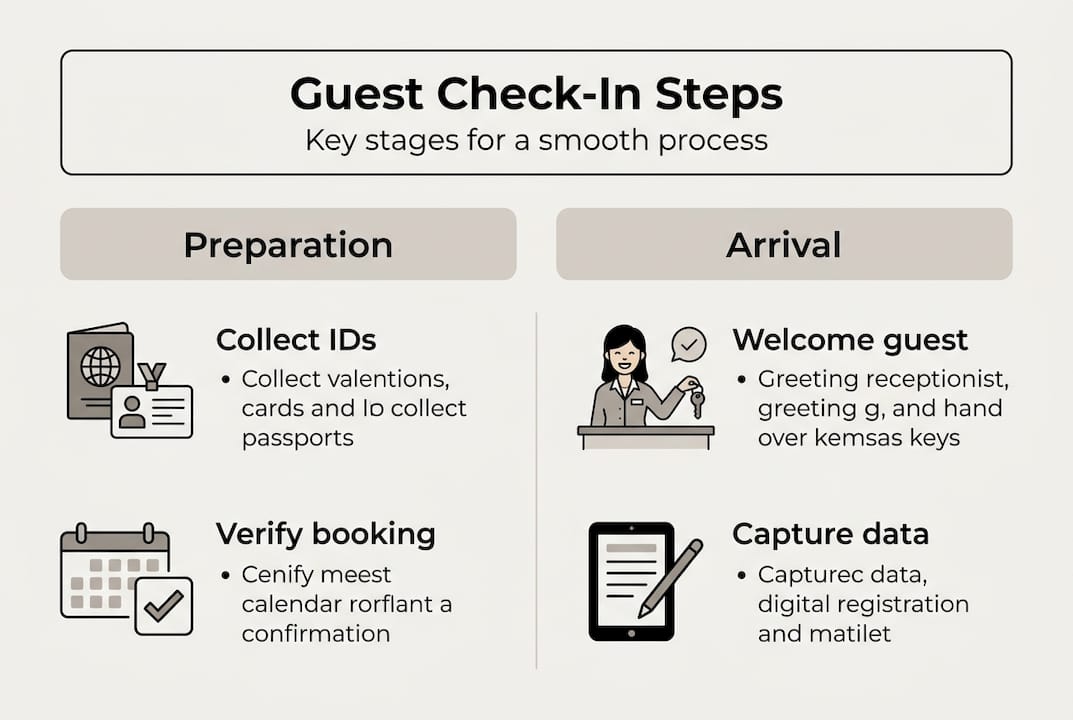
Once you understand the legal landscape, it’s time to gather the tools and records you need for every new guest. Preparation is what separates a smooth check-in from a stressful one.
Pre-arrival compliance checklist:
- Confirm which local authority requires guest data and what format they accept
- Set up a secure system for storing guest information (GDPR-compliant)
- Prepare a guest registration form tailored to your country’s requirements
- Verify your submission portal credentials are active and up to date
- Ensure your rental agreement is signed before or at check-in
Digital tools can automate and simplify guest information capture for compliance, reducing the risk of human error and missed deadlines. Whether you use a dedicated platform or a combination of tools, the right setup makes a measurable difference.
Here is a comparison of common tools used for guest check-in compliance:
| Tool type | Examples | Pros | Compliance fit |
|---|---|---|---|
| Registration platforms | GuestAdmin, Chekin | Automates data capture and submission | High |
| E-signature apps | DocuSign, HelloSign | Streamlines agreement signing | Medium |
| ID scanning apps | AU10TIX, Onfido | Fast identity verification | Medium to high |
| Spreadsheets | Excel, Google Sheets | Low cost, flexible | Low (manual risk) |
When it comes to the check-in method itself, you have two broad options:
Physical check-in:
- Guest arrives in person and presents ID
- Staff verify documents manually
- Data is entered into the submission portal by hand
- Works well for smaller operations or locations without reliable internet
Digital check-in:
- Guest submits ID and personal data remotely before arrival
- Platform verifies and stores data automatically
- Submission to authorities is handled without manual input
- Ideal for contactless check-in options and multi-property management
Review host ID requirements if you list on major platforms, as OTAs may have their own verification standards on top of local law.
Pro Tip: Always back up guest data in a secure, encrypted location separate from your primary system. If your main platform goes down, you still need access to records for compliance purposes.
With your materials ready, follow this structured approach to check-in every guest with confidence.
Step-by-step guest check-in process
A consistent process protects you legally and creates a better experience for guests. Here is a clear sequence you can follow for every arrival.
-
Send a pre-arrival message. At least 24 hours before check-in, contact the guest to confirm arrival time, share property access instructions, and request any required documents in advance.
-
Collect identity documents. Request a valid government-issued photo ID from every adult guest. For digital check-ins, use a secure platform to capture and store this data. For physical arrivals, scan or photograph documents immediately.
-
Complete the guest registration form. Fill in all required fields based on your country’s regulations. Use your automated guest registration platform to pre-populate data where possible, reducing errors.
-
Verify the information. Cross-check the guest’s ID against the booking details. Names, nationalities, and ID numbers must match exactly. Any discrepancy should be resolved before granting access.
-
Submit data to local authorities. Log in to your national or regional portal and submit the guest record within the required timeframe. In Spain, for example, this must happen within 24 hours of arrival.
-
Issue keys or access codes. Only after identity is confirmed and data is submitted should you provide property access. This protects both you and the guest.
-
Store records securely. Save a copy of the registration form and submission confirmation. Most countries require you to retain guest records for a minimum period, often two years.
Automated check-in solutions can decrease manual compliance work by up to 30%, freeing up significant time across a busy portfolio. That time adds up quickly when you are managing multiple properties.

For right to rent verification in the UK, additional checks apply. Always confirm which rules govern your specific location.
Pro Tip: For late arrivals or guests who speak a different language, prepare a simple welcome card in multiple languages that explains the check-in steps. Pair it with a digital registration link so they can complete the process on their phone without needing assistance.
Explore check-in tech alternatives if your current setup is creating bottlenecks or causing delays in data submission.
Common pitfalls and solutions in guest check-in
Even with best efforts, some issues can crop up during check-in. Here’s how to address them quickly and stay compliant.
Top mistakes property managers make:
- Missing or incomplete documents: Guests arrive without valid ID or forget to complete registration forms before arrival.
- Late data submissions: Forgetting to log in to the authority portal within the required window, especially during busy periods.
- Mishandling guest data: Storing personal information in unsecured files, shared spreadsheets, or unencrypted email attachments.
- Unclear check-in instructions: Guests cannot find the property, access the lockbox, or understand what documents they need to bring.
- Technology failures: Platform outages or lost login credentials prevent timely submission to authorities.
Failure to securely handle guest data is the most cited compliance violation in audits, and it is also one of the most preventable.
Always confirm ID before granting property access. No exceptions. Even if a guest is running late or seems frustrated, verifying identity is a legal requirement in most European jurisdictions, not a courtesy.
Review GDPR rules to ensure your data handling practices meet the minimum legal standard across all your properties.
Quick fixes for each pitfall:
- Send a pre-arrival checklist to guests listing exactly what documents they need to bring or upload.
- Set calendar reminders or use a platform that triggers automatic submission alerts.
- Use only GDPR-compliant, encrypted storage for all guest records.
- Create a simple standard operating procedure (SOP) document for your check-in process and share it with any staff involved.
- Keep backup login credentials for authority portals stored securely, and test access monthly.
Building a reliable SOP is one of the highest-value investments you can make as a property manager. It removes guesswork, reduces errors, and ensures every guest receives the same standard of service. Explore guest check-in systems that can support a more structured approach.
A new perspective on guest check-in in 2026
Most conversations about guest check-in focus on avoiding fines. That is understandable, but it misses a bigger shift happening right now across Europe’s short-term rental sector.
Municipalities are moving fast. Cities like Barcelona, Amsterdam, and Lisbon have introduced or tightened digital reporting requirements in recent years, and more are following. The direction of travel is clear: paper-based and manual processes are becoming not just inefficient but genuinely risky.
Property managers who treat compliance as a checkbox exercise are already behind. The ones gaining ground are those who have built check-in into a smooth, branded guest experience. Digital registration, instant ID verification, and automatic data submission are no longer premium features. They are becoming the baseline.
There is also a guest experience argument that often gets overlooked. A frictionless check-in sets the tone for the entire stay. Guests who arrive to a clear, professional process leave better reviews. That is a direct business return on your compliance investment.
Exploring contactless check-in trends is no longer just about convenience. It is about staying viable in a market that is rapidly raising its standards.
Streamline check-ins with automated compliance solutions
If managing guest registrations, data submissions, and compliance deadlines across multiple properties feels like too many moving parts, you are not alone. Many property managers reach a point where manual processes simply cannot scale.
GuestAdmin is built specifically for this challenge. The platform automates guest data capture, securely submits records to local authorities, and integrates with the tools you already use. Whether you manage one property or fifty, automated guest registration removes the administrative burden so you can focus on your guests. Explore multi-property management compliance features or get started with guest registration services tailored to your market.
Frequently asked questions
What guest information must I legally collect in Europe?
You typically need to collect each guest’s full name, address, nationality, and ID details for submission to local authorities. Requirements vary by country, so always verify with your local authority, as many European countries require guest data submission as part of the check-in process.
How can I speed up the guest check-in process?
Digital tools like automated registration platforms shorten check-in time and ensure compliance automatically. Digital solutions cut manual compliance efforts by up to 30%, making them a practical investment for any property manager.
Is physical ID verification always required, or can it be remote?
Many locations now accept remote or digital ID verification if their requirements for secure data handling are met. Contactless and digital check-in systems allow compliant remote verification in many European countries.
What happens if I miss reporting a guest’s data to authorities?
Failure to report can lead to fines, legal issues, and possible suspension of your rental licence. Non-compliance may trigger penalties and threaten your ability to continue operating.
Where can I get help with automating my guest registration process?
Services like GuestAdmin provide automated solutions and expert support for property managers. GuestAdmin specialises in compliant guest registration automation, with tools designed for both individual hosts and large management companies.