

Property managers often confuse real-time property reporting with instant data transmission to authorities. In reality, real-time reporting centres on continuous monitoring and automated workflows that help you catch compliance issues before guests arrive. For short-term rental operators across Europe facing strict guest registration deadlines, understanding this distinction is vital. This guide clarifies what real-time property reporting truly involves, explains its regulatory importance, compares it with traditional methods, and shows you how to implement it effectively for seamless compliance.
Table of Contents
- Key takeaways
- What is real-time property reporting and how does it work?
- The regulatory context and importance of real-time reporting in Europe
- Comparing manual, batch, and real-time reporting methods
- Implementing real-time property reporting: best practices and tools
- Streamline your short-term rental compliance with GuestAdmin
- Frequently asked questions
Key Takeaways
| Point | Details |
|---|---|
| Real time oversight | Real time property reporting combines continuous monitoring with automated workflows to catch compliance issues before guests arrive. |
| Dashboards for oversight | Live dashboards provide visibility across bookings deadlines and submission status to guide proactive compliance. |
| Automation reduces workload | Automated validation and submissions minimise manual data handling and free staff for higher value tasks. |
| Early data requests | Configuring immediate guest data requests at booking helps gather complete information early to avoid last minute delays. |
What is real-time property reporting and how does it work?
Real-time property reporting refers to the continuous monitoring and automated processing of guest booking data to ensure timely compliance with regulatory authorities. Unlike instant data transmission, real-time monitoring focuses on live dashboard oversight paired with automated workflows that identify and resolve potential violations before guests check in. This proactive approach gives property managers the visibility and control needed to maintain compliance without constant manual intervention.
The system operates through several interconnected components working together seamlessly:
- Integration with booking platforms captures guest data automatically as reservations are made
- Centralised dashboards display live booking status, compliance requirements, and submission deadlines
- Automated validation checks verify data completeness and accuracy against regulatory standards
- Alert systems notify managers of missing information or approaching deadlines
- Scheduled workflows trigger submissions to authorities at optimal times
When a new booking arrives through your property management software, the real-time system immediately processes the guest information. It cross-references this data against local regulatory requirements, identifies any gaps or inconsistencies, and flags items needing attention. Rather than waiting until check-in day to discover missing passport details or incomplete registration forms, you receive instant notifications allowing time to request corrections from guests.
The dashboard serves as your command centre, providing at-a-glance status updates across all properties. You can see which bookings have complete data, which submissions are pending, and which guests require follow-up. This visibility transforms compliance from a reactive scramble into a managed workflow for property managers with clear priorities and deadlines.
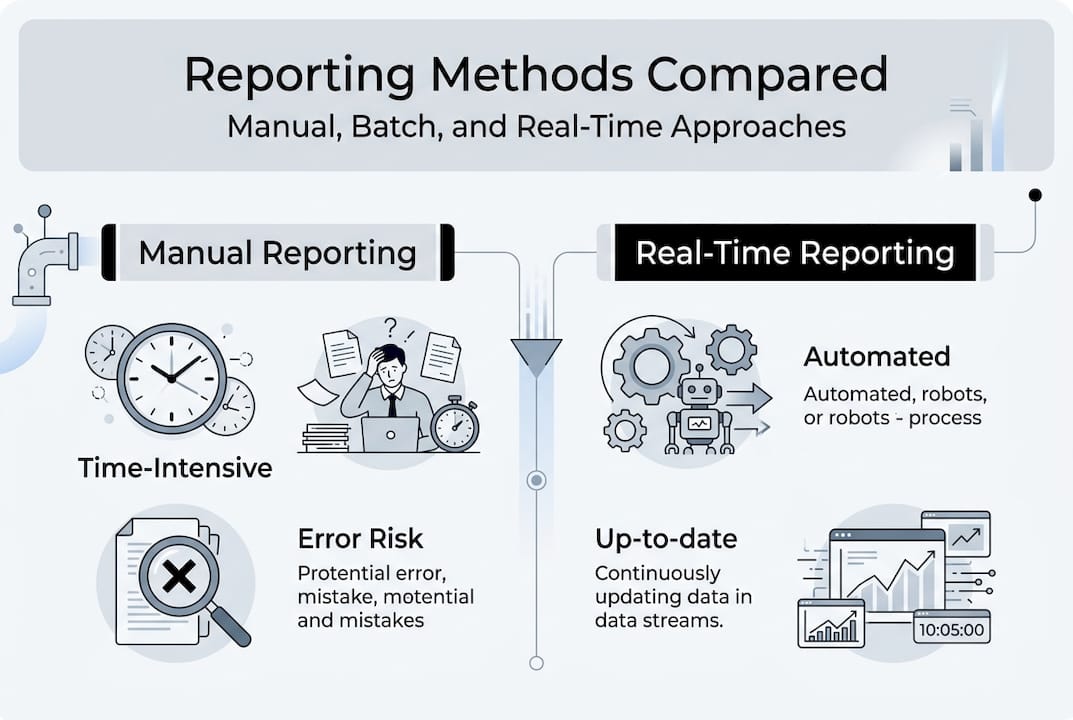
Automation handles the repetitive tasks that traditionally consumed hours of administrative time. Once guest data passes validation, the system automatically formats and submits information to relevant authorities according to their specific requirements. Different jurisdictions may require different data fields, submission formats, or timing windows. Real-time reporting software manages these variations automatically, ensuring each submission meets local standards.
Pro Tip: Configure your real-time reporting system to send guest data requests immediately upon booking confirmation. This gives travellers maximum time to provide required information and reduces last-minute compliance rushes.
The technology behind real-time reporting typically includes API integrations with booking channels, secure data storage compliant with GDPR requirements, and intelligent processing that learns from patterns to improve accuracy over time. Modern platforms use AI to extract information from documents, validate data against multiple sources, and even predict potential compliance issues based on historical patterns.
The regulatory context and importance of real-time reporting in Europe
European short-term rental regulations have evolved significantly, with many jurisdictions now requiring guest data submission within 24 hours of booking or check-in. These rules aim to enhance security, monitor tourism flows, and ensure proper taxation. For property managers operating across multiple cities or countries, keeping track of varying requirements creates substantial compliance challenges. Real-time reporting helps meet tight deadlines by maintaining continuous oversight of booking data relevant to regulatory authorities.
The consequences of non-compliance extend beyond simple administrative penalties. Property managers face:
- Financial penalties ranging from hundreds to thousands of euros per violation
- Suspension or revocation of operating licences
- Mandatory audits and increased regulatory scrutiny
- Reputational damage affecting future bookings
- Legal liability for security-related incidents involving unregistered guests
Traditional manual reporting methods struggle to keep pace with these demands, particularly for managers handling multiple properties. A single missed deadline or incomplete submission can trigger cascading compliance issues. Real-time reporting addresses this challenge by automating the monitoring and submission process, ensuring no booking falls through the cracks.
The regulatory landscape varies significantly across Europe. Italian municipalities often require submissions within hours of check-in. Spanish regions may mandate pre-arrival registration with specific data fields. German cities enforce strict data protection standards whilst still requiring timely guest reporting. French authorities increasingly demand electronic submissions through designated portals. This patchwork of requirements makes automation in rentals compliance essential for consistent adherence.
Real-time reporting systems stay updated with changing regulations, automatically adjusting workflows as requirements evolve. When a city updates its submission portal or changes required data fields, the software adapts without requiring manual reconfiguration. This dynamic capability protects managers from compliance gaps caused by regulatory changes they might not immediately notice.
For operators managing portfolios across multiple jurisdictions, real-time reporting provides centralised compliance oversight. Instead of tracking separate deadlines, formats, and requirements for each location, you gain a unified interface showing compliance status across all properties. This multi-property management approach reduces cognitive load and ensures consistent standards regardless of location.
The administrative burden reduction proves equally important. Manual compliance work can consume 15-20 hours weekly for managers with moderate-sized portfolios. Real-time reporting automation reclaims this time, allowing focus on guest experience, property maintenance, and business growth rather than paperwork and deadline tracking.
Comparing manual, batch, and real-time reporting methods
Property managers have three primary approaches for handling guest data reporting, each with distinct characteristics affecting compliance reliability and workload. Understanding these differences helps you select the most appropriate method for your operational needs.

Manual reporting involves individually entering guest information into authority portals or forms for each booking. This traditional approach offers maximum control but carries significant risks. Human error rates increase with repetitive data entry, particularly when managing multiple properties or high booking volumes. Missed deadlines occur when managers forget submissions or underestimate processing time. The method scales poorly, becoming unsustainable as portfolio size grows.
Batch reporting consolidates multiple guest submissions into scheduled uploads, typically daily or weekly. This approach reduces some repetitive work by processing groups of bookings simultaneously. However, latency between booking and submission creates compliance gaps. If authorities require 24-hour reporting but you batch process weekly, you risk violations. Batch methods also delay error detection, potentially discovering data issues only when attempting bulk submission.
Real-time reporting provides continuous monitoring with automated workflows that significantly reduce compliance work whilst improving accuracy. The system processes each booking immediately, validates data against requirements, and schedules submissions to meet specific deadlines. Errors surface instantly rather than days later, giving ample time for correction.
| Feature | Manual Reporting | Batch Reporting | Real-Time Reporting |
|---|---|---|---|
| Processing speed | Hours per booking | Daily/weekly cycles | Immediate |
| Error detection | At submission | At batch processing | Instant validation |
| Compliance risk | High | Moderate | Low |
| Administrative workload | Very high | Moderate | Minimal |
| Scalability | Poor | Fair | Excellent |
| Deadline adherence | Inconsistent | Scheduled | Automatic |
| Multi-property support | Challenging | Manageable | Seamless |
The practical differences become apparent in daily operations. With manual reporting, a property manager might spend 30 minutes per booking on data entry and submission, totalling hours daily for active properties. Batch reporting reduces this to perhaps 2-3 hours weekly but introduces deadline pressure and bulk error correction challenges. Real-time reporting handles these tasks automatically, requiring manager intervention only for exceptional cases like incomplete guest information.
Real-time systems also provide superior audit trails and compliance documentation. Every action, validation check, and submission gets logged with timestamps, creating comprehensive records useful for regulatory audits or dispute resolution. Manual and batch methods require separate documentation efforts to achieve similar accountability.
Pro Tip: When evaluating reporting methods, calculate the true cost including not just software fees but also staff time, error correction, and potential penalty exposure. Real-time reporting often proves most cost-effective despite higher initial investment.
The choice between methods often depends on portfolio size and regulatory environment. Managers with one or two properties in jurisdictions with relaxed deadlines might manage manual reporting adequately. Those operating multiple properties across strict regulatory environments find real-time reporting essential for maintaining compliance whilst preserving operational efficiency.
Modern automated guest management systems combine real-time reporting with additional features like automated guest communication, digital check-in processes, and integrated payment handling. This holistic approach addresses the complete guest lifecycle whilst ensuring compliance requirements integrate seamlessly rather than existing as separate administrative burdens.
Implementing real-time property reporting: best practices and tools
Successfully adopting real-time property reporting requires thoughtful planning and the right technology foundation. Effective implementation needs appropriate technology and automated workflows to ensure seamless compliance without disrupting existing operations.
Follow these steps for smooth implementation:
- Audit your current compliance requirements across all operating jurisdictions, documenting specific data fields, submission deadlines, and authority portals for each location
- Evaluate your existing property management system to determine integration capabilities and identify gaps in compliance functionality
- Research real-time reporting solutions that support your specific regulatory requirements and integrate with your current technology stack
- Conduct pilot testing with a subset of properties before full rollout, validating data accuracy and workflow efficiency
- Train staff on the new system, emphasising how automation changes their daily routines and what manual interventions remain necessary
- Establish monitoring protocols to review system performance, compliance metrics, and error rates during the transition period
- Optimise workflows based on initial experience, adjusting alert thresholds, submission timing, and validation rules as needed
When selecting property management software for hospitality, prioritise platforms offering comprehensive integration capabilities. The system should connect seamlessly with your booking channels, whether direct bookings through your website, OTA platforms like Booking.com and Airbnb, or channel managers aggregating multiple sources. Each integration point represents potential data entry that automation can eliminate.
| Feature | Importance | What to Look For |
|---|---|---|
| Automated data capture | Critical | Direct API connections to all booking sources |
| Real-time dashboard | Critical | Live compliance status across all properties |
| Intelligent alerts | High | Customisable notifications for missing data or deadlines |
| Multi-jurisdiction support | Critical | Pre-configured templates for major European cities |
| GDPR compliance | Critical | Secure data storage and processing meeting EU standards |
| Mobile access | Moderate | Responsive interface for on-the-go management |
| Reporting and analytics | Moderate | Compliance metrics and historical performance tracking |
| API and webhook support | High | Flexible integration options for custom workflows |
Integration with compliance authorities varies by jurisdiction. Some cities offer API access for automated submissions, whilst others require manual portal uploads or email submissions. Your real-time reporting solution should handle this diversity, automatically routing data through the appropriate channel for each location. Systems that update regularly as authorities modernise their submission processes provide long-term value.
Common pitfalls to avoid during implementation include:
- Incomplete data mapping between booking systems and compliance requirements, causing validation failures
- Inadequate staff training leading to confusion about when manual intervention is necessary
- Overly aggressive alert settings that create notification fatigue and cause important warnings to be ignored
- Insufficient testing before full deployment, resulting in missed submissions during the transition period
- Neglecting to establish backup procedures for system downtime or technical issues
Pro Tip: Start implementation during your slower season to allow time for troubleshooting and workflow refinement before high-volume periods test system capacity.
The automated guest management approach extends beyond compliance reporting to encompass the entire guest journey. Look for solutions that integrate pre-arrival communication, digital check-in, automated upselling, and post-stay review requests alongside compliance automation. This comprehensive approach maximises return on technology investment whilst creating smoother guest experiences.
Consider total cost of ownership when evaluating solutions. Subscription fees represent only part of the equation. Factor in implementation time, staff training requirements, potential reduction in compliance penalties, and administrative time savings. Many property managers find that real-time reporting systems pay for themselves within months through reduced labour costs and avoided penalties.
Ongoing optimisation ensures you extract maximum value from real-time reporting. Regularly review compliance metrics to identify patterns. If certain booking sources consistently provide incomplete data, adjust pre-booking communication to request missing information upfront. If specific properties generate more compliance issues, investigate whether local requirements differ or staff need additional training.
Streamline your short-term rental compliance with GuestAdmin
Managing guest registration and data reporting across European jurisdictions demands sophisticated automation that keeps pace with evolving regulations. GuestAdmin eliminates the manual burden of compliance work by automatically capturing guest information from all booking sources, validating data against local requirements, and submitting to authorities within required timeframes.
Our platform provides real-time dashboards showing compliance status across your entire portfolio, intelligent alerts preventing missed deadlines, and seamless integration with major booking platforms and property management systems. Whether you manage a single property or dozens across multiple countries, GuestAdmin adapts to your operational needs whilst ensuring consistent regulatory adherence.
Discover how automation transforms guest management and reduces compliance workload by up to 30%. Our European-focused solution understands the nuances of local regulations from Barcelona to Berlin, automatically adjusting workflows as requirements change. Experience the confidence that comes from knowing every booking meets compliance standards without constant manual oversight.
Ready to eliminate compliance stress? Explore how GuestAdmin supports rental compliance across Europe or talk to our team about implementing real-time reporting tailored to your specific portfolio and regulatory environment.
Frequently asked questions
What distinguishes real-time reporting from other methods?
Real-time reporting provides continuous monitoring and automated workflows that process bookings immediately, whereas manual and batch methods involve delayed, periodic handling. The real-time approach catches compliance issues before guest arrival, whilst traditional methods often discover problems only at submission time when correction becomes difficult.
Which European regulations require guest data reporting?
Most European countries mandate some form of guest registration for short-term rentals, with specific requirements varying by jurisdiction. Italy, Spain, France, Germany, Portugal, and Austria all enforce guest data reporting with deadlines typically ranging from immediate submission to 24 hours post-check-in, though local municipalities may impose stricter standards.
Can real-time reporting prevent fines and penalties?
Real-time reporting significantly reduces penalty risk by ensuring timely, accurate submissions and alerting managers to potential issues before they become violations. The proactive monitoring catches missing data, approaching deadlines, and validation errors early enough for correction, though managers must still respond to alerts and maintain accurate property information.
What software options support real-time reporting?
Several property management platforms offer real-time reporting capabilities, including dedicated compliance solutions like GuestAdmin, comprehensive PMS platforms with compliance modules, and channel managers with integrated reporting features. The best choice depends on your portfolio size, operating jurisdictions, and existing technology stack.
How does automation help in multi-property management?
Automation centralises compliance oversight across all properties, eliminating the need to track separate deadlines and requirements for each location manually. A single dashboard shows compliance status portfolio-wide, automated workflows handle jurisdiction-specific submission formats, and intelligent alerts prioritise issues requiring attention, making large-scale management practical for small teams.