

Managing short-term rentals in Europe has become a minefield of regulatory complexity. Failure to comply with GDPR can result in fines of up to 4% of annual global turnover or €20 million, whichever is higher, whilst new EU-wide rental regulations add layers of registration and reporting obligations. Automated compliance tools have emerged as essential solutions, transforming how property managers handle these burdens whilst protecting their operations and revenue.
Table of Contents
- The Complexity Of Compliance For Short-Term Rental Managers In Europe
- How Compliance Tools Streamline Regulatory Obligations
- Understanding The EU Short-Term Rental Framework And Data Reporting
- Practical Benefits Of Compliance Tools For Property Managers
- Discover GuestAdmin’s Compliance Solutions For Property Managers
- Why Do Property Managers Need Compliance Tools?
Key takeaways
| Point | Details |
|---|---|
| GDPR enforcement | Non-compliant guest data handling risks fines reaching millions of euros annually. |
| EUSTRR standardisation | The EU’s harmonised short-term rental regulation unifies registration and data-sharing requirements across 27 member states. |
| Automated workflows | Compliance tools eliminate manual errors whilst reducing administrative workload by managing guest data, registration numbers, and monthly reporting automatically. |
| Platform integration | Tools ensure seamless data sharing with booking platforms, maintaining listing visibility and protecting revenue streams. |
| Regulatory transparency | Automated data reporting increases transparency, helping cities enforce local housing rules whilst maintaining good relations with authorities. |
The complexity of compliance for short-term rental managers in Europe
Property managers across Europe face a daunting regulatory landscape that has evolved dramatically in recent years. The General Data Protection Regulation sets the baseline, requiring meticulous handling of guest personal data with severe consequences for violations. Beyond GDPR, the EU Short-Term Rental Regulation introduces harmonised rental registration and platform data-sharing requirements across all 27 EU member states, fundamentally changing how properties must be registered and monitored.
These regulations create multiple overlapping obligations. Managers must register each property with local authorities, obtain unique registration numbers, and submit detailed monthly activity reports through national digital portals. The data requirements are extensive, capturing guest information, booking durations, pricing, and occupancy patterns. Property owner responsibilities in EU rentals have expanded to include ongoing verification of compliance status with booking platforms.
The penalties for non-compliance extend beyond financial fines. Properties operating without proper registration risk being delisted from major booking platforms, effectively cutting off their primary revenue source. Local authorities can impose operational restrictions or complete shutdowns for persistent violations. Understanding data security in property management has become critical, as breaches expose managers to both regulatory penalties and reputational damage.
Key regulatory obligations include:
- Secure collection and storage of guest personal data under GDPR standards
- Registration of all rental properties with competent local authorities
- Display of unique registration numbers on all listings and advertisements
- Monthly submission of activity data through designated national portals
- Verification and validation of booking information shared with platforms
- Maintenance of audit trails for regulatory inspections
“The new regulation gives cities more control by requiring rental platforms to share data, making it easier to enforce city rules and protect local housing markets from excessive commercialisation.”
This complex framework aims to balance tourism revenue with housing availability whilst ensuring tax compliance and safety standards. For property managers juggling multiple properties across different jurisdictions, manual compliance becomes nearly impossible to sustain without significant administrative resources and constant regulatory monitoring.
How compliance tools streamline regulatory obligations
Automated compliance platforms transform the burden of regulatory adherence into manageable, systematic workflows. These tools securely collect guest data through integrated booking systems, ensuring GDPR-compliant storage and processing from the moment reservations are confirmed. The automation extends to generating and managing unique property registration numbers, linking them to the correct properties, and maintaining updated records across all booking channels.

The real power emerges in automated reporting. Compliance tools connect directly to national regulatory portals, submitting required monthly activity data without manual intervention. This eliminates transcription errors, missed deadlines, and formatting inconsistencies that plague manual submissions. When regulations change, which happens frequently across different EU member states, the software updates automatically to reflect new requirements.
Integration capabilities separate effective tools from basic solutions. Property management SaaS platforms connect with popular property management systems and online travel agencies, creating seamless data flows. Guest information captured at booking automatically populates compliance databases, registration numbers appear on listings without manual updates, and activity reports compile from live booking data.
Pro Tip: Choose compliance tools that offer real-time dashboards showing your compliance status across all properties, highlighting any gaps or pending actions before they become violations.
Automation reduces human error dramatically. Manual data entry creates opportunities for mistakes in guest names, dates, or booking values that can trigger audit flags. Automated systems validate data at entry, flag inconsistencies, and ensure completeness before submission. This accuracy protects managers from penalties whilst reducing the time spent on administrative corrections.
The workflow benefits extend throughout operations:
- Automatic extraction of guest data from booking confirmations
- Real-time validation against GDPR and local regulatory requirements
- Scheduled submission of reports aligned with jurisdiction deadlines
- Centralised management of multiple properties across different regions
- Audit trail generation for regulatory inspections
- Alert systems for missing information or compliance gaps
Automated booking compliance becomes the foundation for scalable rental operations. Managers can add properties without proportionally increasing administrative staff, as the system handles compliance workload automatically. This scalability proves essential for growth whilst maintaining regulatory adherence across expanding portfolios.
Understanding the EU short-term rental framework and data reporting
The regulatory architecture governing short-term rentals across Europe reached a milestone on May 20, 2026, when Regulation (EU) 2024/1028 mandated interoperable registration and data-sharing systems for Member States and booking platforms. This harmonisation creates consistent expectations whilst allowing local variations in specific requirements. Each registered property receives a unique registration number following standardised formats, enabling cross-border tracking and enforcement.
The registration process follows a structured pathway:
- Property owners submit registration applications through designated national portals
- Authorities validate property information and compliance with local housing regulations
- A unique alphanumeric registration number is issued for each qualifying property
- Registration numbers must be displayed on all public listings and advertisements
- Platforms verify registration numbers before allowing bookings
- Annual renewals or updates maintain active registration status
Data reporting obligations operate on monthly cycles. Property managers must submit detailed activity reports capturing every booking period, including guest arrival and departure dates, number of guests, rental income, and property utilisation rates. Legal compliance for rentals in Europe requires this data to flow through single digital entry points established by each member state.
| Data Element | Reporting Requirement | Frequency | Purpose |
|---|---|---|---|
| Guest nights | Total occupied nights per property | Monthly | Monitor tourism intensity |
| Booking count | Number of separate reservations | Monthly | Track turnover patterns |
| Revenue | Gross rental income before deductions | Monthly | Enable tax compliance |
| Registration number | Unique identifier per property | Each submission | Link data to registered properties |
| Platform source | Origin of each booking | Monthly | Verify platform compliance |
Booking platforms face parallel obligations. They must verify registration numbers before displaying listings, share booking data with authorities monthly, and remove non-compliant properties. This dual reporting system creates checks and balances, as platform data must reconcile with manager submissions. Cities gain unprecedented visibility into rental activity, enabling enforcement of local housing rules through data-driven insights.
The transparency framework serves multiple policy objectives. Tax authorities use rental income data to verify declaration accuracy. Housing departments monitor whether properties exceed permitted rental days or operate in restricted zones. Tourism boards analyse occupancy patterns for destination planning. Multi-property management workflows must accommodate these diverse reporting needs whilst maintaining operational efficiency.
Practical benefits of compliance tools for property managers
The operational advantages of automated compliance tools extend far beyond simply avoiding penalties. Property managers using these systems report workload reductions of 60 to 80% compared to manual compliance methods, freeing hundreds of hours annually for revenue-generating activities. The elimination of repetitive data entry and report compilation allows teams to focus on guest experience, property maintenance, and portfolio expansion.
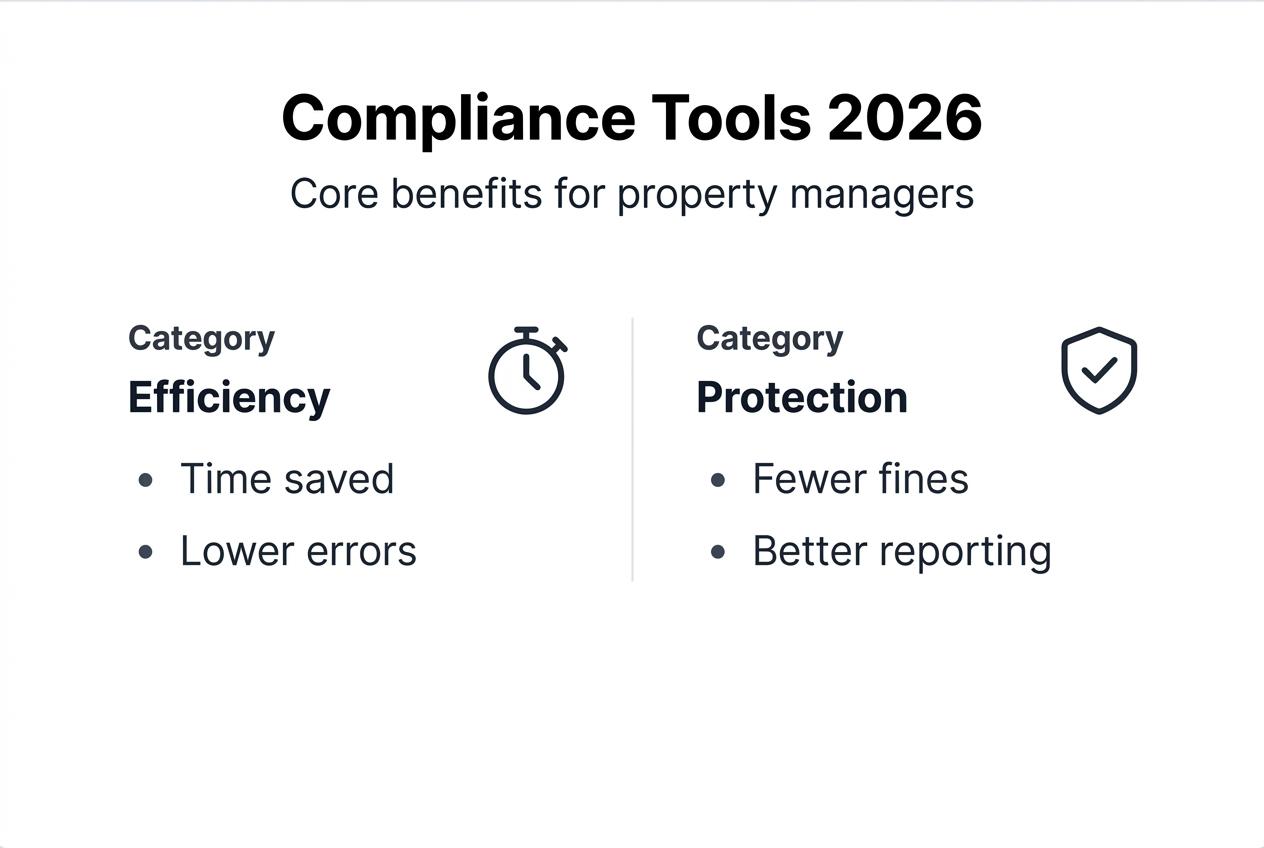
Error reduction delivers substantial cost savings. Manual submissions frequently contain formatting inconsistencies, calculation errors, or missing fields that trigger rejection and require resubmission. Each correction cycle consumes time and risks missing deadlines. Automated validation catches issues before submission, ensuring first-time acceptance rates above 95% and protecting managers from late filing penalties.
Revenue protection represents perhaps the most critical benefit. In Q3 2025, Airbnb, Expedia, and Booking hosted 398 million guest nights across the EU, demonstrating the platforms’ dominance in distribution. Properties failing compliance requirements face delisting, immediately cutting access to this massive booking volume. Compliance tools maintain the platform relationships that sustain revenue streams.
The relationship with local authorities improves when managers demonstrate consistent, accurate reporting. Cities gain enforcement tools through data transparency, using shared information to identify non-compliant operators whilst recognising those meeting obligations. Compliant managers build trust, potentially influencing future regulatory discussions and avoiding enhanced scrutiny.
| Aspect | Manual Compliance | Automated Tools |
|---|---|---|
| Time per property monthly | 2 to 4 hours | 10 to 20 minutes |
| Error rate | 15 to 25% | Under 2% |
| Deadline compliance | 75 to 85% | Above 98% |
| Scalability | Limited by staff | Unlimited properties |
| Audit readiness | Moderate | Excellent |
Pro Tip: Track the time your team spends on compliance tasks before implementing automated tools, then measure the reduction after adoption to quantify ROI and justify the investment.
Operational efficiency gains compound over time. As portfolios grow, manual methods require proportional staff increases to maintain compliance. Automated systems handle additional properties with minimal marginal cost, enabling profitable scaling. Property management compliance best practices emphasise automation as fundamental infrastructure for sustainable growth.
The competitive advantage emerges clearly. Whilst competitors struggle with compliance burdens, automated managers invest saved time in property automation examples that reduce compliance work further whilst enhancing guest satisfaction. This efficiency translates to better reviews, higher occupancy rates, and stronger financial performance across portfolios.
Discover GuestAdmin’s compliance solutions for property managers
Navigating EU short-term rental regulations demands purpose-built tools designed specifically for the European hospitality market. GuestAdmin offers automated compliance platforms that seamlessly handle GDPR requirements, registration management, and monthly reporting obligations across all 27 member states. Our solutions integrate with your existing property management systems and booking platforms, creating effortless data flows that eliminate manual work whilst ensuring accuracy.
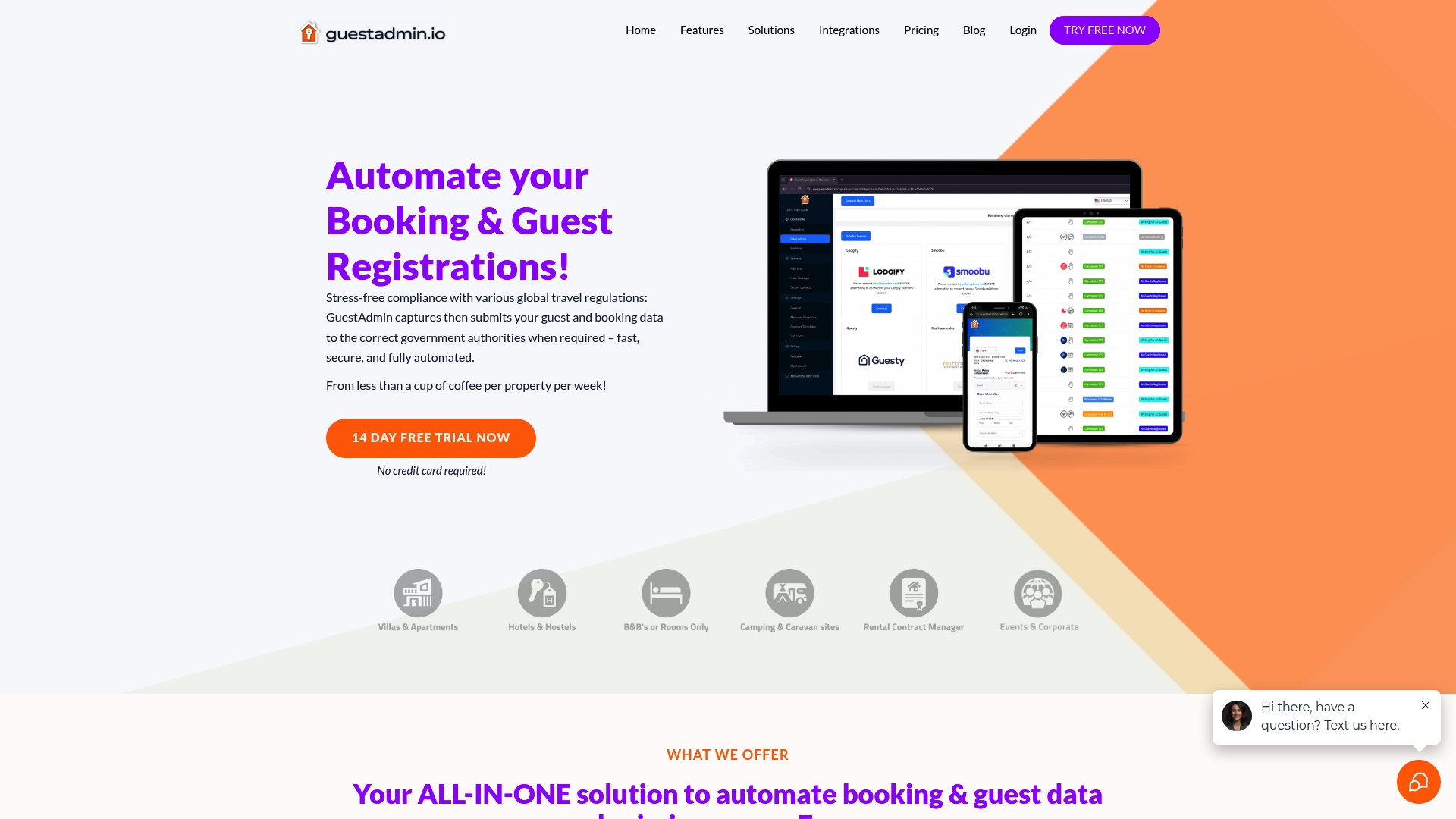
Whether you manage a handful of properties or oversee extensive portfolios, our platform scales to your needs. Explore our essential multi-property management tips to optimise your operations, or discover how different property management software types address specific compliance challenges. For comprehensive guidance on meeting 2026 obligations, review our complete legal compliance guide for rentals in Europe.
Why do property managers need compliance tools?
What are the main regulations affecting short-term rental compliance in the EU?
The two primary regulations are GDPR, governing guest data protection with penalties reaching €20 million, and the EUSTRR, providing harmonised rental registration and data-sharing across all EU states. These frameworks create consistent obligations for property registration, monthly activity reporting, and secure data handling.
How do automated compliance tools reduce risks for property managers?
Automated tools eliminate data entry errors through validation systems, ensure GDPR-compliant storage and processing, and submit reports before deadlines automatically. Integration with booking platforms maintains listing visibility whilst reducing delisting risks from compliance failures.
Can compliance tools also help with guest experience and operational efficiency?
Absolutely. By reducing administrative burdens by 60 to 80%, managers reclaim time for enhancing guest services, maintaining property standards, and expanding portfolios. Automated booking compliance frees resources that drive competitive advantages beyond mere regulatory adherence.
Why is automation more reliable than manual compliance processes?
Manual methods introduce human error rates of 15 to 25%, whilst automated systems maintain accuracy above 98% through systematic validation. Software updates automatically when regulations change, ensuring ongoing compliance without constant manual monitoring. Property management compliance best practices consistently emphasise automation as the foundation for sustainable, scalable operations.
20 Comments
Time-saving tips for property managers to automate compliance
[…] problems, and workflow bottlenecks before they affect real guests or compliance deadlines. Most compliance tools offer sandbox environments specifically for this […]
prevacid otc 15 mg
prevacid otc 15 mg
prevacid otc 15 mg
lasix furosemide price
lasix furosemide price
lasix furosemide price
diflucan pain medication
diflucan pain medication
diflucan pain medication
protonix generic pill
protonix generic pill
protonix generic pill
fluconazole 150 mg
fluconazole 150 mg
fluconazole 150 mg
hims sildenafil instructions
hims sildenafil instructions
hims sildenafil instructions
dapoxetine effectiveness
dapoxetine effectiveness
dapoxetine effectiveness
sémaglutide oral perte de poids amazon
sémaglutide oral perte de poids amazon
sémaglutide oral perte de poids amazon
propecia transformation
propecia transformation
propecia transformation
cialis pill price
cialis pill price
cialis pill price
doxycycline hyclate used to treat
doxycycline hyclate used to treat
doxycycline hyclate used to treat
is expired sildenafil safe
is expired sildenafil safe
is expired sildenafil safe
terbinafine potential side effects
terbinafine potential side effects
terbinafine potential side effects
ivermectin medical breakdown
ivermectin medical breakdown
ivermectin medical breakdown
ivermectin strongyloides expert review
ivermectin strongyloides expert review
ivermectin strongyloides expert review
minoxidil expert overview
minoxidil expert overview
minoxidil expert overview
amoxicillin broad‑spectrum activity
amoxicillin broad‑spectrum activity
amoxicillin broad‑spectrum activity
bronchitis complications
bronchitis complications
bronchitis complications
pneumonia complications
pneumonia complications
pneumonia complications