

TL;DR:
- EU legislation from 2026 mandates property registration, platform verification, and data sharing.
- Automating compliance and guest experience improvements boosts bookings and reduces risks.
- Regulatory adherence transforms into a competitive edge for professional short-term rental operators.
European short-term rental operators are facing a pivotal moment in 2026. New EU-wide legislation has reshaped compliance obligations overnight, while guest expectations continue to rise. Most guides tackle regulations or guest experience in isolation, leaving property owners juggling both without a clear plan. This guide brings them together. Whether you manage a single apartment in Lisbon or a portfolio of villas across Italy, you will find actionable tips here to stay legally protected, delight your guests, and grow your bookings with confidence.
Table of Contents
- Understand new European compliance regulations in 2026
- Optimise guest experiences for five-star reviews and repeat bookings
- Automate operations for effortless compliance and efficiency
- Navigate local rules and leverage compliance as a competitive edge
- Hard-won lessons: why automation and compliance are your best investments
- Streamline your short-term rental operations with automated solutions
- Frequently asked questions
Key Takeaways
| Point | Details |
|---|---|
| Know the rules | Staying updated on country-specific short-term rental regulations avoids fines and listing removals. |
| Invest in guest experience | Personalised touches and five-star reviews can drive up to 30% more bookings. |
| Automate compliance | Automation tools reduce manual errors and streamline reporting for all your properties. |
| Leverage compliance as an advantage | Going above and beyond on legal standards sets you apart and earns higher guest trust. |
Understand new European compliance regulations in 2026
The regulatory landscape for short-term rentals across Europe has shifted significantly. EU Regulation 2024/1028 introduces mandatory registration, platform verification, and data sharing obligations for short-term rental operators and online platforms alike. Understanding what this means for your day-to-day operations is no longer optional.
At its core, the regulation requires hosts to register their property with the relevant national or local authority and display a valid registration number on every platform listing. Platforms must verify that registration numbers exist and are accurate. They are also required to share rental activity data with government bodies via Single Digital Entry Points (SDEPs), which are centralised national data portals designed to give authorities a clear picture of the short-term rental market.
Familiarising yourself with EU compliance terminology is an important first step, especially as member states interpret and enforce the regulation differently. Here is how enforcement varies across key markets:
| Country | Registration required | Night cap | Enforcement level |
|---|---|---|---|
| Spain | Yes (regional level) | Yes, in some cities | Very strict |
| Italy | Yes (national + local) | Varies by region | Strict |
| France | Yes (in many communes) | 120 nights in primary homes | Moderate |
| Portugal | Yes (Alojamento Local) | Varies | Moderate |
| Germany | Yes (varies by city) | Yes, in some cities | Moderate to strict |
Non-compliance carries serious financial risk. Fines range from €1,000 to over €50,000, depending on the member state and severity of the breach. Platforms can be required to remove non-compliant listings within as little as 10 hours of detection. That means a listing error or missing registration number could cost you not just a fine, but lost revenue during peak periods.
For a practical breakdown of what these rules mean property by property, the European rental regulations 2026 guide is worth reading in full.
Key compliance requirements to act on now:
- Obtain a valid registration number for each property in every market where required
- Display registration numbers accurately on all online platform listings
- Ensure your activity data matches what platforms report to national SDEPs
- Check whether your city or region applies night caps or additional local rules
- Review platform terms of service, as many are updating verification procedures
Optimise guest experiences for five-star reviews and repeat bookings
With compliance essentials in mind, the next key driver of success is the guest experience. It is easy to focus so heavily on paperwork and registration that the fundamentals of hospitality take a back seat. But the two are more connected than they appear.
Guests notice the details. The scent of fresh linen, the warmth of well-considered lighting, the feel of quality towels — these sensory elements shape first impressions powerfully. Applying the peak-end rule is particularly effective: people remember an experience primarily by its peak moment and its ending. A warm, personal welcome message at check-in and a thoughtful farewell token or note at check-out can define how guests rate and review your property, regardless of minor issues in between.

Personalisation and professionalisation can lead to a 30% increase in bookings, and properties with consistent five-star reviews see a 10% uplift in future reservations. These numbers are not abstract — they translate directly to revenue.
Digital guidebooks have become an industry standard for good reason. A well-designed digital guide eliminates repetitive guest questions, signposts local restaurants and attractions, and positions you as a professional host rather than a casual landlord. Pairing this with professional photography and thoughtful staging can noticeably lift your click-through rate on OTA platforms.
Pro Tip: Segment your property upgrades based on your typical guest profile. Remote workers benefit from a dedicated workspace with reliable Wi-Fi and good lighting. Families value clear safety information and nearby activity suggestions. A small investment in targeted upgrades often yields outsized returns in reviews and repeat bookings.
You can also reinforce trust and compliance together. A clear guest registration guide helps guests understand identity verification steps, reducing friction at check-in and improving the data accuracy you need for regulatory reporting.
Quick wins for improving guest experience:
- Invest in quality bedding, blackout curtains, and good lighting
- Create a digital guidebook with local tips and house instructions
- Send a personalised welcome message before arrival
- Follow up after check-out with a simple thank-you and review request
- Identify your core guest segment and tailor at least one upgrade specifically for them
Automate operations for effortless compliance and efficiency
To put these tips into practice, automation is the key to sustainable growth and error-free compliance. Managing registration numbers, guest verification, data submissions, and nightly limit tracking manually is not only time-consuming — it is risky. One missed submission or data mismatch can trigger platform penalties under the new rules.
Data parity across systems is critical to prevent auto-delisting by platforms enforcing EU Regulation 2024/1028. If the registration number on your listing does not match the verified national register, platforms are obligated to act swiftly. Automation removes that risk by keeping your data consistent and up to date.
Here is a direct comparison of manual versus automated compliance management:
| Task | Manual approach | Automated approach |
|---|---|---|
| Guest data submission | Hours per week, error-prone | Submitted within 24 hours, accurate |
| Registration number tracking | Spreadsheets, easy to miss | Centralised, always current |
| Nightly limit monitoring | Manual counting, high risk | Automated alerts and reporting |
| Platform data parity | Periodic checks, inconsistent | Real-time sync across channels |
| GDPR data archiving | Ad-hoc, compliance risk | Automated, secure, auditable |
To automate booking compliance effectively, focus on these steps in order:
- Audit your current workflow — identify every manual step that touches guest data or regulatory reporting
- Choose a platform that integrates with your existing PMS and OTA channels
- Confirm the platform handles SDEP data submissions in the countries where you operate
- Set up automated alerts for nightly limit thresholds and registration renewals
- Run a test submission cycle before going fully live to catch any data gaps
Pro Tip: When evaluating compliance tools, ask vendors specifically about their SDEP integration roadmap. Some platforms support data sharing in only a handful of countries — if you operate across borders, you need a solution built for multi-jurisdiction compliance from day one.
Navigate local rules and leverage compliance as a competitive edge
Embracing automation means less time on paperwork, but true leadership comes from mastering local differences and using them to your advantage. Local and city-level rules add another layer of complexity on top of the EU framework. Night caps in Barcelona, seasonal restrictions in Venice, zoning rules in Amsterdam — each market has its own flavour of regulation.
Rather than viewing these rules as obstacles, the most successful operators treat them as a filter. When casual or non-compliant hosts exit the market due to regulatory pressure, the properties that remain benefit from reduced competition and increased guest trust. Regulations increasingly favour professional hosts759356_EN.pdf), creating higher entry barriers but also more trust and the potential for higher nightly rates.
This shift is already playing out across Europe’s top short-term rental markets. Compliance is no longer just a legal obligation — it is a trust signal. Guests, especially in the corporate and premium leisure segments, actively seek properties that operate transparently and professionally. Displaying a valid registration number, offering a seamless digital check-in process, and having verifiable guest policies all communicate professionalism at a glance.
“Professionalisation of the short-term rental sector, driven by regulatory frameworks, is creating a clearer distinction between compliant, high-quality operators and casual hosts — to the long-term benefit of the former.”
Use your 2026 compliance guide to map every local requirement for each property, and keep a compliance checklist updated as rules evolve.
How to turn compliance into a competitive advantage:
- Display your registration number prominently on listings to signal legitimacy
- Use compliance documentation as marketing material with corporate guests
- Position your properties in regulated markets where competition is thinning
- Build relationships with local tourism bodies who value professional operators
- Maintain complete audit trails so you can respond rapidly to any authority query
Hard-won lessons: why automation and compliance are your best investments
Throughout these tips, one message is consistent: resilience comes from adapting early and investing deliberately. The operators who treat compliance as a box-ticking exercise are the most vulnerable. A fine, a delisting, or a data breach does not just cost money — it damages your reputation and guest relationships at the same time.
The contrarian view worth considering is this: regulation is not a threat to your business. It is a filter for professional standards. Every new rule that forces casual operators out of the market is an opportunity for you to capture their demand. Compliance and technology professionalise the sector759356_EN.pdf), offering long-term stability for those who adapt rather than resist.
Quick fixes — ignoring registration, manually fudging nightly counts, relying on outdated spreadsheets — cost far more in the long run than the investment in proper systems. The most resilient operators we see are those who treat automation as infrastructure, not an expense. If you want to explore how legal compliance automation supports this approach, the legal compliance automation guide is a practical next read.
Streamline your short-term rental operations with automated solutions
If you are ready to turn these tips into action, GuestAdmin.io makes every step more manageable. From automating guest data submissions to ensuring your listings stay compliant across multiple markets, the platform is built for European property owners and managers who need reliability without complexity.
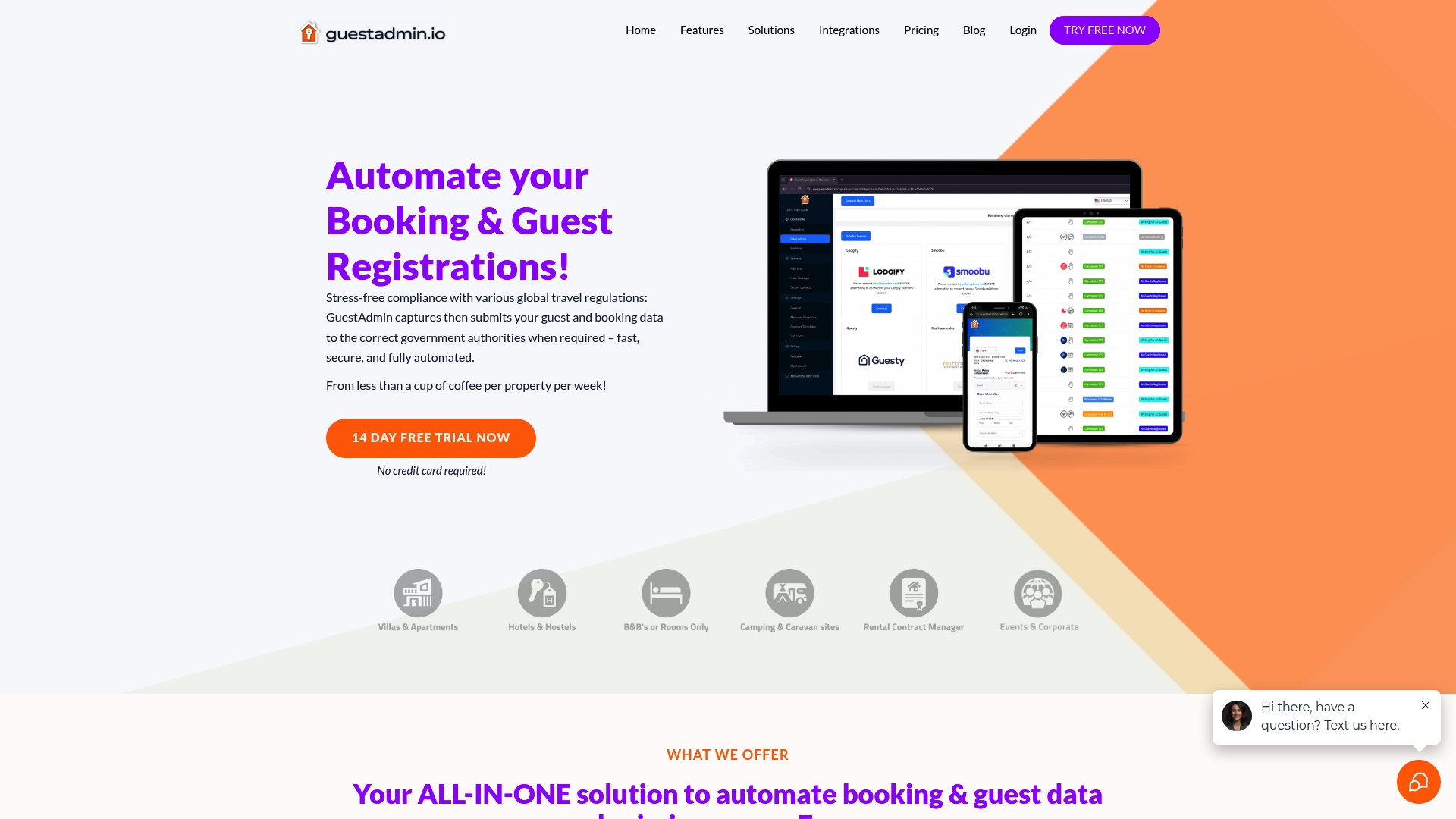
GuestAdmin.io integrates with leading PMS and OTA platforms, supports GDPR-compliant data archiving, and keeps your registration data consistent across channels — reducing the risk of fines or delisting significantly. Explore how to avoid fines with compliance tools, understand the essential rental compliance types your properties require, and discover purpose-built multi-property management solutions designed to scale with your portfolio.
Frequently asked questions
What are the penalties for non-compliance with EU Regulation 2024/1028?
Penalties include fines from €1,000 to over €50,000, and platforms must remove non-compliant listings within as little as 10 hours of detection. The exact level of fine depends on the member state and the nature of the breach.
How can I increase my short-term rental’s bookings in Europe?
Personalise your property, create a seamless check-in and check-out experience, and actively encourage guest reviews. Personalisation strategies can deliver up to 30% more bookings, with five-star reviews adding a further 10% uplift.
Do I need to register every property across Europe in 2026?
Registration is mandatory wherever national or local rules require it under EU Regulation 2024/1028, and your registration number must appear on all relevant platform listings. Requirements vary by country and city, so check each market individually.
Can automation help me stay compliant with changing rules?
Yes. Automation prevents data mismatches that trigger automatic delisting, reduces manual admin burden, and keeps your compliance posture consistent as regulations evolve across jurisdictions.
Is compliance a burden or an advantage for short-term rental operators?
For professional hosts, compliance is increasingly an advantage. Regulation favours professional operators759356_EN.pdf), supporting sector professionalisation and enabling compliant hosts to command higher trust and nightly rates.
2 Comments
Spar penge: Sådan fungerer gebyrfri booking af flyrejser
[…] en generel huskeregel for rejsetips til gebyrfri booking gælder det, at du bør behandle vilkårene som en lige så vigtig del af bookingen som selve […]
How AI streamlines compliance for short-term rentals
[…] Boosting bookings through compliance is a genuine outcome for well-run operations, because platforms prioritise verified, compliant listings in their search results. Compliance is not just a legal obligation. It is a commercial advantage when done consistently and well. […]