

Managing short-term rentals across Europe has become significantly more complex as EU Regulation 2024/1028 requires verified registration by May 20, 2026. Property managers now face a maze of country-specific rules, night caps, and data reporting requirements that can trigger costly delistings if mishandled. The good news? With the right strategies and automation tools, you can transform compliance from a burden into a competitive advantage. This guide delivers seven expert-backed tips to help you navigate the new regulatory landscape, protect your portfolio, and streamline operations for sustainable growth.
Table of Contents
- How to triage your property portfolio by country risk
- Ensure verified registration for each property
- Automate night cap rules and avoid compliance penalties
- Update your owner contracts for legal clarity
- Prioritise data parity audits across systems
- Embrace automation for ongoing compliance success
- Streamline short-term rental compliance with smart automation
- Frequently asked questions
Key Takeaways
| Point | Details |
|---|---|
| Prioritise high-risk countries | Focus first on properties in Code Red nations where compliance action is most urgent. |
| Synchronise registration data | Ensure registration numbers are accurately linked and matched on all platforms to prevent delistings. |
| Automate night cap controls | Deploy PMS features to block overbookings and reduce the risk of breaching city limits. |
| Update owner contracts | Clarify legal responsibilities in contracts to protect both managers and owners under the new EU law. |
| Leverage automation for compliance | Adopting automation tools now helps future-proof your business as enforcement tightens in 2027. |
How to triage your property portfolio by country risk
Not all properties face the same regulatory urgency. Smart managers prioritise by country risk levels: Code Red (Spain, Italy), Code Yellow (France), Code Green (Germany, Netherlands). This triage system helps you deploy resources where they matter most and avoid delisting disasters.
Code Red countries demand immediate action. Spain and Italy have strict registration requirements with active enforcement already underway. Properties in these markets need verified registration numbers uploaded to OTAs within weeks, not months.
Code Yellow countries like France require attention but offer slightly more flexibility. Registration systems are operational, yet enforcement timelines remain less aggressive than Code Red markets.
Code Green countries including Germany and the Netherlands have emerging frameworks. Whilst compliance is mandatory, enforcement infrastructure is still developing, giving you breathing room to prepare.
| Country | Risk Level | Immediate Action Required |
|---|---|---|
| Spain | Code Red | Verify registration, upload to OTAs immediately |
| Italy | Code Red | Confirm local registry entry, sync with platforms |
| France | Code Yellow | Check registration status, prepare documentation |
| Portugal | Code Yellow | Monitor local authority updates, register properties |
| Germany | Code Green | Review emerging requirements, plan registration |
| Netherlands | Code Green | Track regulatory developments, prepare systems |
Start by auditing your entire portfolio. List each property with its country, current registration status, and OTA listing details. This snapshot reveals where you’re exposed and which properties need urgent attention.
Pro Tip: Set quarterly reviews to reassess risk levels as regulations evolve. What’s Code Green today might shift to Yellow or Red as enforcement ramps up in 2027.
Focus your initial efforts on Code Red properties. These markets have the highest delisting risk and the shortest compliance windows. Once secured, move systematically through Yellow and Green categories. This approach prevents you from spreading resources too thin whilst protecting your most vulnerable revenue streams.

For comprehensive guidance on building your compliance framework, explore our compliance checklist for Europe and legal compliance guide.
Ensure verified registration for each property
The May 20, 2026 deadline isn’t negotiable. Every property must have verified registration linked to national databases and displayed on OTA listings. Missing this deadline triggers automatic delisting, cutting off your booking pipeline overnight.
Follow these steps to secure verified registration:
- Check local registry status for each property. Contact municipal authorities to confirm your registration is active and properly recorded in the national database.
- Link registration numbers with OTAs. Upload verified numbers to Airbnb, Booking.com, and other platforms through their compliance portals.
- Verify data parity across all systems. Ensure your PMS, OTA listings, and registry entries match exactly. Even minor discrepancies trigger compliance flags.
- Document everything. Keep copies of registration certificates, submission confirmations, and correspondence with authorities.
Registration deadline: Properties without verified registration numbers on OTAs by May 20, 2026 face immediate delisting.
Automation tools eliminate manual data entry errors and keep registration information synchronised across platforms. When a property’s registration status changes, automated systems update all connected platforms simultaneously, preventing the mismatches that cause delisting.
OTAs provide a ten-day response window when they detect registry mismatches. This brief period is your only chance to correct errors before delisting occurs. Proactive managers run weekly audits to catch discrepancies early, well before platforms flag them.
Pro Tip: Schedule a comprehensive data audit three months before the May deadline. This buffer gives you time to resolve registration issues, correct data mismatches, and handle unexpected bureaucratic delays without panic.
For detailed workflows on maintaining compliance across your portfolio, visit our guides on automating booking compliance and owner compliance responsibilities.
Automate night cap rules and avoid compliance penalties
City-specific night caps create a minefield for multi-property managers. Amsterdam limits rentals to 15 nights, Paris to 90, whilst Barcelona enforces strict zoning rules that vary by neighbourhood. Manual tracking across dozens or hundreds of properties guarantees mistakes.
Automation transforms night cap management from reactive firefighting to proactive prevention. Modern PMS solutions integrate city-specific rules directly into your booking calendar, automatically blocking reservations that would breach legal limits.
| Solution Type | Features | Best For |
|---|---|---|
| PMS with built-in rules | Automatic blocking, city database | Large portfolios |
| Standalone compliance tools | Real-time alerts, audit trails | Multi-country operations |
| Custom API integrations | Flexible rule engine, reporting | Enterprise managers |
Implement night cap automation with these steps:
- Configure city-specific rules in your PMS for every property location. Input exact night limits, seasonal variations, and any zoning exceptions.
- Sync with booking calendars to prevent overbookings. The system should automatically reject or flag reservations that exceed limits.
- Schedule monthly audits to verify rule accuracy. Cities update regulations frequently, requiring regular system adjustments.
- Set up alert triggers for properties approaching their annual limits. Early warnings let you communicate with guests and adjust marketing strategies.
Edge cases require special attention. Some cities apply different caps based on property type, owner residency status, or specific neighbourhoods. Your automation system must handle these nuances to prevent accidental breaches.
“Automated night cap management isn’t optional anymore. The fines for breaches can reach thousands of euros per violation, and repeated offences trigger permanent operating bans. Smart managers invest in prevention, not penalties.” — European Compliance Expert
Manual tracking simply can’t scale. A manager with 50 properties across five cities would need to monitor 250 individual night cap calculations monthly. Automation handles this complexity instantly, freeing you to focus on guest experience and revenue optimisation.
Learn more about leveraging technology for compliance in our articles on automation trends for managers and compliance best practices.
Update your owner contracts for legal clarity
Legal responsibility for registration failures varies dramatically by country. Property managers are legal hosts in France, whilst owners bear responsibility in Spain. Outdated contracts that don’t address these distinctions expose you to liability you never agreed to assume.
Modern owner contracts must explicitly define compliance responsibilities:
- Registration obligations: Specify who obtains and maintains registration numbers. Include timelines and documentation requirements.
- Data provision: Detail what information owners must supply and how quickly they must respond to compliance requests.
- Liability allocation: Clearly state who bears financial and legal responsibility if registration fails or data mismatches occur.
- Communication protocols: Establish how you’ll notify owners of regulatory changes and what actions they must take.
- Indemnity clauses: Protect your business from owner failures to provide accurate information or maintain valid registrations.
Contract updates aren’t just legal protection. They’re operational necessities that prevent the confusion and finger-pointing that erupts when compliance issues arise.
“The biggest mistake property managers make is assuming their existing contracts cover new regulatory requirements. They don’t. Explicit, country-specific compliance clauses are essential to protect your business and maintain clear accountability.” — Property Management Legal Advisor
Enforcement will intensify throughout 2027 as national authorities complete their database integrations and begin systematic audits. Managers operating under vague contracts will face disputes with owners over who pays fines, who’s responsible for delisting revenue losses, and who must invest in compliance systems.
Review every owner agreement in your portfolio. Prioritise Code Red countries where enforcement is already active, then systematically update Yellow and Green market contracts. Consider engaging a solicitor familiar with short-term rental regulations in each jurisdiction to ensure your contracts provide adequate protection.
For more insights on compliance responsibilities, explore our guide on why property managers need compliance tools.
Prioritise data parity audits across systems
Data mismatches between PMS, OTA, and registries trigger the ten-day delisting countdown. A single typo in a registration number, an outdated address, or a missing property identifier can cost you thousands in lost bookings before you even realise there’s a problem.
Proactive data parity audits catch these issues before platforms do:
- Compare PMS records against local registry databases monthly. Verify that property addresses, registration numbers, and owner details match exactly.
- Cross-check OTA listings with your PMS data. Ensure every platform displays current registration information without discrepancies.
- Audit new bookings within 24 hours of confirmation. Automated systems should flag any data inconsistencies immediately.
- Document all audits with timestamps and findings. This paper trail proves due diligence if disputes arise with authorities or platforms.
Manual audits become impossible at scale. A portfolio of 30 properties across three OTAs requires 90 individual comparisons monthly. Multiply that by registration numbers, addresses, and owner details, and you’re looking at hundreds of potential mismatch points.
Pro Tip: Implement automated parity checks that run continuously in the background. These systems compare data across all platforms in real-time, alerting you to discrepancies within minutes rather than weeks.
The competitive advantage of data accuracy extends beyond avoiding delisting. As enforcement tightens, compliant managers will capture market share from competitors who get removed from OTAs. Your investment in data systems today positions you to dominate your markets tomorrow.
Discover how technology streamlines compliance in our resources on SaaS compliance solutions and multi-property management processes.
Embrace automation for ongoing compliance success
Compliance isn’t a one-time project. It’s an ongoing operational requirement that will only grow more complex as regulations evolve. Compliant managers benefit from reduced illegal competition as enforcement ramps up in 2027, creating a significant competitive moat around professional operations.
Build your automation foundation with these essential steps:
- Automate registration synchronisation across all platforms. When registration data changes, updates should propagate automatically to every connected system.
- Implement digital guest check-in that captures required data and submits it to authorities within regulatory timeframes.
- Deploy automated reporting that generates compliance documentation for audits and authority requests.
- Integrate real-time monitoring that alerts you to regulatory changes affecting your properties.
- Establish automated archiving that securely stores guest data according to GDPR requirements and local retention rules.
Pro Tip: Invest in scalable PMS and guest management solutions designed for European compliance. Purpose-built platforms adapt quickly to regulatory changes, protecting your operations from future requirements you can’t yet anticipate.
The silver lining of increased regulation is market professionalisation. Illegal operators and casual hosts who ignore compliance will disappear from OTAs, reducing competition and supporting higher rates for legitimate properties. Your investment in automation positions you to capitalise on this shift.
Automation also improves guest experience. Digital check-in processes are faster and more convenient than paper forms. Automated communications keep guests informed without manual effort. Compliance becomes invisible to guests whilst protecting your business behind the scenes.
According to European Parliament analysis759356_EN.pdf), harmonised data collection across the EU will eventually streamline operations for multi-country managers. Early adopters of comprehensive automation systems will transition seamlessly to these unified frameworks, whilst competitors scramble to retrofit their operations.
Explore advanced automation strategies in our guides on multi-property management workflows and automation benefits.
Streamline short-term rental compliance with smart automation
Navigating Europe’s evolving regulatory landscape doesn’t have to overwhelm your operations. GuestAdmin automates guest registration, ensures data compliance, and synchronises information across platforms, transforming complex requirements into effortless workflows.
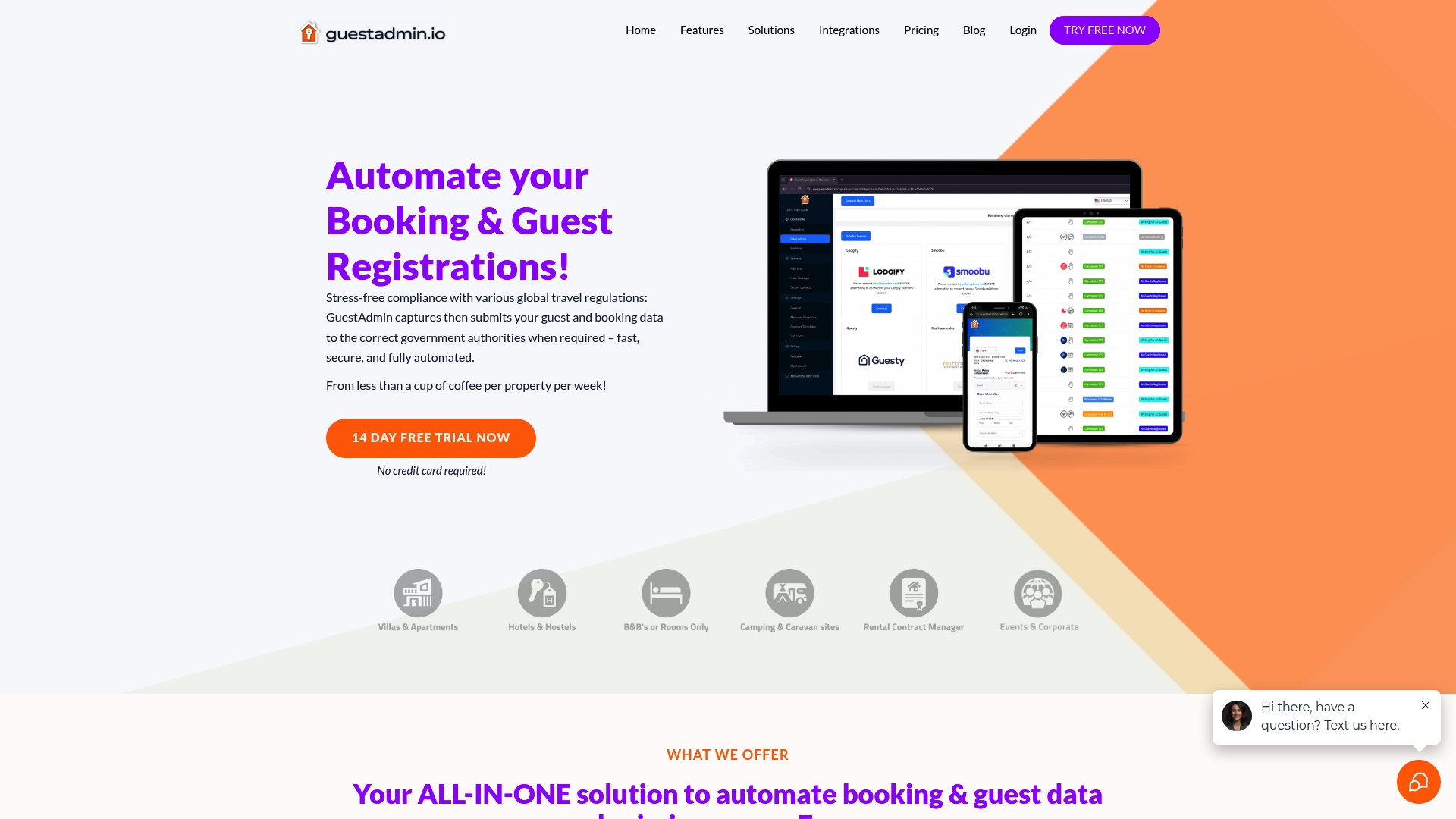
Our platform handles everything from digital check-in to automated authority submissions, giving you complete visibility across your portfolio whilst reducing administrative burden. Whether you manage five properties or five hundred, GuestAdmin scales with your business and adapts to regulatory changes automatically.
Ready to simplify compliance and protect your revenue? Explore our time-saving compliance tips, discover how to automate guest management, and access our comprehensive Europe compliance automation guide. Take control of compliance today and position your portfolio for sustainable growth in 2026 and beyond.
Frequently asked questions
What is the EU registration rule for short-term rentals in 2026?
By May 20, 2026, every property listed on OTAs must have a verified registration number linked to a national database. Properties without verified registration face immediate delisting from booking platforms.
How can managers prevent accidental night cap breaches?
Use PMS automation with city-specific rules to block bookings that would exceed legal night limits. Automated systems prevent overbookings in cities like Amsterdam and Paris before they occur.
Who is legally responsible if registration fails—owner or manager?
Responsibility varies by country: property managers are legal hosts in France, whilst owners bear responsibility in Spain. Updated contracts must clarify liability based on local regulations.
What triggers delisting from OTAs under the new regulation?
Delisting occurs when mismatches between registry data and OTA listings aren’t corrected within ten days. Platforms automatically remove non-compliant properties after this response window expires.
Will compliance automation provide a competitive advantage?
Yes, as enforcement increases in 2027, compliant managers will see less competition from illegal operators who get delisted. Professional operations with robust compliance systems will capture increased market share.
5 Comments
How automation transforms hospitality compliance in Europe
[…] opportunity for professional operators who have their compliance processes in order. Following manager compliance tips from operators who have navigated this shift successfully reveals a consistent pattern: the winners […]
Your essential short-term rental compliance checklist for Europe
[…] these manager compliance tips and reviewing property compliance examples from real operators can help you identify weak points in […]
Step-by-step guide to automating hospitality compliance
[…] short-term rental compliance explained is a strong starting point. You can also apply practical short-term rental compliance tips to ensure platform and authority-facing compliance stay […]
Types of short-term rental regulations in Europe
[…] of rental compliance types relevant to your portfolio. For a practical starting point, the top compliance tips guide is worth bookmarking. Guestadmin integrates with leading PMS and OTA platforms and is […]
How to meet travel regulations for short-term rentals
[…] Top tips for short-term rental managers to stay compliant […]