

TL;DR:
- EU Regulation 2024/1028 mandates harmonized short-term rental data collection across Europe starting May 2026 for rule enforcement.
- Property owners must collect specific guest information and securely retain it for 2 to 6 years per local laws.
- Non-compliance risks include fines, license suspension, and increased enforcement by authorities.
Booking data compliance is not just about tax collection. Many property owners and managers across Europe are surprised to learn that EU Regulation 2024/1028 reshapes how short-term rental data is gathered, stored, and shared with authorities, starting 20 May 2026. The regulation is not designed to track your income. Its purpose is to give local governments reliable data to enforce rules such as night caps and licensing conditions. This guide walks you through what has changed, which guest data you must collect, how to keep it secure, and what risks you face if you fall short.
Table of Contents
- What has changed: Key points of the 2026 EU booking data regulation
- Guest data: What you must collect and how long you must keep it
- Data security, sharing, and your GDPR obligations
- What non-compliance means: Real risks and practical steps
- A practical perspective: Why simplicity wins in booking data compliance
- How GuestAdmin helps with booking data compliance
- Frequently asked questions
Key Takeaways
| Point | Details |
|---|---|
| EU-wide booking rules | New regulations in 2026 require all short-term rental owners in Europe to align with harmonised booking data standards. |
| Core guest data required | Name, date of birth, nationality, and ID must be collected and kept for 2–6 years depending on national requirements. |
| GDPR compliance vital | You must minimise, secure, and lawfully share booking data under GDPR and EU rules. |
| Major risks of neglect | Ignoring data duties invites heavy fines, licence loss, or business suspension by local authorities. |
| Simple, secure systems win | Automating and streamlining booking data workflows reduces errors and ensures sustainable compliance. |
What has changed: Key points of the 2026 EU booking data regulation
For years, short-term rental (STR) operators across the EU worked under a patchwork of national and municipal rules. Some cities required registration numbers, others demanded paper forms, and a few asked for nothing at all. That inconsistency is ending. EU Regulation 2024/1028 mandates harmonised data collection and sharing for STRs across all EU member states, effective 20 May 2026.
Harmonised data collection means every member state must use a common framework for what booking data is gathered and how it flows to national authorities. Data travels via Single Digital Entry Points, known as SDEPs, which act as secure national gateways. Platforms such as Airbnb and Booking.com must send activity data through these SDEPs, and property managers need to ensure their own records align. Familiarising yourself with EU compliance terminology is a good starting point.
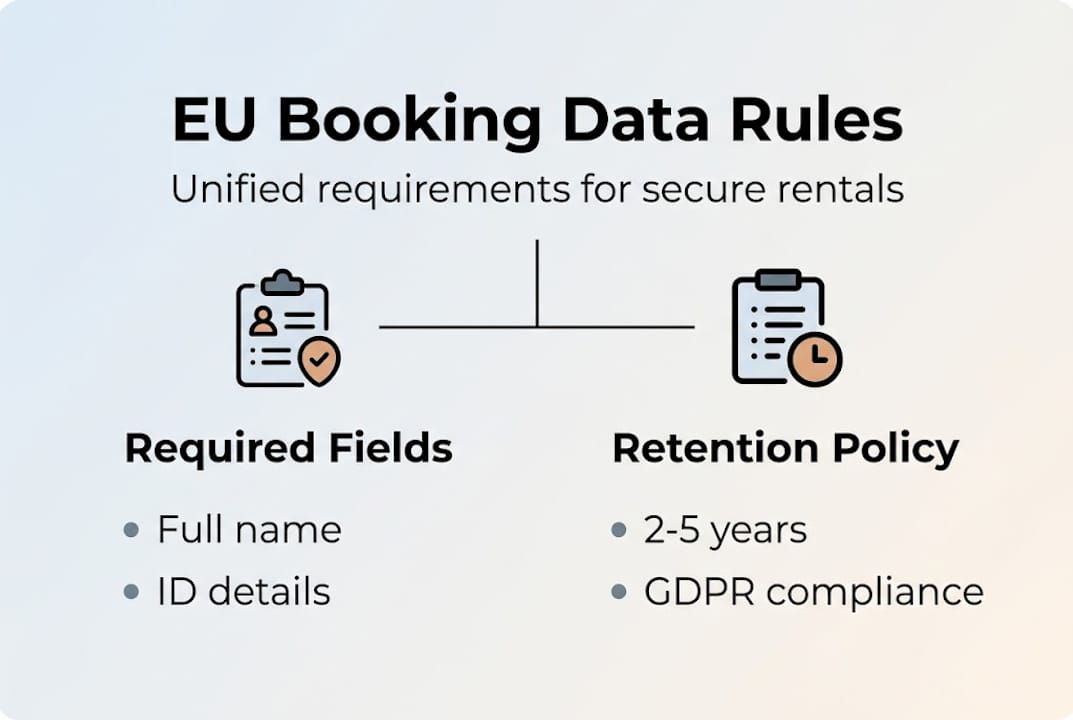
A critical point: the data shared via SDEPs is GDPR-compliant and supports enforcement of local rules like night caps, not tax collection. This distinction matters. You are not handing revenue figures to a tax authority. You are helping local councils verify that your property operates within permitted limits.
Here is a quick comparison of what operators faced before and what applies from May 2026:
| Area | Before 2026 | From May 2026 |
|---|---|---|
| Rules | Fragmented by country or city | Harmonised EU-wide framework |
| Data flow | Ad hoc or platform-specific | Via national SDEPs |
| Enforcement focus | Varied, often unclear | Night caps, licensing, local limits |
| Platform obligations | Inconsistent | Mandatory reporting via SDEPs |
| GDPR alignment | Often inconsistent | Built into the framework |
Review the full 2026 rental rules guide to understand how these changes apply to your specific location.
Key compliance takeaways for property owners and managers:
- Register your property with the relevant national platform before 20 May 2026
- Confirm that your OTA or PMS passes data through the correct SDEP channels
- Understand which local rules (night caps, licence limits) apply to your property
- Align your internal records with the new harmonised data fields
- Review your GDPR data processing agreements with any third-party tools you use
Guest data: What you must collect and how long you must keep it
Once you understand the regulatory framework, the next practical question is straightforward: exactly what information are you legally required to gather from each guest, and for how long must you retain it?
National laws require data such as full name, date of birth, nationality, and identification details, with retention periods ranging from 2 to 6 years depending on the country. GDPR data minimisation principles also apply, meaning you should collect only what the law specifically requires and nothing beyond that.

The table below summarises typical statutory data fields and indicative retention periods:
| Data field | Why it is required | Typical retention period |
|---|---|---|
| Full name | Identity verification | 2 to 5 years |
| Date of birth | Age and identity checks | 2 to 5 years |
| Nationality | Residency and local rule compliance | 2 to 5 years |
| Document type and number | ID verification | 3 to 6 years |
| Arrival and departure dates | Occupancy monitoring | 2 to 5 years |
Consult your guest registration guide for country-specific requirements, as retention periods vary. For example, Spain currently mandates a minimum of three years, while some northern EU states require five.
Here is a numbered process for compliant guest registration:
- Collect mandatory data fields at the point of booking confirmation or digital check-in
- Verify identity documents before or upon arrival
- Store data in a GDPR-compliant system with access controls
- Set automated deletion schedules aligned to your country’s retention requirement
- Keep a record of your data processing activities in case of an audit
Your owner responsibilities extend to ensuring any software or tool used to collect this data also meets GDPR standards.
Pro Tip: Treat “check-in” and “registration” as two separate steps in your workflow. Check-in handles keys and property orientation. Registration is the formal, legally binding data capture step. Keeping them distinct reduces errors and makes audits far simpler.
Data minimisation is worth emphasising here. Collecting a guest’s dietary preferences or social media handle alongside their passport number creates unnecessary risk. Stick to what the law demands.
Data security, sharing, and your GDPR obligations
Collecting guest data is only half of the obligation. Keeping it secure and sharing it lawfully is where many operators encounter difficulties.
SDEPs are the EU’s answer to fragmented data transfer. Each member state operates its own SDEP, and platforms report activity data through these gateways on a regular basis. As a property manager, your role is to ensure your records are accurate enough that any data reported on your behalf is correct. You can learn more about why data security matters for your rental business specifically.
As the EU framework confirms, data shared through national SDEPs is GDPR-compliant and exists to support enforcement of local rules, not tax collection. Understanding this purpose helps you frame your data practices correctly.
“Booking data shared under the 2026 EU framework is used to enforce local accommodation rules, such as night caps and licensing limits. It is not a mechanism for tax reporting.”
Typical data risks and how to avoid them:
- Weak access controls: Use role-based permissions so only staff who need guest data can access it
- Unencrypted storage: Store all guest records in encrypted databases or cloud platforms certified for GDPR compliance
- Outdated retention schedules: Automate deletion of records that exceed your country’s legal retention window
- Sharing via unsecured channels: Never send guest data by ordinary email; use secure portals or optimised booking data workflows instead
- Missing data processing agreements: Ensure every third-party tool you use has a signed Data Processing Agreement (DPA) in place
Pro Tip: Use an encrypted, purpose-built platform for all guest data handling. General tools such as standard spreadsheets or shared email folders do not meet GDPR security standards and can expose you to regulatory action. For broader context on financial record-keeping alongside compliance, hospitality bookkeeping advice can also be useful.
GDPR also grants guests rights, including the right to access, correct, and request deletion of their data. Having a simple internal process to handle these requests promptly is essential.
What non-compliance means: Real risks and practical steps
Ignoring booking data regulations is not a low-risk gamble. The consequences are tangible, and they escalate quickly.
Local authorities enforcing rules under the 2026 framework have the power to issue fines, suspend rental licences, and restrict the number of nights a property can be let. The EU data collection framework is explicitly designed to support enforcement of local rules such as night caps, meaning authorities now have better tools to identify non-compliant operators. Your rental legal compliance guide outlines the specific enforcement mechanisms that apply in different jurisdictions.
The three most common ways operators fall foul of the rules are straightforward and avoidable:
- Incomplete guest records: Missing a required field such as document number or date of birth can invalidate a registration and trigger a fine
- Late or absent data submissions: Platforms and operators both face penalties for failing to report activity data through SDEPs within required timeframes
- Inadequate data security: A breach involving guest data can result in both GDPR sanctions and a loss of operating licence
Here is a practical numbered checklist to keep you on the right side of the law:
- Confirm your property registration number is valid and displayed as required by local law
- Map every guest data field you collect against your country’s statutory list
- Audit your data storage system to confirm encryption and access controls are active
- Verify that your OTA or PMS is reporting data through the correct national SDEP
- Set calendar reminders for data retention deadlines and deletion schedules
- Brief your team or co-hosts on their role in the registration process
- Keep a log of all data processing activities in a format suitable for regulatory inspection
If you want to remove manual risk from this process entirely, automating compliance is a reliable and increasingly popular approach for operators managing multiple properties.
A practical perspective: Why simplicity wins in booking data compliance
We have seen many property managers respond to new regulation by layering complexity on top of complexity: multiple spreadsheets, separate filing systems for each country, elaborate internal approval chains. The intention is good, but the result is usually more errors, not fewer.
The operators who manage compliance well share one trait: they keep it simple. A single, standardised workflow for guest registration, one secure system for data storage, and a clear schedule for retention and deletion is all you need. Following booking data best practices that align with GDPR principles naturally produces lean, auditable processes.
Overengineering your compliance system creates confusion, particularly when staff change or regulations update. A lean, GDPR-aligned workflow does not need to be rebuilt every time a new rule arrives. It adapts. Simplicity is not a shortcut. It is the most durable compliance strategy available to property managers today.
How GuestAdmin helps with booking data compliance
Managing booking data obligations across multiple properties or jurisdictions is demanding. GuestAdmin is built to reduce that burden significantly.

The platform automates guest registration from the point of booking through to secure archiving, ensuring every required data field is captured correctly. It integrates with leading PMS and OTA platforms, feeds data securely through compliant channels, and provides a real-time dashboard so you can see your compliance status at a glance. For operators looking to scale without scaling their administrative workload, understanding why automating hotel compliance delivers long-term value is a natural next step. GuestAdmin keeps your data secure, your submissions timely, and your properties protected.
Frequently asked questions
What is the 2026 EU booking data regulation?
EU Regulation 2024/1028 harmonises data collection and sharing for short-term rentals across all EU member states, effective 20 May 2026, requiring property owners to meet uniform compliance standards.
Which guest data must I legally collect?
You must collect names, dates of birth, nationalities, and identification document details, following your national law and GDPR’s data minimisation principle.
What happens if I fail to comply with booking data rules?
Non-compliance may result in fines, rental suspension, or loss of your operating licence, as local authorities use the EU framework to enforce night caps and licensing conditions.
How long do I have to retain guest booking data?
Data must be kept securely for 2 to 6 years depending on your country’s specific legal requirements and GDPR obligations.
3 Comments
Why track booking dashboards for rental compliance
[…] response time needed to correct records, chase missing guest data, or escalate urgent cases. The booking data and GDPR relationship is one that every property manager needs to understand and manage actively, not […]
GDPR for short-term rentals: Guest data compliance guide
[…] understand not just the law, but how the technology implementing it works. For a closer look at how booking data regulations apply to your daily operations, reviewing your current data flows is a worthwhile […]
How SaaS guest registration simplifies rental compliance
[…] booking data regulations is no longer optional for anyone operating in the European short-term rental market. Operators who […]